Relating Language as an Expression of Culture and Identity to
the Mission of God
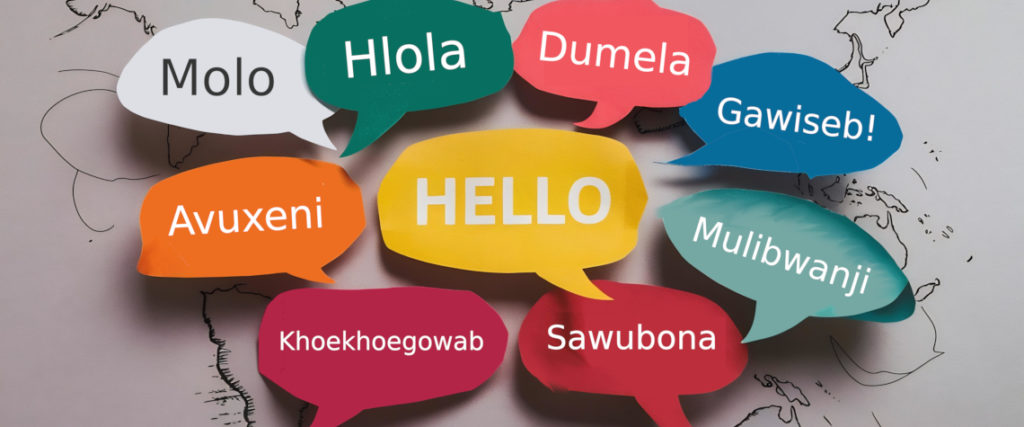
South Africa is one of the most linguistically diverse countries in the world, boasting 11 official languages alongside many other indigenous and immigrant tongues. This diversity is not merely a matter of communication but a profound expression of cultural identity, history, and community belonging. Understanding South Africa’s linguistic landscape is crucial for fostering unity, preserving cultural heritage, and ensuring effective dialogue in a society shaped by centuries of social and political transformation.
Language is more than words; it carries the weight of historical memory, social belonging, and identity formation. As Christians engaged in God’s mission (Missio Dei), we are called to embrace and steward cultural diversity, including linguistic richness, as a means of reflecting God’s creativity and fostering understanding among His people. Let’s explore South Africa’s linguistic landscape, the challenges and opportunities of multilingual communication, and how culture care can guide us toward deeper mutual appreciation and dialogue as we join God at work in the world.
South Africa’s Linguistic Diversity: A Tapestry of Voices
South Africa’s official languages include Afrikaans, English, isiNdebele, isiXhosa, isiZulu, Sesotho, Setswana, SiSwati, Tshivenda, Xitsonga, and Sepedi. Each language reflects the histories and traditions of the communities that speak them, offering insight into South Africa’s rich cultural fabric.
The Indigenous Languages: Echoes of Africa’s Past and Present
Nine of the 11 official languages are of Bantu origin, demonstrating deep historical roots in Africa. These languages are not just communication tools but repositories of oral traditions, folklore, and ancestral wisdom.
- IsiZulu and IsiXhosa: With their distinctive click consonants and lyrical cadence, these languages carry the stories of the Nguni people and have historically served as key cultural markers in South African society.
- Sesotho, Setswana, and Sepedi: These Sotho-Tswana languages play a crucial role in the country’s northern regions, preserving traditions through proverbs, idioms, and communal storytelling.
- Xitsonga and Tshivenda: Less widely spoken but equally vital, these languages contribute to the unique regional identities within South Africa, preserving customs and worldviews unique to their respective peoples.
Afrikaans and English: Colonial Legacies and Contemporary Realities
Afrikaans and English, though introduced through European colonialism, have become integral to South African society. Afrikaans, evolving from Dutch, incorporate Malay, Portuguese, and indigenous Khoisan influences, making it a truly South African language. English, while widely used in business, government, and global communication, coexists with indigenous languages in dynamic ways.
The coexistence of these languages reflects South Africa’s historical struggles and triumphs, from apartheid’s linguistic oppression to democratic multilingualism. Navigating this complexity requires an appreciation of each language’s historical context and cultural significance.
The Challenges of Multilingual Communication
While linguistic diversity is a strength, it also presents challenges in communication, education, and social integration. In this environment missional communication truly needs to understand the linguistic context in order to speak the gospel in ways that resonate with the heart language of the people.
1. Language and Education: Bridging the Literacy Gap
One of the major challenges in multilingual societies is ensuring effective education across different linguistic backgrounds. While research shows that children learn best in their mother tongue, English remains the dominant language of instruction in higher education. This creates barriers for students whose primary language is not English, impacting academic performance and social mobility.
2. Social Cohesion: Overcoming Language Barriers
Despite the policy of multilingualism, language barriers still create social and economic divisions. Certain languages dominate professional and public spaces, leading to the marginalization of less widely spoken languages. This can hinder national unity and contribute to social inequality.
3. Language and Identity: The Risk of Cultural Erosion
The global dominance of English and digital communication has accelerated the language shift among younger generations, putting indigenous languages at risk. The loss of a language often results in the erosion of cultural traditions, oral histories, and unique ways of seeing the world.
Opportunities for Culture Care in a Multilingual Society
As stewards of cultural diversity, Christians are called to nurture and protect linguistic heritage as part of their broader mission of culture care. This involves valuing all languages as God-given expressions of human identity and creativity.
1. Promoting Language Preservation
Language is a vessel for collective memory. Christians can engage in language preservation efforts by supporting local literature, translation projects, and indigenous storytelling initiatives. Church communities and faith-based organizations can contribute by promoting multilingual worship and faith-based education in indigenous languages.
2. Practicing Linguistic Hospitality
Cultural care involves creating spaces where all languages are valued and respected. Linguistic hospitality means making an effort to learn and use basic phrases in different languages and demonstrating respect for others’ identities. This practice fosters inclusion and reflects God’s love for all people, regardless of their linguistic background.
3. Encouraging Cross-Cultural Dialogue
Since language shapes perception, understanding multiple languages enhances cross-cultural empathy. Christians, as ambassadors of reconciliation, can facilitate dialogue across language divides, promoting social harmony and peace.
4. Engaging Language in Mission and Ministry
Christian mission work should reflect linguistic diversity, ensuring that the gospel is accessible in the heart languages of all people. The Bible itself is a model of linguistic inclusion, having been translated into numerous languages to reach diverse communities. By advocating for mother-tongue theological education and Bible translation, Christians uphold the dignity of linguistic communities worldwide.
The Biblical Mandate for Language Diversity
The Bible affirms linguistic diversity as part of God’s design. At Pentecost, the Holy Spirit enabled the disciples to speak in different tongues, demonstrating that God’s message transcends linguistic barriers (Acts 2:1-12). Similarly, Revelation 7:9 envisions a future where people from every nation, tribe, and tongue worship together before God’s throne.
These passages underscore that language is not a divider but a bridge to a deeper connection. By engaging in culture care through linguistic appreciation, Christians participate in God’s redemptive mission, fostering unity amidst diversity.
Conclusion: Embracing South Africa’s Linguistic Wealth
South Africa’s linguistic landscape is a testament to its rich cultural heritage and historical complexity. While multilingualism presents challenges, it also offers profound opportunities for deeper understanding, inclusivity, and cultural care. As Christians, we are called to honor and steward this diversity, ensuring that every language finds its rightful place in the nation’s story.
By promoting language preservation, practising linguistic hospitality, and engaging in cross-cultural dialogue, we reflect God’s love for all people. In doing so, we contribute to a South Africa where every voice is heard, every language valued, and every cultural identity honored.
Sources
- Missional University. (n.d.). Creating Missionally Aligned Content. Retrieved from The Missional Loft
- SIL, What is the “heart language” in multilingual communities? (2017). Retrieved from SIL website.
- South African Department of Arts and Culture. (2021). National Language Policy Framework.
- Heughs, K. (2000). The Case against Bilingual and Multilingual Education in South Africa. Praesa Occasional Papers No. 6, Cape Town: PRAESA.
- Mbiti, J. S. (1990). African Religions & Philosophy. Heinemann.
- Sanneh, L. (2015). Translating the Message: The Missionary Impact on Culture. Orbis Books. (Revised, Expanded)
- Republic of South Africa. (1996). Constitution of the Republic of South Africa, Chapter 1, Section 6.

Liezl Erlank is a dynamic professional with extensive experience and a strong educational background, particularly in the realm of missional work. Her career began with a foundation in communication and theology, earning degrees in Communication Science, Film and Visual Studies, and Practical Theology. Liezl’s missional journey is highlighted by her roles in youth ministry, leadership at a Christian radio network and a Christian magazine in South Africa, where she managed operations, team leadership, online marketing, and content development. Her dedication to youth ministry, education, and Christian media underscores her passion for serving communities and spreading the Christian message. Fluent in English and Afrikaans, Liezl’s proactive mindset, leadership skills, and commitment to continuous learning have enabled her to make a significant impact in her various roles, reflecting her dedication to excellence and meaningful contribution to mission work.