Connecting Narratives to Cultural Expressions in the Mission of God
In a world that is increasingly globalized, the ability to understand and connect across cultural boundaries is essential. Cultural diversity, while a rich and beautiful aspect of human existence, can also be a source of misunderstanding, division, and conflict. However, one of the most powerful tools we have for fostering cross-cultural understanding and empathy is storytelling.
Narratives possess a unique ability to transcend cultural divides and help individuals connect with experiences, emotions, and perspectives that may be vastly different from their own. Both personal and collective, storytelling serves as a bridge between cultures, enabling deeper empathy, mutual respect, and understanding. By examining the role of narrative in shaping cultural identities, we will explore how stories can foster cultural dialogue, promote reconciliation, and offer gospel-centered opportunities of missional engagement.
As individuals called to participate in God’s mission, we are challenged not only to understand others but to actively engage in building relationships that reflect Christ’s love and compassion. Storytelling provides an effective means of accomplishing this, offering us a way to communicate across cultural lines in ways that resonate deeply with people from all walks of life.
The Power of Narrative: Connecting Across Differences
Narratives have the remarkable ability to connect us with others in profound ways. They allow us to step into someone else’s shoes and see the world from their perspective. This is especially important in a multicultural world, where cultural differences can sometimes lead to division or isolation. Stories, whether personal or collective, possess the power to humanize experiences and break down barriers that may exist due to differences in ethnicity, nationality, or background.
In the Bible, storytelling is a powerful tool used by God to communicate His truths and build relationships. Jesus, in particular, often used parables—short stories with deep, spiritual meanings—to convey complex messages about God’s kingdom. Parables such as the Good Samaritan (Luke 10:25-37) or the Prodigal Son (Luke 15:11-32) demonstrate how stories can illustrate profound truths while inviting listeners to identify with the characters, regardless of their background or culture.
By embracing the power of narrative, we can not only learn more about others but also create spaces where empathy and understanding flourish. This is particularly true in cross-cultural contexts, where storytelling serves as a bridge that connects diverse perspectives and experiences.
Cultural Identity and the Role of Storytelling
Storytelling is intrinsically tied to cultural identity. The stories we tell—whether they are about our ancestors, our families, our communities, or our personal journeys—shape how we view ourselves and our place in the world. These narratives help define our values, beliefs, and customs, offering a window into the unique ways different cultures understand the world and the human experience.
In many indigenous cultures, oral storytelling has been a central means of passing down history, traditions, and moral teachings. These stories help reinforce shared values and ensure that cultural knowledge is preserved across generations. For example, Native American storytelling traditions often include lessons about the natural world, community relationships, and the importance of respect for the earth. In other cultures, such as those in sub-Saharan Africa, storytelling is used to teach social norms and maintain a connection to ancestral roots. In some South African cultures, shared stories play a big role in cultural identity. When you meet a Xhosa person, they don’t just say “My name is ____”. The person you meet will tell you their name and also their clan name, which connects them to a larger narrative than individualistic Western societies do.
Personal stories, too, are an essential part of cultural identity. When individuals share their stories, they offer a glimpse into their lives, their struggles, their dreams, and their triumphs. These personal narratives help others understand their cultural background and the experiences that have shaped them. In cross-cultural settings, sharing stories allows people from different backgrounds to see each other as individuals rather than as representatives of a particular group or stereotype.
Storytelling as a Tool for Cross-Cultural Understanding
Storytelling is not just a means of self-expression—it is also an essential tool for cross-cultural understanding. When we listen to stories from other cultures, we are invited into a different worldview. We are able to see how others interpret their experiences, their struggles, and their triumphs. This process fosters empathy, as we begin to understand the emotions, values, and beliefs that shape people from different backgrounds.
One of the key ways storytelling facilitates cross-cultural understanding is by breaking down stereotypes. When we hear the personal stories of individuals from other cultures, we are challenged to move beyond generalizations and assumptions. We are reminded that each person is a unique individual with their own story, shaped by their culture but also by their personal experiences. This shift in perspective can help combat prejudice and foster a more compassionate approach to cultural differences.
For example, a missional leader who spends time listening to the stories of individuals in the community they are serving can gain a deeper understanding of their worldview and cultural values. This understanding allows the missional leader to engage with the community in a way that is respectful and culturally sensitive, ultimately leading to more meaningful relationships and greater opportunities for sharing the gospel. It should be no surprise then that the sharing of testimonies is such a powerful tool of evangelism and connection.
Techniques for Using Storytelling to Bridge Cultural Divides
While storytelling has the potential to connect people across cultural boundaries, it is essential to approach this tool with intentionality and sensitivity. Here are several techniques that can help individuals effectively use storytelling to foster cross-cultural understanding:
1. Active Listening
The first step in using storytelling to connect with others is to be an active listener. This means giving full attention to the speaker, asking clarifying questions, and engaging with the narrative in a way that shows respect and empathy. Active listening is essential in cross-cultural contexts, as it helps build trust and ensures that the storyteller feels heard and valued. For example, “So if I understand correctly, you are saying that _____”.
2. Sharing Personal Stories
Sharing your own story can be a powerful way to bridge cultural divides. By opening up about your own experiences, you invite others to see you as a person, rather than just a representative of your culture. Personal stories also provide a way to find common ground with others, as shared human experiences—such as love, loss, and hope—can transcend cultural boundaries. This is where sharing your testimony comes in as well.
3. Cultural Sensitivity
When telling stories across cultures, it is important to be aware of cultural sensitivities. This includes understanding the values, norms, and taboos of the culture you are engaging with. What may be considered humorous or appropriate in one culture may be offensive in another. By taking the time to learn about the cultural context of the people you are engaging with, you can ensure that your storytelling is respectful and effective. You can even ask: “What is something that I do that is OK in my culture but does not translate well? I value our relationship and would appreciate it if you help me become of my cultural blindspots.”
In Afrikaans culture in South Africa, it is a sign of disrespect to call an older person by their name. You have to add “aunt” (tannie) or “uncle” (oom) in front of their name when you address them – In super traditional circles you cannot even say “you”. So, a normal sentence might look like: “Uncle Jan, can Uncle Jan please pass me the newspaper when Uncle’s done with it?”
4. Use of Visual and Non-Verbal Elements
Storytelling is not limited to words alone. Visual and non-verbal elements—such as images, gestures, and body language—can also play a significant role in conveying meaning and connecting with others. In some cultures, non-verbal communication is as important, if not more so, than spoken words. By incorporating these elements into your storytelling, you can enhance the emotional impact of your narrative and create a more immersive experience.
In Afrikaans culture in South Africa, it is a sign of disrespect to look away when an older person speaks to you. You have to look them in the eye. In the same country, Xhosa people see it as a sign of disrespect when a youth looks an adult in the eyes. So, imagine a classroom where an Afrikaans teacher is standing at the desk of a Xhosa student trying to get through to them… The student looks away as a sign of respect and the teacher shouts: “Look at me when I’m talking to you!?”
5. Storytelling in Educational and Professional Settings
Storytelling can be a powerful tool in both educational and professional settings to promote cultural dialogue and mutual respect. In the classroom, educators can use storytelling to teach students about different cultures, fostering empathy and understanding. In the workplace, storytelling can help build relationships between colleagues from diverse backgrounds, enabling better collaboration and communication.
Equipping Individuals for Cultural Engagement Through Storytelling
At Missional University, we are committed to equipping individuals to engage with cultural diversity in a way that reflects God’s mission of reconciliation. We believe that storytelling is a powerful tool for cultural engagement, and we strive to provide students with the skills and resources they need to use storytelling effectively in their personal, professional, and missional lives.
- Courses on Cultural Engagement: Our curriculum includes courses/modules on cultural studies, intercultural communication, and the theology of mission, all of which emphasize the importance of storytelling as a tool for cross-cultural understanding. Students learn how to listen actively, share personal narratives, and engage with people from diverse cultural backgrounds in a way that fosters empathy and connection.
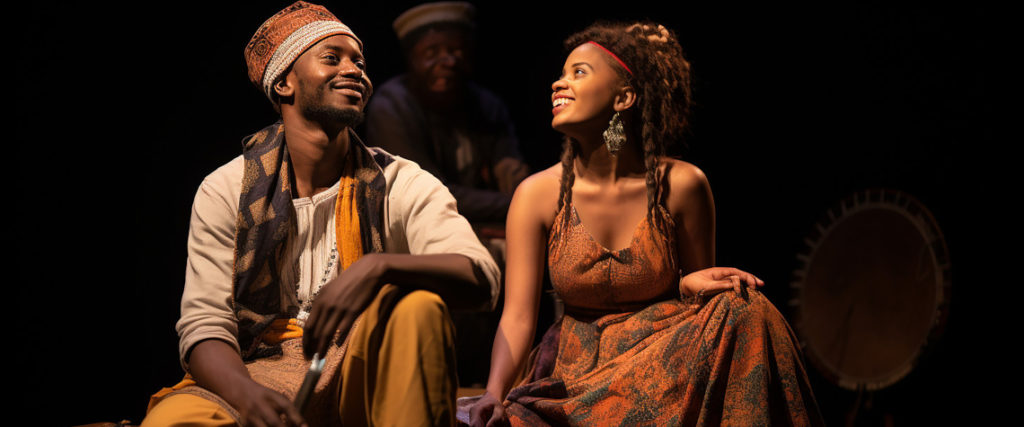
- Courses on Ethnodramatic Scriptwriting and Ethnotheatre: In today’s world, faith-based organizations need storytellers who can transform recordings of events and user stories into dramatic content that can inform, inspire and persuade others. These courses/modules equip students to transform and adapt ethnographic research data (e.g., interview transcripts, participant observation fieldnotes, journals, documents and statistics) into a dramatic script that can be performed on stage or screen. Through ethnodramatic scriptwriting, students learn how to create dramas based upon real life situations in global society. The process enables students to uniquely serve in faith-based organizations by transforming the experiences of their staff and constituents into scripts that can demonstrate the organization’s ethos and effectiveness.
- Programs in Ethnodramatology: Ethnodramatology is the academic discipline that formally studies world theatrical traditions. This program offers students a culturally-based perspective where indigenous forms of drama are understood and practiced. Students conduct analyses of diverse cultural theatrical styles and traditions and develop performance through global theatrical theory and history coursework. While biblical Christianity is rooted in eternally universal truths, the ways in which people understand and appropriate those truths in their daily lives are conditioned by their sociocultural context expressed in a specific time, place and people. Missional leaders understand that authentic Christian living grows out of the soil of indigenous forms – expressions that come from within that culture. Through the program in Ethnodramatology in Global Performance, students explore how to discover and understand a culture’s drama forms. In addition, students practice performing indigenous theatre and learn to appreciate cultural expressions of theatrical performance.
- Programs in Digital Media and Global Storytelling: These programs are designed for working professionals who desire to enhance their knowledge and skills in using media to tell compelling stories in intercultural and multicultural settings across the globe. The programs introduces the student to the international development of computer-mediated communication and the construction of meaning across cultures. From content creation and curation to visualization and digital deployment, students gain understanding and experience in using culturally-sensitive stories to communicate with and persuade audiences.
The scripture embodies the overarching story of God reaching out to redeem, reconcile, restore and renew creation. As we join in that mission of God, our personal story and the stories of the organizations we serve become a part of the metanarrative of God’s work in the world. Missional University’s courses and programs in storytelling – digital media, scriptwriting, ethnotheatre — are grounded in the Biblical story to enable graduates to harnass the power of story for the strategic benefit of faith-based organizations such as mission entities, nonprofits & NGOs, schools, churches and church groups as they communicate to, from and within a variety of cultural settings across the globe.
Conclusion: Embracing Storytelling as a Bridge to Cultural Understanding
In a world marked by cultural diversity, storytelling is a powerful tool for fostering empathy, connection, and reconciliation. By listening to and sharing stories, we are able to break down barriers, challenge stereotypes, and build bridges between cultures. Storytelling not only allows us to understand one another’s experiences but also enables us to see the beauty and value in every culture.
As individuals committed to God’s mission, we are called to engage in the gospel-centered message of redemption and reconciliation through storytelling, creating spaces where empathy, respect, and the gospel message can flourish. At Missional University, we are dedicated to equipping individuals with the skills and understanding they need to use storytelling as a tool for cultural engagement, promoting dialogue, understanding, and justice in all aspects of life while joining God at work in the world.
Sources
- Bruner, J. (1991) ‘The narrative construction of reality’, Critical Inquiry, 18(1), pp. 1-21. The University of Chicago.
- Ong, W.J. (1982) Orality and literacy: The technologizing of the word. London: Methuen.
- Geertz, C. (1973) The interpretation of cultures: Selected essays. New York: Basic Books.
- Ricoeur, P. (1984) Time and narrative, Volume 1. Chicago: University of Chicago Press.
- Smith, J.K.A. (2013) Imagining the kingdom: How worship works. Grand Rapids, MI: Baker Academic.
- Nussbaum, M.C. (1997) Cultivating humanity: A classical defense of reform in liberal education. Cambridge, MA: Harvard University Press.

The Digital Content Writing team crafts compelling and engaging content that connects with audiences across various digital platforms. We are a team of skilled writers, editors, and strategists passionate about storytelling and effective communication. From informative blog posts and thought-provoking articles to persuasive website copy and engaging social media content, together we produce high-quality, SEO-optimized material that is biblically-based, missionally-driven, contextually-informed, and interculturally-focused. We collaborate closely with other teams to understand project goals and target audiences, ensuring that our content aligns with the mission and values of the Missional voice. Our focus is on creating content that not only informs and entertains but also inspires action and builds meaningful connections.