God is present everywhere; hence God can act everywhere; and God’s mission is the outflow of that presence and action.
Introduction: Mission as Participation, Not Program
Too often mission is framed in the mind of the Christian as a program the church carries out—foreign trips, outreach events, church planting, evangelistic campaigns. Yet the deeper truth of mission is that God is a sending God (missio Dei) and that mission is first and foremost God’s work, into which we are invited to participate. To understand how we as individual disciples live on mission, we must reckon with two theological underpinnings: God’s omnipresence and divine action. In short, God is present everywhere; hence God can act everywhere; and God’s mission (missio Dei) is the outflow of that presence and action.
This essay will unfold in three movements: first, an exposition of how omnipresence grounds divine action; second, how divine action shapes our understanding of the missio Dei; and third, how the individual disciple is called to live from that integrated horizon.
Part I: Omnipresence as Ground for Divine Action
Defining Omnipresence and Divine Action
When we speak of omnipresence, we mean that God is fully present in all places, at all times—not by being diluted or diffused, but by being relationally present. Scripture repeatedly affirms this:
- “Where shall I go from your Spirit? Or where shall I flee from your presence? If I ascend to heaven, you are there! If I make my bed in Sheol, you are there!” (Psalm 139:7–8, ESV)
- “Can a man hide himself in secret places so that I cannot see him? declares the LORD. Do I not fill heaven and earth? declares the LORD.” (Jeremiah 23:24)
- In the New Testament, Paul states: “In Him we live and move and have our being” (Acts 17:28).
Omnipresence is not to be confused with pantheism (God = everything) or panentheism (God is in everything), but rather that God is present to all things, sustaining, knowing, loving, and capable of acting across all spaces. This presence is the ontological basis for divine action.
Divine action refers to the many ways God interacts with creation—upholding, governing, intervening, redeeming, communicating. It encompasses the realm of providence, miracles, revelation, salvation, transformation, and more. Some traditions distinguish between general divine action (the sustaining and ordering presence of God) and special divine action (God’s particular interventions in history, e.g. the incarnation, miracles, regeneration).
The relation between omnipresence and divine action is intimate: God can act in every place and moment because God is already present to every place and moment. The presence is not passive but dynamic. As Colossians 1:17 affirms, “He is before all things, and in him all things hold together.” That “holding together” is active—it is God’s sustaining presence in every atom, every life, every moment.
Omnipresence as Causal Possibility and Relational Proximity
From a metaphysical perspective, if God were confined to a location, there would be parts of creation outside God’s reach. But omnipresence means there is no spatial barrier to divine activity. God can act in your neighbor’s life, in the remote village, in the subatomic world, in your own heart — without needing to “go” there. The “how” of divine action is mediated through God’s presence.
From a relational perspective, God’s presence fosters true communion. Divine action is not distant manipulation but occurrence within relationship. It is not that God first travels, then acts; but that God acts precisely because God is present. In this sense, prayer, transformation, mission, revelation, and daily life are not external intrusions of God but expressions of God’s ever-present work. Classical theism (e.g., Augustine, Aquinas) conceives God as wholly present everywhere, sustaining all things via what is often called primary causality, with secondary causes (natural processes, human choices) being the proximate instruments. Divine action is not violating nature but operating through it. The invisible sustaining presence is the metaphysical ground of every event.
Biblical Witness: Presence That Acts
The Bible never treats God’s presence as inert. For example:
- Acts 17:27–28: “that they should seek God, in hope that they might feel their way toward him and find him. Yet he is actually not far from each one of us, for ‘In him we live and move and have our being.’” This text locates divine action in proximity: God is not a remote deity but intimately near to every life.
- John 5:17: Jesus says, “My Father is always working”. Christ assumes a constant divine activity, not an intermittent one.
- Hebrews 1:3: “He upholds the universe by the word of his power.” The sustaining act is undergirded by presence.
Thus the biblical tradition intertwines presence and action: where God is, God acts.
Implications for Prayer, Providence, and Miracles
Because God is present everywhere, prayer is not a request that summons God from elsewhere; rather, prayer is entering into the dynamic presence of God already at work. Divine action in response to prayer is a synergy of God’s sustaining presence and our relational engagement.
Providence (God guiding, ordering, caring for creation) becomes less mysterious: God already is with all things and therefore can uphold, direct, and govern without external interference.
Miracles and special interventions must be understood carefully: they are not violations of nature from without but deeper actions from within God’s sustaining presence—moments when God’s particular purpose irrupts the ordinary flow of secondary causes. Because God is everywhere, special action is possible without rupture of omnipresence.
Part II: Divine Action as Expression of the Missio Dei
The Missio Dei: Mission as God’s Movement
Missio Dei (the mission of God) is a theological lens for understanding mission not as the church’s program but as God’s own mission in the world. This was emphasized especially in the 20th century (notably at the 1952 Willingen conference) as a corrective to an ecclesiocentric (church-centered) mission paradigm. In this view, mission begins in the triune God, who sends the Son and the Spirit, and invites human participation.
Thus mission is not ultimately ours, but ours to join. Theological reflection must ask: how does God’s presence and action inform what God is doing in the world and how we enter that movement?
Omnipresence + Divine Action = Mission Everywhere
Because God is present everywhere and acts everywhere, mission is never only in distant lands or exotic places. God is already at work in every city, every culture, every heart—even where we may not see. Our job is not to bring God to a location, but to discern how God is already acting and join in. This observation protects us both from triumphalism (as though we must impose mission) and passivity (as though mission is only for specialists).
In practical terms, when you go to your workplace, your neighborhood, your online community—even in your daily conversations—God is already present and acting. Your mission is discovering where God is moving and aligning your life with that.
The Trinitarian Sending and Divine Action
The missio Dei is deeply Trinitarian:
- The Father sends the Son (John 3:16–17; 5:30)
- The Father and the Son send the Spirit (John 14:26; Acts 2)
- The Son sends the disciples (John 20:21; Matthew 28:18–20)
- The Spirit sends the people of Ginto mission (Acts 13:2; Galatians 4:6)
Each act of sending is an act of divine action. The Trinity is not aloof; every divine person participates in the sending, presence, and efficacy of mission.
Because God is omnipresent, the sent Son and the Spirit are not distant either—the incarnate Christ and the Spirit are present to creation without undermining transcendence.
Human Participation: Cooperation, Synergism, and Co-operant Grace or Monergistic Sovereign Fulfillment
While mission is God’s, human beings are not passive spectators—they participate. But if God is omnipresent and acting, how should we understand our role?
Many evangelical theologians affirm a synergistic or co-operant grace model: God initiates, sustains, and empowers mission; humans respond, cooperate, and act. Thinane discusses how the doctrine of synergism enriches missio Dei by showing that the faithful are not inert recipients but active participants in God’s mission.
In Wesleyan traditions, co-operant grace emphasizes that God’s grace enables human participation—not overriding our will but transforming and enabling. David Whitworth, in his thesis on Missio Dei and the Means of Grace, argues that the Christian participates in mission through the means of grace (prayer, Scripture, sacraments, acts of mercy), such that human participation is neither independent human effort nor passive divine monologue but communion with God’s mission.
In contrast to the Wesleyan emphasis on co-operant grace, the Calvinist tradition interprets divine grace as monergistic sovereignty—that is, the work of salvation and sanctification originates entirely from God’s sovereign initiative and not from human cooperation. Within Reformed theology, divine action is understood as effectual and irresistible, a manifestation of God’s omnipresent will working through creation to accomplish His redemptive purposes. Human response, therefore, is not a co-operative act that enables grace, but rather the fruit of grace already effectually applied by the Spirit. In this view, God’s omnipresence ensures not that grace is universally accessible, but that His sovereign presence is actively directing all things toward the fulfillment of His decrees. Calvinist missiology thus locates divine action within the Missio Dei as God’s unilateral movement to redeem His elect from every nation, tribe, and tongue—demonstrating that mission itself is the outward expression of God’s sovereign grace operating through the people of God as His chosen instruments.
Therefore from both perspectives, divine action and human response are not opposed but integrated: God acts, empowers, invites; we respond, obey, and join. Our mission is not to do what God cannot, but to join what God is already doing—faithfully, humbly, courageously.
Divine Action, Kingdom, and the Cosmic Scope of Mission
Mission is not limited to human salvation. In the biblical storyline, God’s redemptive action is for all creation. The missio Dei is cosmic: God is reconciling “all things, whether on earth or in heaven” (Colossians 1:20). In this way, divine action encompasses social justice, creation care, healing, restoration, reconciliation of human relationships, and transformation of structures.
The full presence of God (pleroma) in mission is emphasized by some theologians: the fullness of God’s being is involved in the mission (pleromatic missio Dei). In this sense, no dimension of life is outside God’s redemptive action.
Tensions and Balances
In integrating omnipresence, divine action, and missio Dei, several tensions arise:
- Sovereignty vs. human freedom: If God is everywhere and acting, how do we avoid determinism? The doctrine of secondary causality, relational metaphysics, or synergism helps preserve human agency.
- Hidden action: Sometimes God works in hidden ways we may not perceive. Mission requires humility and discernment—just because we don’t see evidence does not mean God is absent.
- Contextual particularity vs universal presence: We must honor local cultures, languages, stories, while holding to the universal presence and mission of God.
- Exclusivity vs inclusivity: Evangelical mission must retain clear gospel truth while embracing the complexity and depth of God’s cosmic mission.
Part III: The Individual on Mission—Living from Presence, Action, and Sending
With the theological scaffolding in place, how does the individual disciple live this out?
Reorienting Identity: You as Missional Agent
First, you must see yourself not merely as a consumer of religious experiences but as a missional agent—someone called to live in God’s sending. Your identity is rooted in the triune God’s mission, not primarily in what you do, but in whose you are. Because God is present everywhere, your life in your ordinary contexts is mission territory.
Discernment: Seeing Where God Is Already at Work
Mission begins with listening and observing. Since God is omnipresent and already acting, your task is discerning where God is already at work in your sphere: in conversations, relationships, workplaces, social media, neighborhoods. Ask: Where is reconciliation, justice, mercy needed? Where is brokenness crying for healing? Where is God’s Spirit enabling transformation? Then you step in.
Scripturally, this is akin to how the disciples at Pentecost or Philip in Acts 8 discerned where the Spirit was leading. We do not impose mission from outside, but enter where God is already moving.
Prayer and Spiritual Disciplines (Means of Grace)
Because divine action is always present, prayer and spiritual practices are not optional add-ons—they are how we align ourselves with God’s presence and action. The means of grace (Scripture, prayer, worship, service, communal life) train our eyes and hearts to perceive God’s movement and respond. Whitworth argues that these means are not separate from mission but are the modes of participation.
Obedience, Participation, and Faithful Risk
Once you discern, you act: a conversation, a word of peace, a visit, a service, a journey. Because God is omnipresent, your finite actions matter—they bear weight in God’s ongoing presence and purpose. This normalizes risk, openness, vulnerability, faith. You trust that your small steps matter in God’s vast presence.
Consistency, Patience, and Perseverance
Mission is rarely spectacular. Much of mission is slow, incremental, relational, patient work. But because God is omnipresent and active, your perseverance, your faithfulness, your character matter—the unseen virtues build up the kingdom. Over time, seed sown grows, sometimes unexpectedly.
Holistic Engagement: Word, Deed, Presence
Living on mission involves integrating proclamation, service, justice, relationship, and presence. Because God’s presence suffuses all of creation, your mission is not only evangelism, but healing broken neighborhoods, advocating justice, caring for creation, nurturing beauty, building bridges. The gospel you carry is lived, not only spoken. (Compare James 2:14–17; Luke 4:18–19; Micah 6:8.)
Boundary Awareness: Recognizing Limits and God’s Sovereignty
While God is omnipotent and omnipresent, we are finite. We must know our role—not to carry the whole burden, but to join where God invites. We act in humility, trusting that God’s presence, not our perfection, is the ground of fruitfulness.
Missio Hominum and Human Call
Some missiologists introduce missio hominum (the mission of human beings) as a framework of human participation in missio Dei. The idea is that our calling, gifts, vocations, relationships, and spheres are not incidental—they are part of human mission. In other words, your workplace, your art, your relationships, your family life—all become part of your mission.
In the evangelical tradition, this is coherent with seeing our everyday vocations as arenas for witness, love, justice, Kingdom presence.
Conclusion: An Invitation to Live in the Tension—and Power
God is truly present everywhere (omnipresence). Because of that presence, God fully acts everywhere (divine action). And God’s mission (missio Dei) is the unfolding of God’s presence and action through all creation toward reconciliation, restoration, and the manifestation of God’s reign. When we understand these together, our mission is no longer a compartmentalized activity but the very posture of life: recognizing God at work, aligning ourselves, and participating in what God is doing.
For the individual disciple, the implication is profound: your life matters. Your sphere, your relationships, your habits, your prayers, your outward gestures—they all bear weight in God’s mission. You don’t need to wait for a special calling or exotic trip; but you need eyes attuned, a heart ready, feet willing. And you can live confident that God’s presence accompanies you always.
May we each be people who discern, join, and abide in God’s mission—not as spectators, but as living participants.
Selected Bibliography / Further Reading
- Bosch, David J. Transforming Mission: Paradigm Shifts in Theology of Mission. Orbis Books, 2011.
- Wright, Christopher J. H. The Mission of God: Unlocking the Bible’s Grand Narrative. IVP Academic, 2006.
- Bevans, Stephen B., and Schroeder, Roger P. Constants in Context: A Theology of Mission for Today. Orbis Books, 2004.
- Flett, John G. The Witness of God: The Trinity, Missio Dei, Karl Barth, and the Nature of Christian Community. Eerdmans, 2010.
- Goheen, Michael W. A Light to the Nations: The Missional Church and the Biblical Story. Baker Academic, 2011.
- Tennent, Timothy C. Invitation to World Missions: A Trinitarian Missiology for the Twenty-First Century. Kregel Academic, 2010.
- Kärkkäinen, Veli-Matti. An Introduction to the Theology of Religions: Biblical, Historical, and Contemporary Perspectives. IVP Academic, 2003.
- Wright, N. T. Surprised by Hope: Rethinking Heaven, the Resurrection, and the Mission of the Church. HarperOne, 2008.
- Newbigin, Lesslie. The Open Secret: An Introduction to the Theology of Mission. Eerdmans, 1995.
- Vicedom, Georg F. The Mission of God: An Introduction to a Theology of Mission. Concordia Publishing, 1965.
- Louw, Daniël J. Wholeness in Hope Care: On Nurturing the Beauty of the Human Soul in Spiritual Healing. LIT Verlag, 2015.
- Thinane, J. S. “Missio Dei’s Pleromatic Disposition: The Infinite Missionary Being of God.” Pharos Journal of Theology 104 (2023).
- Thinane, J. S. “Missio Dei’s Complexity Prefaced in Synergism.” HTS Teologiese Studies (2023).
- Tinker, George E. Missionary Conquest: The Gospel and Native American Cultural Genocide. Fortress Press, 1993.
- Bevans, Stephen B. Models of Contextual Theology. Orbis Books, 2013.
- Bosch, David J., and Louw, Daniël J. Missional Theology and the Praxis of Care: A Reinterpretation of Presence. University of Pretoria Theological Papers, 2019.
- Whitworth, David Martin. Missio Dei and the Means of Grace: A Theology of Participation in Mission. PhD Thesis, University of Manchester, 2012. Research Explorer
- Thinane, J. S. “Missio Dei’s Pleromatic Disposition: The Infinite Missionary Being of God.” Pharos Journal of Theology 104, no. 1 (2023). Pharos Journal
- Thinane, J. S. “Missio Dei’s Complexity Prefaced in Synergism.” HTS Teologiese Studies (2023). HTS Teologiese Studies
- “Missio Dei: The Understanding and Misunderstanding of a Theological Concept in European Churches and Missiology.” ResearchGate, 2011. ResearchGate
- “The Concept of Divine Action in Christianity.” Wisdom Library. Wisdom Library
- “Missio Dei: SAET.” St Andrews Encyclopaedia of Theology. St Andrews Encyclopaedia of Theology
- “An Evangelical Understanding of The Missio Dei.” FBC Classroom (PDF). fbcclassroom.com
- “Missio Dei Towards the Kingdom of God: From Soteria to Basileia.” ResearchGate. ResearchGate
- Louw, D. J. “‘Missio Dei’ as Embodiment of ‘Passio Dei’.” SemanticsScholar (PDF). Semantic Scholar
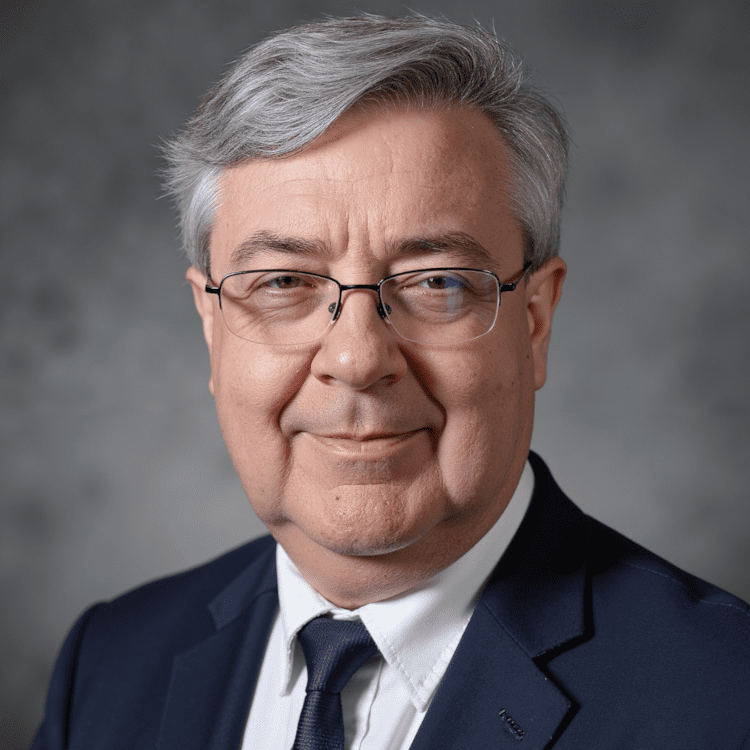
Dr. Curt Watke is a distinguished missiologist whose three-plus-decade-long career has significantly impacted Christian mission work in North America, particularly in under-reached and challenging regions. Holding a Ph.D. in Evangelism and Missions, Dr. Watke has focused on bridging cultural gaps and fostering sustainable Christian communities by developing innovative strategies that address contemporary challenges like globalization, urbanization, and religious pluralism. His emphasis on cultural sensitivity and contextualization in mission work is reflected in his collaborative writings, including notable works such as “Ministry Context Exploration: Understanding North American Cultures” and “Starting Reproducing Congregations.” Beyond his writing, Dr. Watke is a sought-after speaker and educator, lecturing at seminaries and conferences worldwide, and his teachings continue to inspire and equip new generations of missional leaders. His enduring legacy is marked by unwavering dedication to the mission of God and a profound influence on missional thought and practice. Dr. Watke serves as President and Professor of Evangelism & Missiology at Missional University.