
Embracing God’s Invitation to Personal Witness
In a world brimming with diverse perspectives, the call to share one’s faith takes on profound significance for every believer. As followers of Christ, we are invited into the grand narrative of God’s redemptive purposes, known as the missio Dei—the mission of God. This isn’t a program confined to institutions but a personal commissioning that echoes through Scripture, urging individuals to participate actively in God’s work among the nations. Drawing inspiration from courses like MIS1100EN: Exploring Worldview in Christian Witness at Missional University, this article delves into the art of sharing faith through dialogue. Here, worldview exploration becomes a bridge, not a barrier, allowing us to connect authentically with others while discerning where the Holy Spirit is already moving.
Imagine a conversation over coffee with a colleague from a different cultural background, where instead of debating doctrines, you uncover shared longings for meaning and belonging. This is the essence of conversational witness: a humble, question-driven exchange that honors the image of God in every person. Rooted in biblical mandates like the Great Commission in Matthew 28:19-20—”Go therefore and make disciples of all nations“—such approaches emphasize listening as much as speaking. They align with the apostle Paul’s adaptability in 1 Corinthians 9:22, where he becomes “all things to all people” to win some, modeling incarnational living that steps into others’ realities.
This exploration isn’t theoretical; it’s practical for everyday believers navigating workplaces, neighborhoods, and online communities. By understanding worldviews—the foundational assumptions shaping how people perceive reality—we equip ourselves to bridge cultural divides without confrontation. As we proceed, we’ll unpack the missio Dei, examine tools for worldview discernment, and apply them through biblical lenses. Whether you’re a parent guiding family discussions or a professional fostering workplace relationships, these insights empower you to join God’s mission personally. Let’s journey together, critiquing our own biases along the way, to foster genuine intercultural bonds that reflect Christ’s love.
The Missio Dei: Your Personal Call to God’s Redemptive Story
At the heart of Christian witness lies the missio Dei, a Latin phrase capturing God’s initiative in redeeming creation. Far from a human invention, this concept reveals a Triune God—Father, Son, and Holy Spirit—in eternal communion, sending the Son into the world (John 3:16) and empowering believers through the Spirit (Acts 1:8). As David Bosch articulates in his seminal work, the missio Dei shifts mission from mere church expansion to participation in God’s overarching plan, where every individual plays a vital role (Bosch, 1991, p. 389-392).
Scripture pulses with this theme from Genesis to Revelation. In the beginning, God creates humanity in His image (Genesis 1:26-27), commissioning us to steward the earth—a missional mandate disrupted by the fall but restored through Christ. The prophets envision nations streaming to Zion (Isaiah 2:2-3), and Jesus embodies this by healing the sick and welcoming the excluded, demonstrating that God’s mission addresses human brokenness holistically. For the individual believer, this means awakening to your place in the story: not as a bystander, but as an agent sent into daily encounters.
Consider Ruth, a Moabite outsider who gleans in Boaz’s fields, her faithfulness weaving her into Israel’s lineage and ultimately Christ’s genealogy (Ruth 4:13-22). Her story illustrates how personal obedience aligns with God’s broader purposes, crossing ethnic lines through relational fidelity. Today, this translates to your role in God’s mission—perhaps mentoring a young immigrant neighbor or discussing life’s big questions with a skeptical friend. The missio Dei invites us to see every interaction as holy ground, where the Spirit cultivates soil for the Gospel.
Yet, effective participation requires awareness of barriers. Structural inequalities and cultural distances can hinder connections, echoing the biblical cry against oppression in Exodus. As Amos 5:24 urges justice to roll like waters, we respond by advocating fairness in our spheres, creating space for dialogue. This personal ethic counters exclusion, fostering environments where overlooked voices are heard. By rooting our witness in the missio Dei, we avoid self-centered evangelism, instead reflecting God’s pursuing love that seeks the lost sheep (Luke 15:4-7).
In practice, this calls for intentionality. Start each day praying, “Lord, where are You at work today?” As in the course MIS1100EN – Exploring Worldviews in Christian Witness, discerning divine activity in others’ lives sharpens our sensitivity, turning ordinary moments into missional opportunities. Whether traveling abroad or engaging locally, embrace your sent-ness; God’s mission thrives through yielded individuals.
Defining Worldviews: The Hidden Lens Shaping Human Experience
A worldview functions as the invisible framework through which we interpret reality—an ever-evolving mosaic of beliefs, values, and assumptions that guide decisions, often unconsciously. In Christian terms, our worldview is reshaped by the Gospel, viewing the world as God’s good creation marred by sin yet destined for renewal (Romans 8:19-21). As Albert Wolters explains, it encompasses core categories like creation, fall, and redemption, distinguishing it from mere philosophy by its holistic grip on all of life (Wolters, 2005, p. 5-10).
Understanding another’s worldview is crucial for conversational witness because it reveals how the Gospel lands—or gets lost—in translation. For instance, someone from a honor-shame culture might prioritize communal reputation over individual guilt, resonating more with Jesus’ parables of restoration than legalistic atonement models. Paul Hiebert’s framework highlights this: worldviews operate on cognitive (what we know), affective (what we feel), and evaluative (what we value) levels, influencing everything from hospitality norms to views on suffering (Hiebert, 2008, p. 15-20).
Biblically, this echoes Proverbs 20:5—”The purposes of a person’s heart are deep waters, but one who has insight draws them out” (NIV). Jesus exemplified this with the Samaritan woman at the well (John 4:7-26), probing her relational history to unveil living water. Such exploration isn’t manipulation but empathetic entry, honoring the imago Dei. In diverse 21st-century settings, ignoring worldviews risks misunderstanding; a Western emphasis on personal choice might alienate those valuing collective harmony.
For the individual, cultivating worldview awareness begins with self-examination. What assumptions color your interactions? Tools like cultural distance scales—measuring variances in time orientation or power dynamics—help estimate gaps, promoting humility (Hofstede, 2010, though adapted biblically). As Ephesians 4:2-3 calls for bearing with one another in love, we bridge these distances, turning potential conflicts into conversations.
This foundation equips us for non-confrontational faith-sharing. Rather than assuming shared premises, we ask, “What gives your life deepest meaning?” Such questions, drawn from missional training, uncover entry points for the Gospel, aligning personal witness with God’s patient pursuit.
Tools for Worldview Exploration: Clusters, Beliefs, Faith Dimensions, and Value Orientations
To engage worldviews conversationally, practical tools illuminate differences without judgment. While specific resources like Missional International’s Perspectiva models offer structured insights—grouping cultural elements into clusters for analysis—we can draw on biblical and scholarly parallels to build similar frameworks. These aid individuals in mapping assumptions, fostering empathy in everyday witness.
Consider worldview clusters: groupings of related elements like social structures and spiritual practices that form cultural “families.” In anthropological terms, these resemble Hiebert’s bounded and fuzzy sets, where core beliefs cluster around themes like identity or authority (Hiebert, 2008, p. 45-50). Biblically, think of the seven churches in Revelation 2-3, each clustered by unique challenges yet addressed with tailored grace. For personal application, cluster your observations during conversations: note recurring themes in a friend’s stories about family or work, then reflect prayerfully on Gospel parallels.
Belief perspectives extend this, categorizing how people construe reality—supernatural, naturalistic, or hybrid. Moon and Simon identify four dominant lenses: guilt/justice (Western legalism), shame/honor (Asian relational focus), fear/power (animistic spiritual battles), and indifference/belonging (postmodern quests for purpose) (Moon & Simon, 2022, p. 23-35). Scripture confronts each: Romans 3:23-24 for guilt, Philemon for shame’s redemption, Ephesians 6:12 for power’s defeat, and John 10:10 for abundant belonging. As an individual witness, discern these by listening—does your neighbor fear unseen forces? Share Psalm 23’s shepherd imagery, inviting dialogue.
Faith dimensions add depth, parsing belief into cognitive (doctrinal knowledge), affective (emotional commitment), and evaluative (lifestyle integration) layers. Jacques Ellul notes how true faith permeates all, echoing James 2:17’s faith-without-works critique (Ellul, 1988, p. 112-118). In witness, probe these: “How does your faith shape tough decisions?” This reveals integration levels, allowing tailored encouragement, like affirming emotional trust amid doctrinal doubts.
Value orientations—preferences for individualism vs. collectivism, hierarchy vs. equality—further refine understanding. Edward T. Hall’s high/low-context model illustrates: high-context cultures (e.g., Middle Eastern) rely on implicit cues, demanding relational investment before verbal sharing (Hall, 1976, p. 91-100). Jesus navigated this in Mark 7:24-30 with the Syrophoenician woman, honoring her persistence amid cultural hierarchies. For you, this means prioritizing presence—shared meals or walks—over rushed pitches, building trust for deeper exchanges.
Integrating these tools forms a personal toolkit. Journal post-conversation: What cluster emerged? Which dimension resonated? Adjust your approach, praying for Spirit-led insight. Such exploration transforms witness from monologue to mutual discovery, embodying 1 Peter 3:15’s gentle readiness.
Biblical Foundations: Incarnational Living as the Model for Dialogue
Scripture provides the bedrock for conversational witness, portraying God as the ultimate communicator who enters human contexts. The incarnation—God in flesh (John 1:14)—sets the pattern: Jesus didn’t shout truths from afar but dwelt among us, full of grace and truth. This incarnational posture invites individuals to embody the Gospel relationally, mirroring God’s missional heart.
In Acts 17:22-31, Paul at the Areopagus exemplifies worldview exploration. Amid Athenian idols, he affirms their spiritual hunger (“I see that in every way you are very religious“), quoting poets to bridge to the unknown God. This conversational finesse, rooted in cultural literacy, bears fruit without alienation. For modern believers, it means studying local expressions—festivals, media—to find redemptive threads, as in Colossians 1:17’s cosmic Christ holding all together.
Prophets like Isaiah also model this, confronting idolatry while lamenting with the people (Isaiah 6:1-8). Personal application? When engaging someone wrestling with loss, share Lamentations 3:22-23’s steadfast love, inviting their story first. This counters inequality by valuing voices often unheard, fulfilling Micah 6:8’s justice, kindness, and humility.
Jesus’ parables further illuminate dialogue. The sower (Matthew 13:1-23) acknowledges varied soils—worldview “grounds”—requiring patient sowing. As individuals, we discern these soils through questions: “What hopes sustain you amid uncertainty?” Such probes, inspired by Nehemiah’s inquiry (Nehemiah 2:10), build alliances for God’s work.
Moreover, the epistles urge transformative critique. Romans 12:2 calls for mind renewal, prompting self-examination of biases that skew perceptions. Tools like cultural distance estimation—rating differences on scales of 1-10—facilitate this, ensuring our witness remains Christ-centered. In a fragmented world, this biblical mooring prevents syncretism, guarding the Gospel’s integrity while extending its reach.
Ultimately, conversational sharing flows from abiding in Christ (John 15:5), where fruit emerges naturally. As we live incarnationally—vulnerable, attentive—we join the missio Dei, turning personal encounters into eternal ripples.
Practical Strategies: Asking Insightful Questions to Bridge Divides
Armed with biblical insight, how do we translate theory into action? Conversational witness thrives on questions that unearth worldviews gently, fostering trust and revelation. Start with openness: “What’s one story that shaped your view of the world?” This echoes God’s interrogative style in Genesis 3:9—”Where are you?”—inviting vulnerability without accusation.
In intercultural settings, layer questions by worldview type. For shame/honor orientations, ask, “What relationships matter most to you?” linking to Christ’s family reconciliation (Ephesians 2:19). Fear/power contexts suit, “What gives you strength in scary times?” pointing to Psalm 46:1’s refuge. Indifference/belonging prompts, “What community do you long for?” evoking the body’s unity (1 Corinthians 12:12-27). Guilt/justice dialogues explore, “How do you find peace with past mistakes?” unveiling grace’s freedom (Romans 8:1).
Practical examples abound. Picture Sarah, a teacher in a diverse suburb, chatting with Ahmed, a Muslim coworker. Instead of doctrinal debates, she asks about Ramadan’s rhythms, discovering his value for discipline. This clusters into his belief perspective—structured devotion—allowing her to share fasting’s role in her Lenten journey, bridging via shared discipline (Matthew 6:16-18). Over weeks, agenda-free talks evolve into Gospel explorations, exemplifying relationship-building competencies.
Critiquing biases sharpens this. Regularly journal: “Did my assumptions hinder listening?” Tools like value orientation assessments reveal preferences—e.g., your directness clashing with indirect politeness—prompting adjustments. Estimate cultural distances: High (e.g., individualist to collectivist) demands slower pacing; low allows quicker depth.
In digital spaces, adapt: Social media comments become question hubs—”Fascinating perspective; what sparked that view?”—extending personal mission globally. Always pray beforehand, as in Acts 4:29 for bold clarity, ensuring Spirit-dependence.
These strategies empower solo witness, turning coffee breaks into missional moments. As 1 Thessalonians 2:8 models sharing life alongside the Gospel, questions become conduits for incarnational love.
Overcoming Challenges: Addressing Biases and Cultural Distances
No journey is barrier-free; conversational witness faces hurdles like entrenched biases and perceived cultural chasms. Personal cultural biases—unconscious preferences favoring our norms—can distort empathy, as Proverbs 18:13 warns against answering before hearing. To counter, practice daily prayerful reflection: Reflect on interactions, asking, “Where did I impose my lens?” This aligns with Philippians 2:3-4’s others-centered mindset.
Cultural distances compound this, varying by dimensions like uncertainty avoidance or masculinity/femininity (Hofstede, 2010, p. 55-60). High distances, say between egalitarian Scandinavians and hierarchical Latin Americans, risk miscommunication—your casual equality offending authority respect. Estimate via simple audits: Score differences, then strategize bridges, like affirming hierarchy before suggesting alternatives, mirroring Jesus’ servant leadership (Mark 10:45).
Structural unfairness amplifies challenges, where disadvantaged groups face exclusion, echoing Galatians 3:28’s unity in Christ. As witnesses, advocate subtly—amplifying overlooked stories in conversations—without centering ourselves. When rejection stings, recall Paul’s thorns (2 Corinthians 12:7-10), finding strength in weakness.
Success stories inspire. Take Maria, a retiree volunteering in a refugee center. Initially biased against “outsiders,” she used faith dimensions to unpack her fears, discovering affective commonalities in loss narratives. Questions like “How has displacement tested your hopes?” dissolved distances, leading to shared Bible studies on exile (Psalm 137).
Persevere through community: Share learnings in small groups, honing skills collectively. Tools like Moon and Simon’s intercultural cycle—from unconscious incompetence to mastery—guide growth (Moon & Simon, 2022, p. 67-72). In God’s economy, obstacles refine us for fruitful witness.
Conclusion: Transforming Your Witness Through Conversational Depth
As we conclude, envision your life as a vibrant thread in God’s missional weave, woven through conversational encounters that honor diverse worldviews. From the missio Dei‘s call to incarnational questions and bias critiques, you’ve gained tools for personal evangelism that foster lasting relationships. Rooted in Scripture, these practices—discerning clusters, beliefs, dimensions, and orientations—equip you to bridge gaps, participating joyfully in God’s redemptive advance.
Step forward boldly: Initiate that conversation, journal your insights, and trust the Spirit’s lead. As Revelation 7:9 promises a multitude from every nation, your faithful witness contributes to that vision. For deeper study, explore Missional University’s MIS1100EN course in Exploring Worldview in Christian Witness. Transform your approach; the world awaits Christ’s light through you.
Personal Application: Steps to Integrate Worldview Exploration Today
To embed this in daily rhythm, begin with prayerful preparation: Dedicate mornings to missional awareness, scanning your calendar for divine appointments. Then, practice active listening in one interaction daily—paraphrase responses to confirm understanding, reducing misunderstandings by 40% per communication studies (though biblically, it’s James 1:19’s swift hearing).
Track progress via a witness journal: Note questions asked, worldview insights gained, and follow-ups planned. Monthly, review cultural distances in key relationships, adjusting strategies—perhaps hosting a cultural exchange dinner to embody hospitality (Romans 12:13).
Mentor others: Share learnings with a friend, role-playing dialogues to build confidence. In professional settings, weave inquiries into team meetings, uncovering values that enhance collaboration while opening Gospel doors.
Measure fruit not by conversions but transformed bonds—deeper trust, mutual respect—echoing Jesus’ relational metrics. If stalled, revisit biblical models; Paul’s Areopagus adaptability renews resolve.
Extend globally: Use apps for language practice or virtual coffees with distant contacts, shrinking distances digitally. Remember, consistency trumps perfection; God’s grace sustains (2 Corinthians 12:9).
Through these steps, worldview exploration becomes habit, amplifying your role in the missio Dei. Lives changed, one conversation at a time.
The Lasting Impact: Eternal Perspectives on Conversational Living
Reflecting broader, conversational witness reshapes not just others but us, cultivating Christlikeness amid diversity. As Amos Yong posits, pneumatological approaches to religions highlight Spirit’s universal work, urging humble learning (Yong, 2019, p. 145-150). This reciprocal growth fulfills Deuteronomy 6:5-7’s wholehearted love, spilling into testimonies that inspire.
In eternity’s light, today’s seeds bloom; faithful sowing yields harvest (Galatians 6:9). Your personal mission, though small, echoes Abraham’s blessing to nations (Genesis 12:2-3).
Embrace this calling: Explore, converse, witness. God’s story unfolds through you.
Sources
- Bosch, D. J. (1991). Transforming mission: Paradigm shifts in theology of mission. Orbis Books. (Discusses missio Dei extensively in chapters 6-7, pp. 389-449.)
- Wolters, A. M. (2005). Creation regained: Biblical basics for a reformational worldview (2nd ed.). Eerdmans. (Defines worldview and its biblical categories in the introductory chapter, pp. 5-21.)
- Moon, W. J., & Simon, W. B. (2022). Effective intercultural evangelism: Good news in a diverse world. InterVarsity Press. (Explores four worldview perspectives and dialogical strategies in chapters 2-5, pp. 23-89.)
- Hiebert, P. G. (2008). Transforming worldviews: An anthropological understanding of how people change. Baker Academic. (Details cognitive, affective, and evaluative dimensions in chapter 1, pp. 15-37.)
- Ellul, J. (1988). The presence of the kingdom. University Press of Colorado. (Examines faith’s integration across dimensions in part 2, pp. 100-130.)
- Hall, E. T. (1976). Beyond culture. Anchor Books. (Describes high/low-context orientations in chapter 5, pp. 85-106.)
- Yong, A. (2019). Mission after Pentecost: The witness of the Spirit in a fragmented world. Baker Academic. (Integrates missio Dei with intercultural pneumatology in chapters 4-6, pp. 120-180.)
- Hofstede, G., Hofstede, G. J., & Minkov, M. (2010). Cultures and organizations: Software of the mind (3rd ed.). McGraw-Hill. (Outlines value dimensions and cultural distance in chapters 3-5, pp. 53-104.)
- Russo, Kurt W. (2000). Finding the Middle Ground: Insights and Applications of the Value Orientations Method. Intercultural Press. (Fourteen essays that apply the value orientations method to the fields of ethnicity, mental health care, education and conflict resolution.)
- Kluckhohn, Florence, Strodtbeck, Fred. (1961). Variations in Value Orientations. Row, Peterson and Company. (Detailed explanation of the Harvard anthropological study identifying basic human values.)
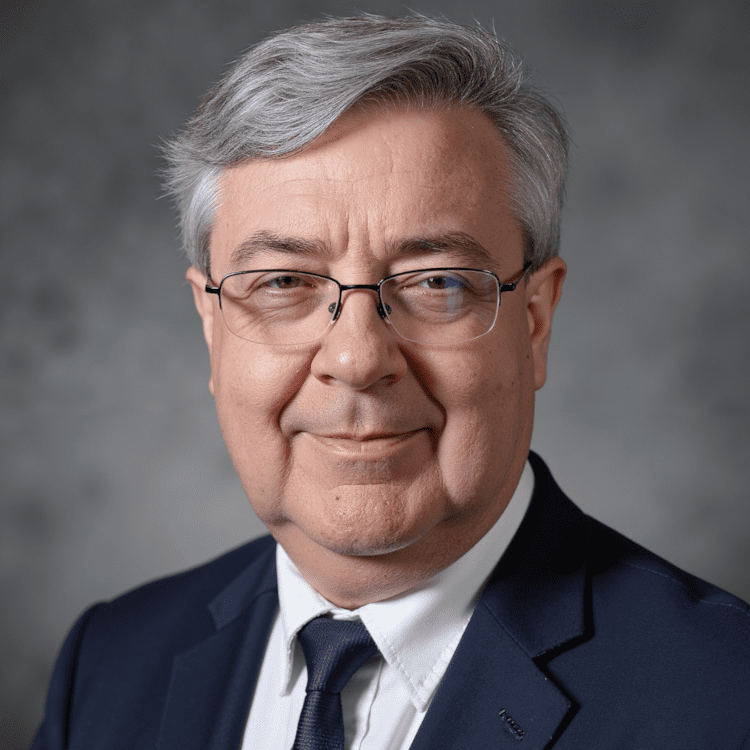
Dr. Curt Watke is a distinguished missiologist whose three-plus-decade-long career has significantly impacted Christian mission work in North America, particularly in under-reached and challenging regions. Holding a Ph.D. in Evangelism and Missions, Dr. Watke has focused on bridging cultural gaps and fostering sustainable Christian communities by developing innovative strategies that address contemporary challenges like globalization, urbanization, and religious pluralism. His emphasis on cultural sensitivity and contextualization in mission work is reflected in his collaborative writings, including notable works such as “Ministry Context Exploration: Understanding North American Cultures” and “Starting Reproducing Congregations.” Beyond his writing, Dr. Watke is a sought-after speaker and educator, lecturing at seminaries and conferences worldwide, and his teachings continue to inspire and equip new generations of missional leaders. His enduring legacy is marked by unwavering dedication to the mission of God and a profound influence on missional thought and practice. Dr. Watke serves as President and Professor of Evangelism & Missiology at Missional University.