The Christian life is not meant to be lived in our own strength. From the moment sin entered the world through Adam and Eve’s rebellion, humanity has existed in a state of spiritual bankruptcy, unable to bridge the chasm between our fallenness and God’s holiness. Yet God, in His magnificent redemptive purpose, does not leave us orphaned or powerless. The missio Dei—God’s mission to reconcile all things to Himself—includes not only the sending of the Son but also the outpouring of the Holy Spirit to empower every believer for participation in this divine work. This pneumatological dimension of mission stands at the very heart of what it means to be a follower of Christ in the world today.
The Foundation: Understanding Pneumatological Empowerment
Pneumatology, the theological study of the Holy Spirit, reveals one of Christianity’s most profound yet frequently overlooked truths: the same Spirit who hovered over the waters at creation, who empowered the prophets, who conceived Christ in Mary’s womb, and who raised Jesus from the dead now indwells every believer to equip them for God’s redemptive mission. The Holy Spirit is not merely an impersonal force or a mystical energy; He is the third person of the Trinity, fully God, who provides the dynamic power, divine guidance, convicting truth, and supernatural gifting necessary for authentic participation in the missio Dei.
This empowerment is not peripheral to the Christian experience but central to it. As Jesus Himself declared in John 16:7, “Nevertheless, I tell you the truth: it is to your advantage that I go away, for if I do not go away, the Helper will not come to you. But if I go, I will send him to you.” The departure of Christ in His physical form opened the way for the Spirit’s universal presence among His people. Where Christ’s incarnate ministry was geographically limited to first-century Palestine, the Spirit’s ministry knows no such boundaries—He fills, indwells, and empowers believers across every culture, language, and generation.
The theological significance of pneumatological empowerment cannot be overstated. It connects directly to multiple doctrinal categories that together form a comprehensive understanding of how God equips His people for mission. In systematic theology, pneumatology explains the Spirit’s personhood, His procession from both Father and Son, and His multifaceted work including illumination, conviction, regeneration, sanctification, and the distribution of spiritual gifts. Each of these functions serves the ultimate purpose of enabling believers to participate effectively in God’s ongoing redemptive work in the world.
The Pentecost Paradigm: God as Renewer
The dramatic events of Acts 2 provide the definitive biblical portrait of pneumatological empowerment for mission. On the day of Pentecost, approximately 120 disciples gathered in Jerusalem in obedience to Jesus’ command to wait for the promised Holy Spirit. What transpired that day fundamentally altered the trajectory of human history and established the pattern for how God’s mission would advance through Spirit-empowered witnesses.
Luke’s account describes the moment with vivid imagery: “And suddenly there came from heaven a sound like a mighty rushing wind, and it filled the entire house where they were sitting. And divided tongues as of fire appeared to them and rested on each one of them. And they were all filled with the Holy Spirit and began to speak in other tongues as the Spirit gave them utterance” (Acts 2:2-4). The symbolism is unmistakable. Wind represents the invisible yet powerful presence of God’s breath bringing life to what was dead, echoing the creation account where God breathed life into Adam. Fire symbolizes purification, divine presence, and the transforming power that would enable these ordinary Galileans to become extraordinary witnesses.
This Pentecost outpouring reveals God supremely as Renewer. The Spirit breathes transformative new life into individuals and communities, regenerating hearts that were dead in trespasses and sins, sanctifying lives that were enslaved to the flesh, and equipping witnesses for bold proclamation and kingdom embodiment. The renewal continues the missio Dei’s sending dynamic, applying Christ’s accomplished redemption to individual lives and propelling the church outward into mission. Where once the disciples cowered behind locked doors in fear, the Spirit’s renewal transformed them into courageous proclaimers willing to face persecution and death for the gospel.
The multilingual miracle at Pentecost carries profound missiological significance. The crowd gathered in Jerusalem for the Jewish feast represented Jews from every nation under heaven—Parthians, Medes, Elamites, residents of Mesopotamia, Judea and Cappadocia, Pontus and Asia, Phrygia and Pamphylia, Egypt and Libya, Rome, Crete and Arabia. Each heard the wonders of God declared in their native tongue by Galilean speakers who had never learned these languages. This reversal of Babel demonstrated that God’s redemptive mission transcends all ethnic, linguistic, and cultural barriers. The Spirit empowers witnesses to communicate the gospel effectively across every human division.
Peter’s sermon following this miracle unpacks its theological meaning. He quotes the prophet Joel: “And in the last days it shall be, God declares, that I will pour out my Spirit on all flesh, and your sons and your daughters shall prophesy, and your young men shall see visions, and your old men shall dream dreams; even on my male servants and female servants in those days I will pour out my Spirit, and they shall prophesy” (Acts 2:17-18). The democratization of Spirit empowerment signals a radical departure from the Old Testament pattern where the Spirit came upon select individuals—primarily prophets, priests, and kings—for temporary, specific tasks. Now every believer, regardless of age, gender, or social status, receives the Spirit’s empowerment for prophetic witness to Jesus Christ.
This universal empowerment fulfills Jesus’ promise in Acts 1:8: “But you will receive power when the Holy Spirit has come upon you, and you will be my witnesses in Jerusalem and in all Judea and Samaria, and to the end of the earth.” The Greek word for power here is dynamis, from which we derive “dynamite”—explosive, transformative energy. This is not mere human enthusiasm or natural ability; it is divine enabling that transforms ordinary people into effective instruments of God’s mission.
The Spirit’s Convicting Ministry: Preparing Hearts for the Gospel
Beyond empowering believers for witness, the Holy Spirit engages in preparatory work in the hearts of unbelievers. Jesus articulated this crucial dimension of the Spirit’s ministry in John 16:8-11: “And when he comes, he will convict the world concerning sin and righteousness and judgment: concerning sin, because they do not believe in me; concerning righteousness, because I go to the Father, and you will see me no longer; concerning judgment, because the ruler of this world is judged.”
This convicting work reveals God as Convictor, exposing the threefold reality that fallen humanity desperately needs to recognize. First, the Spirit convicts concerning sin—not merely behavioral sins, though those are included, but fundamentally the sin of unbelief in Jesus Christ. The root problem of humanity is not poor moral choices but rejection of God’s provision for redemption in His Son. Second, the Spirit convicts concerning righteousness—the perfect standard that Christ alone has met and that He offers to all who trust in Him. Third, the Spirit convicts concerning judgment—the certain reality that Satan’s kingdom has been defeated and that all who align with darkness face eternal condemnation.
This convicting ministry is essential for authentic conversion. No amount of persuasive argumentation, emotional appeal, or compelling presentation can save a single soul apart from the Spirit’s work of conviction. The missionary or witness does not convert anyone; that is the Spirit’s exclusive domain. Our role is to faithfully proclaim the gospel while trusting the Spirit to pierce hearts with truth and draw people to Christ. This understanding should simultaneously humble us (removing any prideful presumption that evangelistic success depends on our eloquence or technique) and encourage us (assuring us that God is actively working even when we cannot see immediate results).
The Spirit’s conviction also operates progressively in believers, sanctifying us toward greater Christlikeness. As Paul writes in 2 Corinthians 3:18, “And we all, with unveiled face, beholding the glory of the Lord, are being transformed into the same image from one degree of glory to another. For this comes from the Lord who is the Spirit.” The Spirit who initially convicts us unto salvation continues His work throughout our lives, exposing areas of remaining sin, revealing deeper dimensions of God’s righteousness, and progressively conforming us to Christ’s image. This ongoing sanctification is itself missional, as our transformed character provides credible witness to the gospel’s power.
The Fruit of the Spirit: Missional Character Formation
Galatians 5:22-25 presents another essential aspect of pneumatological empowerment: “But the fruit of the Spirit is love, joy, peace, patience, kindness, goodness, faithfulness, gentleness, self-control; against such things there is no law. And those who belong to Christ Jesus have crucified the flesh with its passions and desires. If we live by the Spirit, let us also keep in step with the Spirit.“
This passage reveals that authentic missional life flows not from fleshly striving but from divine cultivation of Christ-like character. The nine qualities Paul lists represent not human achievements but supernatural fruit produced as the Spirit works in yielded hearts. This distinction is critical: we cannot manufacture love, joy, or peace through willpower or behavioral modification. These qualities emerge organically as we abide in Christ and allow the Spirit to transform us from the inside out.
The missional significance of Spirit-produced fruit is immense. Cross-cultural missionaries quickly discover that proclamation divorced from incarnation lacks credibility. People watch how we live before they listen to what we say. If our words about God’s love contradict loveless behavior, our witness is nullified. If we preach peace while radiating anxiety and turmoil, our message rings hollow. If we proclaim self-control while enslaved to our appetites, we discredit the gospel. The fruit of the Spirit authenticates our witness, demonstrating that the transforming power we proclaim is genuinely operative in our own lives.
Moreover, this fruit enables perseverance in mission despite opposition and hardship. Love compels us to continue reaching out even when rejected. Joy sustains us when circumstances are difficult. Peace guards our hearts when facing hostility. Patience prevents us from abandoning the work prematurely. Kindness and goodness overcome evil with good. Faithfulness keeps us committed when results seem absent. Gentleness allows us to answer hostility without retaliation. Self-control prevents us from being sidetracked by temptation. Each fruit serves the mission, equipping us not merely to survive but to thrive as witnesses in a fallen world.
Paul emphasizes that those who belong to Christ have “crucified the flesh with its passions and desires.” This crucifixion is not a one-time event but an ongoing posture of death to self and surrender to the Spirit’s control. The flesh—our fallen, self-centered nature—constantly pulls us away from God’s mission toward self-indulgence, self-promotion, and self-preservation. Walking by the Spirit requires conscious, daily choice to reject the flesh’s demands and align ourselves with the Spirit’s leading. This is not passive resignation but active cooperation with God’s transforming work.
Spiritual Gifts: Divine Distribution for Mission
The Holy Spirit’s empowering work extends beyond character formation to the distribution of supernatural abilities for mission. First Corinthians 12 provides extensive teaching on spiritual gifts, emphasizing their diversity, their divine origin, and their essential purpose. Paul writes, “Now there are varieties of gifts, but the same Spirit; and there are varieties of service, but the same Lord; and there are varieties of activities, but it is the same God who empowers them all in everyone. To each is given the manifestation of the Spirit for the common good” (1 Corinthians 12:4-7).
Several critical truths emerge from this passage. First, spiritual gifts are divinely given, not humanly achieved. The Spirit sovereignly distributes gifts “as he wills” (1 Corinthians 12:11), meaning we cannot earn or manufacture them through effort. Second, every believer receives at least one spiritual gift. There are no second-class Christians lacking Spirit empowerment. The Spirit equips the entire body, not just elite leaders or particularly spiritual individuals. Third, gifts are given for the common good, not personal benefit or private experience. Their purpose is edification of the church and advancement of mission.
The range of gifts Paul mentions spans diverse categories: wisdom, knowledge, faith, healing, miracles, prophecy, discernment, tongues, and interpretation. Other passages add gifts like teaching, exhortation, serving, mercy, giving, leadership, evangelism, pastoring, and apostleship. This diversity reflects the multifaceted nature of God’s mission. Some gifts operate primarily in proclamation (teaching, prophecy, evangelism). Others function in leadership (apostleship, pastorship, administration). Still others facilitate service (helps, mercy, giving). Together they enable the body to fulfill its comprehensive missional calling.
Particularly significant for cross-cultural mission are the more dramatic gifts sometimes called “power gifts” or “signs and wonders.” Throughout Acts, we see the Spirit authenticating gospel proclamation through healings, exorcisms, miraculous deliverances, and other supernatural interventions. These power encounters demonstrate that the kingdom of God has broken into the present age and that Jesus’ victory over sin, Satan, and death is real and accessible. In pioneer mission contexts especially, where competing worldviews and spiritual powers hold sway, signs and wonders often accompany initial gospel advance, confirming the message’s truth and authority.
However, we must avoid two opposite errors. On one hand, we must not dismiss or minimize the Spirit’s supernatural gifting as merely first-century phenomena no longer relevant today. Scripture provides no textual support for cessationism (the belief that miraculous gifts ceased with the apostolic age), and missionary testimonies worldwide confirm continued Spirit empowerment through signs and wonders. On the other hand, we must not elevate signs and wonders above the gospel itself or pursue them for their own sake. Nor can we make them happen. Jesus warned against sign-seeking (Matthew 12:39), and Paul insisted that love, not gifts, defines spiritual maturity (1 Corinthians 13). Gifts serve mission; they do not constitute it.
The Tragic Alternative: Human Desolation and Spiritual Barrenness
Against the backdrop of the Spirit’s magnificent renewing and empowering work stands the tragic reality of human desolation—the profound spiritual barrenness and inner emptiness that characterizes those who refuse the Spirit’s invitation to life. This desolation represents not merely the absence of something good but an active state of existential wasteland, a soul-deep void that no created thing can fill.
The biblical narrative consistently portrays humanity’s fallen condition as death, darkness, and desolation apart from God’s intervention. Paul writes in Ephesians 2:1, “And you were dead in the trespasses and sins in which you once walked.” This is not metaphorical death but spiritual reality—separation from God who alone is the source of life. Just as a body without breath is a corpse, so the soul without the Spirit’s life-giving presence exists in a state of living death, functioning biologically but spiritually lifeless.
This desolation manifests in multiple ways. Blaise Pascal famously described “a God-shaped vacuum in the heart of every person which cannot be filled by any created thing, but only by God.” Every human pursuit apart from God—whether pursuit of wealth, pleasure, power, knowledge, or relationships—ultimately disappoints because it cannot satisfy the soul’s deepest hunger. Augustine’s prayer captures this reality: “You have made us for yourself, O Lord, and our heart is restless until it rests in you.” The restlessness, the constant searching, the perpetual dissatisfaction that characterizes modern life all testify to the desolation within.
What makes this desolation particularly tragic is that it need not persist. The Spirit stands ready to breathe life into dead souls, to fill empty hearts, to transform barren wastelands into flourishing gardens. Yet multitudes refuse the invitation. Why? Scripture identifies several patterns of rejection.
- First is active suppression. Paul writes in Romans 1:18 that people “suppress the truth” about God. Rather than acknowledging their need and turning to the life-giving Spirit, they actively resist conviction, hardening their hearts against divine overtures. Each time the Spirit convicts and is rebuffed, hearts grow incrementally harder, consciences increasingly seared.
- Second is fear of surrender. The Spirit’s work requires relinquishing control, admitting need, acknowledging sinfulness—all profoundly threatening to human pride. Many prefer the illusion of self-sufficiency to the humility of dependence on God. They fear what surrendering to the Spirit might require, what transformations might be demanded, what comfortable sins might need forsaking.
- Third is preference for rational control over divine dynamism. The Spirit’s work often confounds human categories, operating in ways that transcend mere logic or empirical verification. Some resist this, insisting that authentic spirituality must conform to naturalistic explanations and remain within boundaries of human comprehension.
- Fourth is the perpetuation of division. The Spirit creates unity across human boundaries—ethnic, economic, social—forming one new humanity in Christ. Yet sin’s default is tribalism, the insistence on maintaining divisions that elevate “us” above “them.” Rejecting the Spirit’s unifying work allows maintenance of prejudices and superiorities that the gospel demolishes.
- Fifth is self-reliance. Pride leads people to depend on human strategies, dismissing the necessity of Spirit empowerment as weakness or superstition. They attempt mission in their own strength, trusting techniques, programs, and organizational models rather than divine enabling.
The ultimate expression of rejection is blasphemy against the Holy Spirit—the unforgivable sin Jesus identifies in Matthew 12:31-32. This involves attributing the Spirit’s work to Satan, a complete inversion of spiritual reality that marks irreversible resistance to God. While believers worried about committing this sin almost certainly have not (genuine concern indicates heart responsiveness), the warning soberly reminds us that persistent rejection of the Spirit leads to a hardening from which no recovery is possible.
Living as Spirit-Empowered Witnesses
Understanding pneumatological empowerment should radically transform how we approach our participation in God’s mission. We are not left to stumble forward in our own wisdom and strength but are equipped by the third person of the Trinity Himself. Several practical implications flow from this truth.
- First, we must cultivate ongoing dependence on the Spirit through prayer. Just as the early disciples devoted themselves to prayer in the upper room before Pentecost, we must continually seek fresh fillings of the Spirit. Paul commands in Ephesians 5:18, “Do not get drunk with wine, for that is debauchery, but be filled with the Spirit.” The Greek grammar indicates continuous action—”keep being filled.” This is not a one-time experience but an ongoing lifestyle of surrender and receptivity.
- Second, we must walk in step with the Spirit, allowing Him to guide our missional engagement. The Spirit directed Philip to the Ethiopian eunuch (Acts 8:29), instructed Peter regarding Cornelius (Acts 10:19), and prevented Paul from entering certain regions while redirecting him to Macedonia (Acts 16:6-10). The same Spirit desires to guide our missional decisions—where to serve, whom to engage, what to say, when to act. This requires developing sensitivity to His promptings through Scripture meditation, prayer, and attentiveness to His voice.
- Third, we must actively resist the flesh’s contrary pulls. Galatians 5:17 declares, “For the desires of the flesh are against the Spirit, and the desires of the Spirit are against the flesh, for these are opposed to each other.” This opposition is real and ongoing. We will face constant temptation to abandon dependence on the Spirit and revert to fleshly self-reliance. Victory requires conscious choice to reckon ourselves dead to sin and alive to God (Romans 6:11), refusing the flesh’s demands and yielding instead to the Spirit’s direction.
- Fourth, we must identify and employ our spiritual gifts for mission. Many believers remain unclear about their spiritual gifts, hindering their effectiveness. Through prayer, experimentation, and consultation with mature believers, we can discover how the Spirit has equipped us. Once identified, gifts must be actively employed, not hoarded. They exist for the body’s edification and mission’s advancement.
- Fifth, we must maintain proper balance between Word and Spirit. Some traditions emphasize the Spirit’s work while minimizing Scripture’s authority; others emphasize biblical truth while practically ignoring the Spirit’s person and power. Both errors cripple mission. The Spirit who inspired Scripture continues to illuminate it, while biblical truth provides the framework and boundaries for authentic Spirit activity. Word and Spirit must work in harmony.
- Sixth, we must pursue holiness as essential preparation for mission. The Spirit is described as the “Holy” Spirit, indicating His fundamental nature. He does not empower unholy vessels or bless disobedient servants. While none achieves perfect holiness in this life, we must earnestly cooperate with the Spirit’s sanctifying work, confessing sin quickly, forsaking known disobedience, and pursuing righteousness. Personal holiness undergirds missional effectiveness.
The Eschatological Dimension: Mission in the Last Days
Peter’s Pentecost sermon emphasized the eschatological significance of the Spirit’s outpouring. Quoting Joel, he declared this occurred “in the last days” (Acts 2:17). From Pentecost onward, we live in the final epoch of redemptive history, the time between Christ’s first and second advents when the Spirit empowers global witness.
This eschatological context provides urgent motivation for mission. The Spirit’s presence is itself the firstfruits and guarantee of coming redemption (Romans 8:23, Ephesians 1:14). His work in us previews the full transformation awaiting us at Christ’s return. Yet vast multitudes remain in desolation, unreached with the gospel. The Spirit empowers us to participate in God’s mission precisely because time is short and the harvest is great.
Moreover, the Spirit creates eschatological community—the church as foretaste of the coming kingdom. When the Spirit unites believers across ethnic, economic, and social divides, we demonstrate the reconciliation that will characterize the new creation. Our Spirit-enabled unity serves as a visible sign pointing to God’s ultimate purpose of gathering all things in Christ (Ephesians 1:10).
Conclusion: Embracing Our Spirit-Empowered Calling
The choice before every person is stark: embrace the Spirit’s renewing life or remain in desolation’s barrenness. For believers, the question is not whether we have received the Spirit—all who are in Christ have—but whether we are walking in step with Him, yielding to His transforming work, and allowing Him to empower us for mission.
God’s mission does not depend on human ingenuity, organizational excellence, or impressive programs. It advances through ordinary people filled with extraordinary power—the power of the Holy Spirit. The same Spirit who descended at Pentecost, who empowered Peter’s sermon resulting in three thousand conversions, who propelled the early church into cross-cultural mission despite persecution, who has sustained believers through two millennia of gospel advance now dwells in us.
We need not manufacture passion for mission or conjure enthusiasm for witness. The Spirit produces these as fruit of His presence. We need not devise clever strategies or master complex methodologies. The Spirit provides wisdom and direction. We need not fear inadequacy or insufficiency. The Spirit is our adequacy (2 Corinthians 3:5).
What we must do is surrender—daily, completely, joyfully. We must confess our bankruptcy apart from Him and our absolute dependence on Him. We must open ourselves continually to His filling, His fruit, His gifts, His guidance. We must refuse the flesh’s contrary demands and align ourselves with His purposes. We must take our place in the unfolding drama of redemption, neither shrinking back in fear nor rushing forward in presumption, but moving in obedient step with the Spirit’s leading.
The alternative—human desolation—remains a tragic reality for countless millions. They need not remain in that wasteland. The Spirit stands ready to breathe life, to transform emptiness into fullness, to replace barrenness with fruitfulness. But they will never encounter the Spirit’s renewing power unless Spirit-empowered witnesses carry the gospel to them.
This is our calling, our privilege, our destiny. Not in our own strength, wisdom, or ability, but in the power of the Holy Spirit, we participate in the missio Dei. The God who sends is the God who empowers. The mission is His, the power is His, and the glory will be His alone. We are simply vessels—earthen, fragile, flawed—yet filled with the treasure of the Spirit’s presence and power.
May we embrace this pneumatological empowerment fully, walking daily in dependence on the Spirit, bearing His fruit, employing His gifts, following His guidance, and thereby fulfilling our role in God’s great redemptive mission until the day Christ returns and every knee bows before Him.
Sources
- Boaheng, Isaac. “The Pneumatological Phenomenon in Acts 2:1–6: Implications for Christian Mission in Africa.” Conspectus: The Journal of the South African Theological Seminary 34, no. 2 (2022): 1-24.
- Bruce, F. F. “The Holy Spirit in the Acts of the Apostles.” Interpretation 27, no. 2 (April 1973): 166-183.
- Enns, Paul. The Moody Handbook of Theology. Chicago: Moody Press, 1989.
- Erickson, Millard J. Christian Theology. Grand Rapids: Baker, 1985.
- Fee, Gordon D. God’s Empowering Presence: The Holy Spirit in the Letters of Paul. Peabody, MA: Hendrickson, 1994.
- Goff, James R., Jr. “Initial Tongues in the Theology of Charles Fox Parham.” In Initial Evidence: Historical and Biblical Perspectives on the Pentecostal Doctrine of Spirit Baptism, edited by Gary B. McGee, 57-71. Peabody: Hendrickson, 1991.
- Griffiths, John D. The Spirit as a Gift in Acts: The Spirit’s Empowerment of the Early Jesus Community. Journal of Pentecostal Theology Supplement Series, vol. 47. Leiden: Brill, 2022.
- Jacobsen, Douglas. Thinking in the Spirit: Theologies of the Early Pentecostal Movement. Bloomington: Indiana University Press, 2003.
- Keener, Craig S. “Prayer for the Spirit in Luke 11:1-13.” In Reading St. Luke’s Text and Theology: Pentecostal Voices. Essays in Honor of Professor Roger Stronstad, edited by Riku P. Tuppurainen, 114-134. Eugene: Pickwick, 2019.
- Keener, Craig S. “Why Does Luke Use Tongues as a Sign of the Spirit’s Empowerment?” Journal of Pentecostal Theology 15, no. 2 (2007): 177-184.
- Keener, Craig S. “God’s Power for Mission in Acts 1–2.” Journal for the Study of the New Testament 46, no. 5 (2024): 573-594.
- McGee, Gary B. “Shortcut to Language Preparation? Radical Evangelicals, Missions, and the Gift of Tongues.” International Bulletin of Missionary Research 25 (July 2001): 118-123.
- Packer, J. I. “Holy Spirit.” In New Dictionary of Theology, edited by Sinclair B. Ferguson, David F. Wright, and J. I. Packer, 316-319. Downers Grove, IL: InterVarsity, 1988.
- Packer, J. I. Keep in Step with the Spirit. Grand Rapids: Fleming H. Revell, 1984.
- Pascal, Blaise. Pensées. Translated by W. F. Trotter. New York: E. P. Dutton, 1958.
- Robeck, Cecil M., Jr. The Azusa Street Mission & Revival: The Birth of the Global Pentecostal Movement. Nashville: Thomas Nelson, 2006.
- Stronstad, Roger. The Prophethood of All Believers: A Study in Luke’s Charismatic Theology. Journal of Pentecostal Theology Supplement Series 16. Sheffield: Sheffield Academic Press, 1999.
- Turner, Max. Power from on High: The Spirit in Israel’s Restoration and Witness in Luke-Acts. Journal of Pentecostal Theology Supplement Series 9. Sheffield: Sheffield Academic Press, 2000.
- Wacker, Grant. Heaven Below: Early Pentecostals and American Culture. Cambridge: Harvard University Press, 2001.
- Wesley, Luke. The Church in China: Persecuted, Pentecostal, and Powerful. AJPS 2. Baguio: AJPS Books, 2004.
- Yong, Amos. The Spirit Poured Out on All Flesh: Pentecostalism and the Possibility of Global Theology. Grand Rapids: Baker Academic, 2005
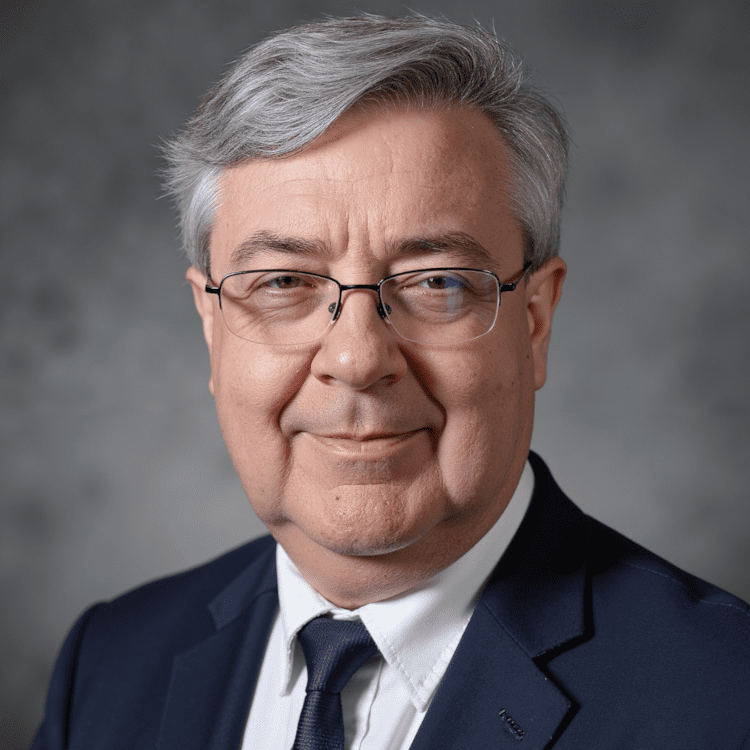
Dr. Curt Watke is a distinguished missiologist whose three-plus-decade-long career has significantly impacted Christian mission work in North America, particularly in under-reached and challenging regions. Holding a Ph.D. in Evangelism and Missions, Dr. Watke has focused on bridging cultural gaps and fostering sustainable Christian communities by developing innovative strategies that address contemporary challenges like globalization, urbanization, and religious pluralism. His emphasis on cultural sensitivity and contextualization in mission work is reflected in his collaborative writings, including notable works such as “Ministry Context Exploration: Understanding North American Cultures” and “Starting Reproducing Congregations.” Beyond his writing, Dr. Watke is a sought-after speaker and educator, lecturing at seminaries and conferences worldwide, and his teachings continue to inspire and equip new generations of missional leaders. His enduring legacy is marked by unwavering dedication to the mission of God and a profound influence on missional thought and practice. Dr. Watke serves as President and Professor of Evangelism & Missiology at Missional University.