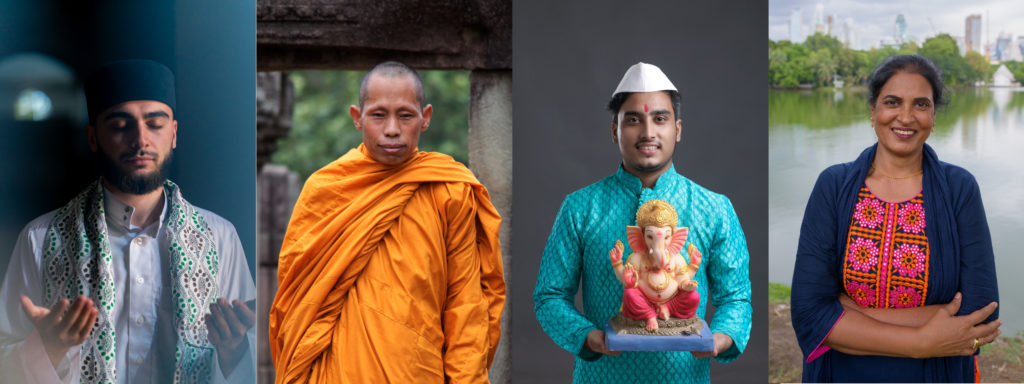
Redemptive Care as Missional Participation
When pluralism, global migration, and complex spiritual landscapes shape societies, traditional charity often falls short of addressing the deeper human needs embedded in broken souls and fractured communities. While acts of generosity and compassion have undeniable value, the mission of God (Missio Dei) calls believers to something deeper and more transformative—Redemptive Care.
Redemptive Care is not merely about meeting physical needs or offering temporary relief. It is a holistic engagement that recognizes the totality of the human condition—spiritual, emotional, relational, and cultural—and responds by participating in God’s redemptive plan to restore all creation. For Christians, this means engaging not just in acts of kindness but in intentional, Spirit-led care that integrates verbal gospel proclamation with practical love, especially in religiously diverse contexts.
This article explores how Redemptive Care transcends charity and catalyzes transformation among spiritually and religiously diverse adherents and practitioners. Drawing on biblical foundations, theological insights, and global examples—including South Africa—this piece challenges believers to see themselves as active participants in the Missio Dei through redemptive engagement that is holistic, respectful, and uncompromising in its gospel witness.
The Theological Framework: Missio Dei and the Call to Holistic Mission
The Missio Dei, or Mission of God, affirms that mission is not the invention of the church but the very nature of God Himself. From Genesis to Revelation, Scripture reveals a God who relentlessly pursues the redemption of humanity and the restoration of creation.
In John 20:21, Jesus tells His disciples, “As the Father has sent Me, I also send you.” This mandate invites believers into God’s ongoing redemptive mission, one that includes proclaiming the gospel (Romans 10:14-15), binding up the brokenhearted (Isaiah 61:1), and seeking justice for the oppressed (Micah 6:8). Redemptive Care, then, is not an optional add-on to the Christian life—it is a missional imperative that reflects God’s own heart.
This mission is integral, not compartmentalized. As Dr. Curt Watke notes, Redemptive Care must address the spiritual anatomy of the soul: the corrupted image of God (Genesis 1:27), the wounded will (Romans 3:10-12), disordered desires (James 4:1-3), and darkened understanding (Ephesians 4:18). True transformation can only occur when care engages both external needs and internal brokenness through the lens of the gospel.
Beyond Relief: From Charity to Redemptive Engagement
While traditional charity focuses on temporary alleviation, Redemptive Care seeks long-term restoration. Charity may feed the hungry or clothe the poor, but it often stops short of asking: What is the spiritual condition of the person receiving this aid? How does this act of service fit into God’s redemptive narrative?
Redemptive Care, by contrast, understands that suffering is both physical and spiritual, and that gospel hope must accompany compassion. This echoes Jesus’ model in John 5, where He heals a lame man and later confronts him with the deeper call to repentance: “See, you are well! Sin no more, that nothing worse may happen to you” (John 5:14).
This approach affirms the inviolable dignity of each person as an image-bearer of God while also recognizing their profound need for spiritual rebirth. In religiously diverse contexts, this means engaging people across faith lines not as projects to convert, but as beloved individuals whom God is already pursuing.
Redemptive Care Among Muslims: Loving with Gospel Intentionality
The global Muslim population is projected to grow significantly, with over 1.9 billion adherents worldwide. Engaging Muslims in Redemptive Care means acknowledging both common ground—a belief in one God, reverence for Jesus as a prophet, communal life—and significant theological differences.
In many Islamic societies, acts of charity (zakat) are highly valued. This offers an open door for Christians to demonstrate selfless love and build trust through service. However, Redemptive Care moves beyond shared values to gently introduce the transformative power of Jesus as Savior, not merely a prophet.
For example, in South Africa’s Western Cape, Christian professionals have partnered with Muslim-majority communities to offer medical care, trauma counseling, and refugee support while maintaining a clear gospel witness. These relationships have created opportunities for spiritual conversations grounded in trust, respect, and genuine love.
As Paul models in Acts 17, Redemptive Care involves discerning cultural and religious narratives, affirming what aligns with truth, and lovingly proclaiming the gospel as the fulfilment of humanity’s deepest longings.
Among Buddhists: Caring Through Presence and Redemptive Narrative
In Buddhist contexts—particularly in Southeast Asia and parts of South Africa’s urban migrant communities—Redemptive Care takes a different shape. Since Buddhism often centres on suffering, detachment, and karma, care must engage both physical hardship and the underlying worldview that views suffering as necessary for enlightenment.
Christian caregivers can introduce a redemptive narrative that does not ignore suffering but offers a God who suffers with and for humanity (Isaiah 53:3-5). The gospel radically redefines suffering, not as something to be detached from, but as something that God enters into to heal and restore.
In Thailand, for instance, Christian volunteers have built relationships with Buddhist monks and families through education programs, anti-trafficking work, and orphan care. As trust grows, they share stories of Jesus, whose compassion heals both body and soul. Redemptive Care in these settings requires deep listening, cultural fluency, and persistent gentleness, always anchored in the truth of Christ.
Among Hindus: Holistic Care and the Power of Relational Witness
With its pantheon of deities, sacred rituals, and caste implications, Hinduism presents unique challenges—and opportunities—for Redemptive Care. In many Indian and diasporic communities, spiritual needs are deeply intertwined with social identity and familial obligation.
Effective Redemptive Care begins with relational witness. In Hindu culture, relationships are paramount. Offering tutoring, job assistance, or healthcare becomes a platform for incarnational ministry, where the Christian becomes a visible sign of God’s love.
In Durban, South Africa, Christians working among Hindu populations have opened community centres offering after-school programs and women’s support groups. These platforms allow for sustained interaction where the gospel is lived and proclaimed, often through story, testimony, and one-on-one discipleship.
Proclaiming Christ as the one true God is a bold claim in this context. Yet, when done relationally and redemptively, such a proclamation can speak directly to the spiritual confusion and longing for liberation that many Hindus feel.
Among Baha’i Adherents: Truth in a Relativistic Context
The Baha’i Faith, while relatively small globally, is growing in influence and appeal, especially among those disillusioned by religious division. Its emphasis on the unity of all religions and ethical living creates a veneer of spiritual inclusivity that can seem attractive.
Redemptive Care among Baha’is involves clarifying truth with compassion. While appreciating their desire for unity and peace, Christians must gently challenge the relativism that underpins Baha’i theology by presenting Jesus as the exclusive and sufficient revelation of God (John 14:6).
Redemptive engagement may include intellectual dialogue, but it must be paired with embodied love. In Cape Town, South African believers have engaged Baha’i adherents through art workshops, environmental care projects, and philosophical meetups—spaces that allow for rich discussion and gospel testimony.
Redemptive Care in South Africa: A Case Study of Reconciliation
South Africa’s multi-faith and multi-cultural landscape provides a fertile ground for Redemptive Care. The legacy of apartheid, economic inequality, and religious diversity makes it clear that neither charity nor policy alone can bring healing.
In Soweto, a grassroots initiative led by Christian social workers combines trauma healing, conflict mediation, and gospel-centered mentoring for youth from Muslim, Zulu traditionalist, and secular backgrounds. By addressing wounds from violence, fatherlessness, and spiritual confusion, this initiative exemplifies how Redemptive Care meets holistic needs with gospel-centered hope.
Likewise, in the Eastern Cape, Christian farmers and Xhosa community leaders have partnered on food security projects that blend sustainable agriculture, spiritual formation, and discipleship. These efforts not only alleviate hunger but also foster reconciliation and introduce the peace of Christ into fractured communal spaces.
Gospel Proclamation as the Heartbeat of Redemptive Care
At the centre of all Redemptive Care lies the proclamation of the gospel, not as an afterthought, but as the essential catalyst for transformation. Without gospel proclamation, care risks becoming humanitarianism. Without care, a proclamation risks becoming hollow.
As Paul writes in Romans 1:16, the gospel is “the power of God for salvation to everyone who believes.” True Redemptive Care seeks not just to serve, but to lead people toward the Redeemer who alone can heal the soul, reconcile the heart, and restore the cosmos.
This does not mean aggressive evangelism or cultural insensitivity. Rather, it means living and speaking the truth in love (Ephesians 4:15), always ready to give a reason for the hope within (1 Peter 3:15) and trusting that the Holy Spirit uses both word and deed to draw hearts to Christ.
A Call to Action: The Individual’s Role in the Missio Dei
Redemptive Care is not reserved for missionaries, pastors, or theologians. It is a call to every follower of Jesus—students, doctors, mothers, artists, engineers—to live missionally in their everyday spaces.
You may befriend a Muslim neighbor, support a Hindu coworker through loss, or tutor a Buddhist refugee child. These are not coincidences. They are divine appointments. And in each encounter, the Spirit invites you to listen, serve, speak, and embody Christ in a way that reflects the heart of God.
Redemptive Care is your participation in the Missio Dei. It is your “yes” to a God who is restoring all things—one act of love, one gospel conversation, and one soul at a time.
Conclusion: Beyond Charity, Toward Redemption
In a world fragmented by religious differences, spiritual confusion, and human suffering, Redemptive Care shines as a radical expression of the gospel. It moves beyond charity to offer hope, healing, and eternal transformation—not just through what we give, but through Whom we proclaim.
The mission of God is unfolding, and He invites you to join in—not merely to do good, but to bear witness to the One who is making all things new (Revelation 21:5). In every act of Redemptive Care, you reflect His love, declare His truth, and participate in His unstoppable mission to redeem the nations.
Sources
- Watke, Curt. “Redemptive Care and the Missio Dei: An Intercultural Framework.” Missional University.
- Wright, Christopher J. H. The Mission of God: Unlocking the Bible’s Grand Narrative. InterVarsity Press, 2006.
- Tennent, Timothy C. Invitation to World Missions: A Trinitarian Missiology for the Twenty-First Century. Kregel Academic, 2010.
- Johnstone, Patrick, and Jason Mandryk. Operation World: The Definitive Prayer Guide to Every Nation. IVP, 2010.
- Greenman, Jeffrey P., and Gene L. Green. Global Theology in Evangelical Perspective. IVP Academic, 2012.
- Moreau, A. Scott. Contextualization in World Missions: Mapping and Assessing Evangelical Models. Kregel Academic, 2012.
- Lausanne Movement. “Holistic Mission.” Lausanne.org.
- The Bible (ESV). Crossway Publishers.

Liezl Erlank is a dynamic professional with extensive experience and a strong educational background, particularly in the realm of missional work. Her career began with a foundation in communication and theology, earning degrees in Communication Science, Film and Visual Studies, and Practical Theology. Liezl’s missional journey is highlighted by her roles in youth ministry, leadership at a Christian radio network and a Christian magazine in South Africa, where she managed operations, team leadership, online marketing, and content development. Her dedication to youth ministry, education, and Christian media underscores her passion for serving communities and spreading the Christian message. Fluent in English and Afrikaans, Liezl’s proactive mindset, leadership skills, and commitment to continuous learning have enabled her to make a significant impact in her various roles, reflecting her dedication to excellence and meaningful contribution to mission work.