A Call to Equitable Care and Advocacy Mission in a Vulnerable World
In a world deeply fractured by inequality, violence, and mistrust, the call to justice cannot be ignored by those who follow Christ. Around the globe—and especially in nations like South Africa—communities are grappling with the aftershocks of systemic injustice, gang violence, human trafficking, and fractured law enforcement systems. For Christians, these are not just societal issues—they are deeply spiritual realities that intersect with God’s heart for justice and restoration.
Through a Gospel lens, community policing becomes more than a law enforcement strategy. It transforms into a sacred expression of equitable care and the advocacy mission—where believers, as active participants in the mission of God (missio Dei), engage in redemptive action to restore peace, protect the vulnerable, and ensure that justice flows like a river (Amos 5:24) while manifesting a gospel-centered message through word and deed.
Equitable Care: God’s Justice in Action
Equitable care is not an optional activity for believers—it is a foundational expression of God’s justice and righteousness. The Hebrew word mishpat, often translated as “justice,” carries a rich meaning that includes fairness, restoration, and advocacy for the marginalized. Scripture repeatedly points us to God’s concern for the vulnerable: the widow, the orphan, the foreigner, and the poor (Zechariah 7:9–10; Deuteronomy 10:18–19).
The call to equitable care demands that we move beyond charity—where we might give to those in need—and toward justice, where we dismantle the systems that cause inequality in the first place. Isaiah 1:17 exhorts us to “learn to do good; seek justice, correct oppression; bring justice to the fatherless, plead the widow’s cause.”
In the context of community safety, equitable care is not just about protecting individuals—it is about restoring communities. It recognizes that poverty, violence, and injustice are interconnected symptoms of a deeper spiritual brokenness that only Christ can heal through the transformative power of the Holy Spirit.
Advocacy Mission: Faith in Action
The Justice Advocacy Mission is not an add-on to our faith—it is its natural outworking. As Proverbs 31:8–9 commands, “Speak up for those who cannot speak for themselves, for the rights of all who are destitute.” Advocacy rooted in the Gospel aligns our lives with God’s justice and compels us to act.
This mission is:
• Transformative: It changes systems and structures by the power of God through the active witness of believers.
• Restorative: It aims to bring healing and reconciliation – between humanity and God, and between people and creation.
• Radically Inclusive: It extends welcome to the outsider and oppressed.
In Acts 2:44–45, the early Church modeled a radical form of advocacy by ensuring no one was in need. They did not wait for the state or institutional solutions—they became the solution, living as agents of God’s kingdom.
Community Policing in South Africa: A Case Study in Gospel Witness
South Africa, with its unique post-apartheid struggles, is a compelling case study in community policing initiatives that embody equitable care. Decades of mistrust between law enforcement and communities—particularly in low-income, marginalized neighborhoods—have left many residents vulnerable to gang violence, drug trafficking, domestic abuse, and human exploitation.
But change is taking root. Christian-led initiatives across the country are reframing what it means to “police” a community—not through force and fear, but through presence, relationship, and peacebuilding.
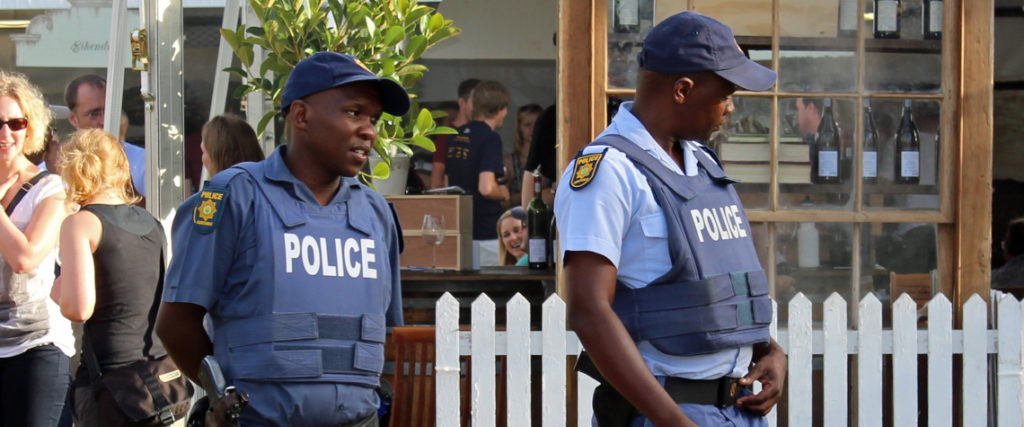
One powerful example is the collaboration between local churches and neighborhood watch groups in Cape Town’s gang-ridden areas. These partnerships go beyond mere crime prevention—they involve mentorship programs for youth, support groups for survivors of abuse, and prayer walks that reclaim spaces of violence for peace. Believers involved in these efforts are not simply volunteers; they are peacemakers (Matthew 5:9), bringing shalom to broken streets.
These grassroots movements are not driven by governmental agendas but by a Gospel vision for wholeness, righteousness, and justice. The presence of believers in these roles bridges the trust gap between citizens and the justice system, demonstrating that community policing can be both redemptive and effective when it flows from a heart of advocacy.
Equitable Care at the Individual Level
Community transformation begins with individual conviction. Christians must understand that our call to justice is not confined to Sunday services or charitable giving. It is a holistic lifestyle that reflects Christ in every sphere of influence—including our careers, daily interactions, and public engagement.
The question is not if we are called to justice, but how we will respond to that call in practical, Spirit-led ways.
Faith, Career, and Mission: Advocating Justice Through Vocation
Believers are uniquely positioned to bring about change by merging their faith, career, and calling in fields that directly impact justice and righteousness. Here’s how individuals in various justice-related professions can participate in the Missio Dei through advocacy and equitable care:
1. Criminal Justice and Law Enforcement
Christian professionals in this field play a frontline role in protecting communities and restoring trust. Through ethical conduct, community engagement, and restorative justice practices, they can reflect Christ’s compassion while upholding accountability.
Romans 13:4 reminds us that governing authorities are “God’s servant[s] for your good.” When believers serve in these positions, they have the opportunity to embody God’s justice with humility and integrity, rejecting corruption and favoritism (Leviticus 19:15).
2. Criminal Investigation and Forensics
Investigators and forensic professionals help uncover the truth and provide closure for victims. In a world where justice is often delayed or denied, their pursuit of truth is a divine act of restoration.
Micah 6:8 calls us to “do justice.” This includes using one’s skills and training to ensure that crimes are properly investigated, evidence is handled ethically, and victims are not forgotten.
3. International Law and Justice
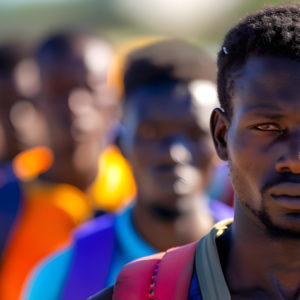
Global justice issues—such as immigration, forced migration, and human trafficking—demand a cross-border response. Advocates in international law or refugee support can be voices for the voiceless, reminding the world of God’s love for the foreigner (Exodus 22:21).
This includes advocating for humane immigration policies, supporting legal pathways for asylum seekers, and working to dismantle the trafficking networks that prey on the vulnerable.
4. Environmental Law and Justice
The fight for environmental justice is a spiritual act. The earth is the Lord’s (Psalm 24:1), and Christians are called to steward creation with care. Environmental degradation disproportionately affects the poor—those least responsible for it.
Lawyers and advocates in this space help secure the right to clean water, sanitation, and health—critical components of global equitable care. Their work testifies to the value God places on both people and creation.
5. Legal and Paralegal Services
Legal practitioners carry the privilege and responsibility of ensuring that justice is accessible to everyone—not just the wealthy. Proverbs 29:7 states, “The righteous care about justice for the poor, but the wicked have no such concern.”
Christian lawyers and paralegals can provide pro bono services, help marginalized communities navigate the legal system, and combat bias. They are modern-day advocates reflecting the heart of God.
Addressing Global Vulnerabilities with Gospel-Centered Advocacy
The world is groaning under the weight of broken systems—economic disparity, environmental degradation, violence, and widespread violations of human rights. These global vulnerabilities do not just hinder flourishing—they obstruct the spread of the Gospel.
When people are silenced, displaced, or oppressed, they struggle to hear the Good News. Therefore, advocacy is missional. Fighting for human dignity opens the door for the hope of Christ to be received.
Consider These Global Realities:
• Human Rights: From lack of education to suppression of religious expression, millions suffer in silence. Christians must speak out, challenge injustice, and provide resources and support to those in need.
• Environmental Justice: Access to clean water, sanitation, and health are Gospel issues. They directly affect people’s ability to thrive, worship, and live with dignity.
• Community Policing: Justice must be local before it is global. Community-based initiatives help reduce trafficking, domestic violence, and gang crime—creating safe environments where the Gospel can flourish.
• Public Security: Christians can advocate for ethical law enforcement, protection of the wrongfully detained, and justice for victims of terror and coercion.
Every action taken to restore fairness and security aligns with God’s mission to reconcile the world to Himself (2 Corinthians 5:18–19).
A Lifestyle of Advocacy: Practical Next Steps
You don’t have to be in law enforcement or a courtroom to participate in God’s justice mission. Every believer can be a voice for equity and a vessel of hope. Here are practical ways to start:
• Educate Yourself: Read widely about local and global justice issues. Understand how systems work—and how they break down.
• Pray Intentionally: Intercede for specific communities, victims of injustice, and those working in justice-related fields.
• Use Your Platform: Whether you’re a teacher, artist, entrepreneur, or student—advocate for justice in your sphere of influence.
• Partner Locally: Join or support community policing or justice initiatives. Offer your skills in administration, mentoring, legal advice, or prayer.
• Support Vulnerable Communities: Donate, volunteer, or raise awareness for refugee support, anti-trafficking efforts, and environmental justice organizations.
Conclusion: Gospel Witness in Community Policing
Community policing through a Gospel lens is more than a policy—it is a prophetic act and message of justice. It reflects God’s desire for every neighborhood to experience shalom, where safety, fairness, and dignity are the norm, not the exception. The message of the Gospel — of redemption, reconciliation, restoration, and renewal available through Jesus Christ — embodied and spoken, transforms people and neighborhoods.
The Missio Dei is not confined to church buildings. It takes root in police stations, courtrooms, street corners, refugee camps, and community halls. When Christians embrace their call to equitable care and advocacy, they become instruments of God’s peace in a world desperate for healing.
Now is the time for believers to rise—not with fear or pride, but with humility and courage—to be ambassadors of God’s justice in every neighborhood, every nation, and every profession.
Sources
• “Biblical Justice: A Closer Look” – Tim Keller, Generous Justice, Penguin, 2010.
• Office of the United Nations High Commissioner for Human Rights – www.ohchr.org
• “What is Community Policing?” – Center for Evidence-Based Crime Policy, George Mason University.
• South African Christian Community Policing Forums – Cape Town Safety Initiative Reports.
• International Justice Mission – www.ijm.org
• Nicholas Wolterstorff (2007), Justice: Rights and Wrongs, Princeton University Press.
• Environmental Justice and the Church – Tearfund & A Rocha International.
• The Bible (ESV)

Liezl Erlank is a dynamic professional with extensive experience and a strong educational background, particularly in the realm of missional work. Her career began with a foundation in communication and theology, earning degrees in Communication Science, Film and Visual Studies, and Practical Theology. Liezl’s missional journey is highlighted by her roles in youth ministry, leadership at a Christian radio network and a Christian magazine in South Africa, where she managed operations, team leadership, online marketing, and content development. Her dedication to youth ministry, education, and Christian media underscores her passion for serving communities and spreading the Christian message. Fluent in English and Afrikaans, Liezl’s proactive mindset, leadership skills, and commitment to continuous learning have enabled her to make a significant impact in her various roles, reflecting her dedication to excellence and meaningful contribution to mission work.