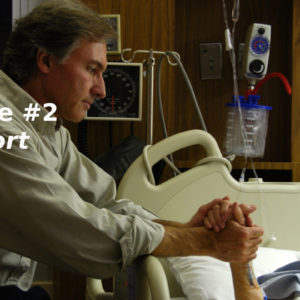
Online Education and Community Care
In an increasingly interconnected world, the call to serve and transform communities has never been more urgent. As believers seeking to participate in God’s mission of reconciliation and restoration, we must embrace innovative approaches to equipping ourselves for effective community care. Online education has emerged as a powerful tool in this journey, breaking down geographical barriers and creating unprecedented opportunities for global impact.
The Heart of Community Care in God’s Mission
At its core, community care reflects God’s heart for His creation. Throughout Scripture, we see God’s concern for the vulnerable and His call for His people to be agents of transformation. From the Old Testament’s emphasis on caring for the widow, orphan, and stranger (Deuteronomy 10:18-19) to Jesus’s ministry of healing and restoration, the biblical narrative consistently highlights the importance of holistic community care.
Community care goes beyond mere charitable acts. It encompasses a comprehensive approach to addressing social vulnerabilities, fostering development, and promoting physical, mental, and spiritual well-being. This approach aligns perfectly with God’s mission of reconciliation – restoring broken relationships between people, creation, and ultimately, with God Himself.
The Communitarian Mission: A Biblical Perspective
The concept of communitarian mission emerges from this biblical foundation. It represents a gospel-centered approach to community transformation, where believers actively participate in God’s mission by empowering their communities to thrive. This mission isn’t limited to church activities but extends into every sphere of life, including our professional careers and educational pursuits.
As Paul writes in Ephesians 2:10, “For we are God’s handiwork, created in Christ Jesus to do good works, which God prepared in advance for us to do.” This verse underscores our role as active participants in God’s mission, using our gifts and training to serve others and transform communities.
Digital Learning: Breaking Barriers in Mission Education
Online education has revolutionized mission training, making learning more accessible, flexible, and impactful. Digital platforms remove geographical barriers, allowing individuals worldwide to engage in community care education. This global reach fosters diverse learning communities where students share cross-cultural insights and solutions. Digital learning breaks traditional barriers in mission education, equipping individuals with the skills and connections needed for transformative community care.
Flexible learning pathways accommodate various schedules, enabling students to balance education with work and family. They can access materials anytime, study at their own pace, and apply lessons immediately in their local communities, creating a continuous learning loop of theory and practice.
Technology enhances engagement through virtual discussions, interactive case studies, real-time collaboration, and multimedia resources. Online learning is also cost-effective, eliminating travel expenses and reducing material costs while providing access to global expertise.
A personalized learning experience tailors education to individual needs, offering adaptive technologies, self-paced modules, and diverse content formats. Digital platforms also build global networks, connecting students with practitioners worldwide for collaboration, mentorship, and shared resources.
Innovative assessments focus on real-world impact through project-based evaluations, peer feedback, and portfolio development. Additionally, technology-enhanced research grants access to global databases, community assessment tools, and real-time best practices.
Missional University’s Innovative Approach: The Mosaic Curriculum
Missional University’s unique mosaic curriculum design represents a revolutionary approach to preparing community care leaders. Unlike traditional linear education models that build knowledge sequentially like a pyramid, the mosaic design creates rich interconnected learning experiences that better reflect real-world complexity.
Breaking the Traditional Mold
Traditional higher education often creates artificial silos of knowledge, compartmentalizing learning in ways that poorly reflect the interconnected nature of community challenges. The mosaic curriculum breaks free from these constraints through a dynamic integration of multiple disciplines. This innovative approach encourages non-linear thinking and problem-solving, placing strong emphasis on competency development rather than mere content mastery. By weaving theological perspectives throughout all courses and creating natural connections between theory and practice, the curriculum prepares students for the complex realities of community transformation work.
Theological Integration
The curriculum’s theological foundation transcends the simple addition of Bible courses to a secular program. Instead, it develops comprehensive “theology of” perspectives for each field of study, examining how biblical principles inform professional practice in meaningful ways. Students explore God’s mission through various disciplinary lenses, connecting their individual calling to broader kingdom purposes. This integration ensures that spiritual formation becomes inseparable from professional development, creating practitioners who understand their work as an extension of God’s redemptive mission in the world.
Competency-Based Learning
The mosaic approach prioritizes practical skill development alongside theoretical knowledge through a robust competency-based framework. Rather than focusing solely on content coverage, the curriculum emphasizes measurable outcomes demonstrated through real-world applications. Students develop both technical and soft skills essential for effective community care, following learning paths based on competencies in community care. This approach creates clear, tangible connections between academic learning and professional practice, ensuring graduates are truly prepared for the challenges they will face.
Equipping Individual Believers for God’s Mission
For individual believers seeking to merge their faith, career, and mission in community care, online education at Missional University offers a uniquely integrated pathway. The program begins by establishing a robust biblical foundation for community care, helping students understand how their professional work connects to God’s broader mission of reconciliation and restoration. This theological grounding ensures that graduates approach community transformation not merely as a career choice, but as a sacred calling aligned with God’s purposes.
Through carefully designed coursework and practical experiences, students develop essential skills in community transformation that bridge theoretical understanding with real-world application. The program emphasizes hands-on learning opportunities that allow students to practice and refine their skills while still receiving guidance and support. This practical focus ensures that graduates can effectively implement community care strategies in their specific contexts.
One of the most valuable aspects of the programs is the inherently global nature. Students learn from diverse perspectives as they interact with peers and faculty from around the world. These cross-cultural exchanges enrich the learning experience, challenging assumptions and broadening understanding of how community care principles can be adapted for different cultural contexts. The resulting global network becomes an invaluable resource for ongoing collaboration and mutual support.
The program’s design enables students to apply their learning directly within their local communities even as they study. This immediate application creates a powerful feedback loop between theory and practice, allowing students to see the real-world impact of their studies while developing contextually appropriate approaches to community transformation. The ability to remain embedded in their local communities while studying ensures that learning remains grounded in practical reality.
Perhaps most significantly, the program facilitates the development of a global network of like-minded change agents. Students connect with others who share their passion for community transformation, creating relationships that extend far beyond the duration of their studies. These connections provide ongoing support, collaboration opportunities, and shared learning experiences that continue to enrich their work long after graduation. The resulting community of practice becomes a powerful resource for addressing complex challenges and implementing innovative solutions in community care.
The Future of Community Care Education
As we look to the future, online education will continue to play a crucial role in preparing individuals for effective community care. The combination of digital learning platforms with innovative curriculum design creates unprecedented opportunities for global impact and transformation.
The nature of continuous learning in community care has been fundamentally transformed by digital platforms. As community challenges evolve and new solutions emerge, practitioners can easily access updated knowledge and skills through online education. This ongoing professional development ensures that community care leaders remain effective and relevant in their work.
Digital learning environments have revolutionized collaborative problem-solving in community care. Students and practitioners from different continents can now work together in real-time, sharing insights and developing solutions that draw from diverse cultural perspectives and experiences. These global collaborations often lead to innovative approaches that can be adapted for various local contexts.
Perhaps most importantly, online education allows students to remain deeply rooted in their communities while gaining global perspectives and proven methodologies. This combination of local presence and global learning creates practitioners who can think globally while acting locally, developing contextually appropriate solutions informed by worldwide best practices.
Conclusion
The intersection of online education and community care represents a powerful opportunity for believers to participate effectively in God’s mission of reconciliation and restoration. Through innovative approaches like Missional University’s mosaic curriculum, individuals can develop the knowledge, skills, and biblical foundation needed to transform their communities.
As we embrace these educational opportunities, we position ourselves to better serve as agents of change in our communities, fulfilling our call to be salt and light in the world (Matthew 5:13-16). The future of community care leadership lies in our ability to harness digital learning platforms while maintaining a firm foundation in biblical truth and mission.
Sources
- McCumber, Chuck. “What kind of thinker am I? Linear vs. Non-linear Thinking.”
- “Community Care and Social Transformation.” Missional University Loft Website.
- Teh, Geok Bee and Siew Chee Choy, editors, Empowering 21st Century Learners Through Holistic and Enterprising Learning. Springer Nature Singapore, 2017.
- Lowe, Stephen and Mary Lowe, Ecologies of Faith in a Digital Age : Spiritual Growth through Online Education, Downers Grove : InterVarsity Press, 2018.
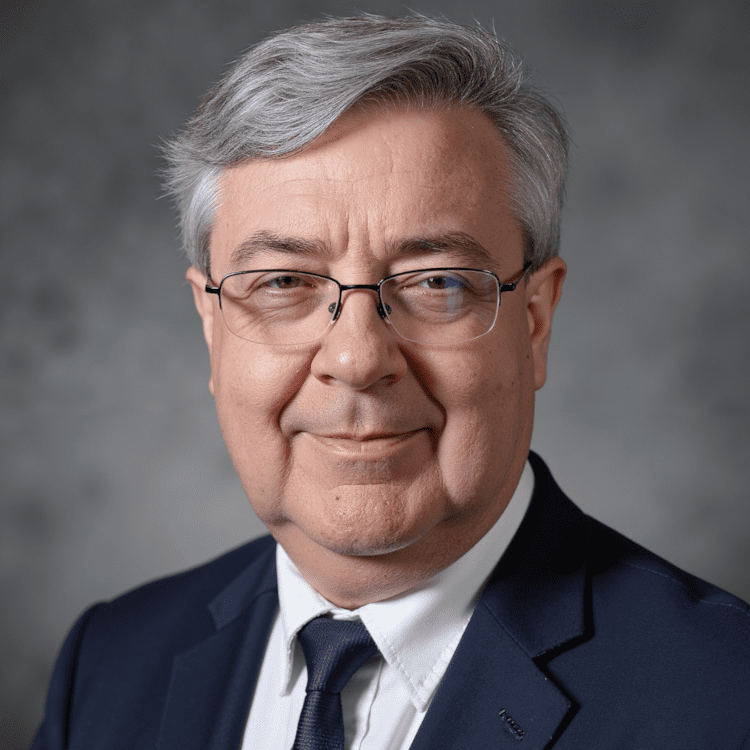
Dr. Curt Watke is a distinguished missiologist whose three-plus-decade-long career has significantly impacted Christian mission work in North America, particularly in under-reached and challenging regions. Holding a Ph.D. in Evangelism and Missions, Dr. Watke has focused on bridging cultural gaps and fostering sustainable Christian communities by developing innovative strategies that address contemporary challenges like globalization, urbanization, and religious pluralism. His emphasis on cultural sensitivity and contextualization in mission work is reflected in his collaborative writings, including notable works such as “Ministry Context Exploration: Understanding North American Cultures” and “Starting Reproducing Congregations.” Beyond his writing, Dr. Watke is a sought-after speaker and educator, lecturing at seminaries and conferences worldwide, and his teachings continue to inspire and equip new generations of missional leaders. His enduring legacy is marked by unwavering dedication to the mission of God and a profound influence on missional thought and practice. Dr. Watke serves as President and Professor of Evangelism & Missiology at Missional University.