Engaging Present-Focused Temporality in Conversational Witness
Something significant has shifted in the spiritual atmosphere of the contemporary West. Walk into any bookstore and the self-help shelves are dense with titles about mindfulness, presence, and the art of living now. Meditation apps have been downloaded hundreds of millions of times. Therapists recommend breathing exercises designed to anchor their clients in the present moment. Buddhist-influenced teachers have become household names. And beneath all of it runs a single, quietly urgent question: Is the present moment all that truly matters?
This is not a trivial question, and dismissing it as mere cultural fashion misses something important. The people who ask it are often genuinely weary — weary of carrying the weight of past regret, weary of anxiety about an uncertain future, weary of a life that races past without ever seeming to arrive. They are reaching for something real. And the disciple who carries the gospel into everyday conversations needs to understand exactly what they are reaching for — because the answer Christianity offers is at once more affirming of their longing and more disruptive to their framework than they might expect.
This post explores the Temporality Value Orientation — specifically the posture that the present moment is the primary, and often the only, arena of meaningful human existence. It is written for those who witness to the gospel not from pulpits but in the ordinary, unhurried flow of conversation — at coffee shop tables, on neighborhood walks, across office lunch tables, in the fragile space of genuine human encounter. Understanding this orientation is not abstract theory. It is practical preparation for one of the defining spiritual conversations of our time.
What Is the Temporality Value Orientation?
The Temporality Value Orientation is one of twelve foundational value orientations within the Kluckhohn-Strodtbeck framework, developed extensively within Missional University’s Perspectiva Worldview Research Series.1 This orientation asks how human beings relate to time itself: Do they organize their lives around the weight of the past — tradition, ancestry, accumulated wisdom? Do they defer present satisfaction for the sake of future planning, investment, and goal-achievement? Or do they locate ultimate significance in the present moment — in immediate experience, present awareness, and the aliveness of now?
Those who hold a present-focused temporal orientation are not careless or shallow. They are often people who have found that past-orientation produces guilt and nostalgia without liberation, and that future-orientation produces anxiety without arrival. The present, by contrast, seems honest — it is the only moment that actually exists, the only place where life is genuinely happening. From this conviction flows a wide range of cultural expressions: the secular mindfulness movement, contemplative and therapeutic presence practices, Buddhist-influenced spirituality, the philosophy of radical immanence, and the pervasive cultural instruction to “live in the moment.”
The insight is real, but so is the danger. When the present is severed from the narrative of creation, fall, redemption, and consummation — when it becomes self-sufficient and self-interpreting — it loses the very weight and meaning it was meant to carry. A present without a story is not more alive but less. Understanding why, and knowing how to say so with both conviction and compassion, is the task of every witness who encounters this orientation.
The God Who Is: “I AM” and the Sanctity of the Present
The most direct theological response to the present-focus orientation does not begin with a correction. It begins with an agreement — rooted in one of the most remarkable divine self-disclosures in all of Scripture.
When Moses, standing before the burning bush, asks the name of the God who is sending him, the answer he receives is unlike any religious name he has ever heard: “I AM WHO I AM” (Exodus 3:14). The Hebrew — Ehyeh asher ehyeh — is a declaration of pure, unqualified, present-tense being. Not “I was,” as if God were primarily a figure of historical memory. Not “I will be,” as if God were primarily a future hope. But “I AM” — the One whose existence is eternally, irreducibly present.
This is the theological foundation of all genuine present-attentiveness. The present moment carries weight not because it is self-sufficient but because the eternally present God inhabits it. Every present moment is a moment held within the “I AM” of God’s own being. The person who senses that the present is somehow sacred, somehow more real than their anxious projections about tomorrow or their guilty rehearsals of yesterday, is sensing something true — even if they have not yet been introduced to the God who is the ground of that truth.
The apologetic and conversational move here is not to dismiss the present-focus orientation but to press gently beneath it: What makes the present so significant? Where does its weight come from? On purely immanent grounds — a universe of matter and energy, with no Author, no narrative, no inherent meaning — one present moment is exactly as significant as any other, which is to say not significant at all. The present has gravity only if it is held within something larger than itself. And Christianity’s claim is that it is held within the eternal present of the living God.
Daily Bread: The Biblical Case for Present Dependence
One of Scripture’s most sustained explorations of present-tense living is found not in a philosophical treatise but in the practical, daily reality of Israel’s wilderness journey. When God provides manna for a hungry, complaining people in Exodus 16, he establishes a pattern that is both deeply practical and profoundly theological: one day’s provision at a time, no more and no less. The people are told to gather only what they need for the day. Those who attempt to hoard overnight find that the excess rots, fills with maggots, and becomes worthless (Exodus 16:20).
This is not arbitrary. It is a curriculum in present-attentiveness — but a distinctively covenantal one. The people are not being taught to savor the moment for its own sake. They are being trained in daily dependence on the God who provides in the present. The present moment, in this narrative, is not a self-sufficient container of experience; it is the arena of encounter with the God who gives, sustains, and accompanies. This is the theological root of what Jesus will later teach explicitly: “Give us today our daily bread” (Matthew 6:11). The Lord’s Prayer does not ask for a secured future or a guaranteed supply. It asks for today’s provision — and in asking, it trains the praying person in a present-attentiveness that is simultaneously an act of radical trust.
The contrast between this and secular mindfulness is subtle but crucial. Both direct attention to the present moment. But the manna narrative and the Lord’s Prayer locate the present’s significance outside itself — in the character and faithfulness of the God who inhabits it. The gift is real, but the Giver makes it meaningful. Present-attentiveness, in the biblical framework, is always a posture of reception rather than self-generation.
“Do Not Worry About Tomorrow”: Jesus and the Liberated Present
Matthew 6:25–34 is perhaps the most explicit teaching in the New Testament on temporal orientation — and Jesus’s words here are both more affirming and more disruptive than they first appear.
“Do not worry about tomorrow, for tomorrow will worry about itself. Each day has enough trouble of its own” (Matthew 6:34). Read in isolation, this sounds like a first-century version of mindfulness instruction — Jesus telling his disciples to live in the now and let the future take care of itself. And at one level, that reading is not wrong. Jesus is genuinely directing his hearers away from the anxious future-projection that colonizes the present with worry, evacuates the moment of its actual content, and produces a kind of temporal homelessness: always arriving in an imagined future that never quite materializes.
But the teaching’s ground is not presence itself — it is the Father. “Your heavenly Father knows that you need all these things” (Matthew 6:32). The present is freed from anxiety not by ignoring the future or pretending it does not exist, but by trusting the One who holds it. The birds of the air and the lilies of the field are not mindful — they are provided for by a God who sees them (Matthew 6:26–29). The present is sufficient not because it contains everything but because God is in it, and God can be trusted.
This is the move that the secular mindfulness tradition cannot make on its own terms. It can train people to release anxious future-projection through breathing techniques and cognitive reframing. What it cannot do is give the future over to Someone — because on its own premises, there is no One to give it to. The Christian witness who understands this can offer something categorically different: not a technique for managing temporal anxiety, but a relationship that actually grounds the present in trustworthy hands.
Mary and Martha: The Present as Place of Encounter
One of Jesus’s most quietly radical teachings on temporal engagement occurs in a domestic scene that is easy to sentimentalize — the story of Mary and Martha in Luke 10:38–42. Martha, described as “distracted by much serving,” is buzzing through the house with the anxious productivity of someone who has too much to do and too little time. Mary has simply sat down at Jesus’s feet and is listening. When Martha asks Jesus to send Mary to help, his response is gentle but unambiguous: “Mary has chosen the better part, and it will not be taken away from her” (Luke 10:42).
What Jesus is commending here is not passivity or irresponsibility. It is what the Christian contemplative tradition would later call attention — the full, undivided, receptive orientation of the whole self toward the One who is present. Martha is not in the present moment; she is in an anxious mental future where the meal is either ready or not, the house either in order or not. Mary is entirely present — to the person of Jesus, to his words, to the moment of encounter. And Jesus says this is not the lesser choice but the greater one.
For the witness engaging someone drawn to present-moment awareness, this story is a powerful bridge. The impulse to be fully present, to slow down the anxious mental chatter and simply attend — that impulse is not wrong. It is, in fact, recognized and affirmed by Jesus himself. The question is not whether to be present, but present to whom. Martha’s busyness is its own kind of absent-mindedness. But a mindfulness practice that cultivates awareness of breath, sensation, and consciousness without opening toward a Person is, in the end, still a kind of aloneness. Mary shows what the alternative looks like: present attentiveness as encounter, as reception, as love.
The Incarnation: God’s Entry Into the Present Moment
No theological claim more radically affirms the significance of the present moment than the doctrine of the Incarnation. “The Word became flesh and made his dwelling among us” (John 1:14). This is not a metaphor for God’s general interest in humanity. It is a claim about a specific temporal event — a particular present moment in the first century, in a particular place, in a particular body. The eternal Son of God entered the flow of time and lived a genuinely temporal, present-moment human life.
The author of Hebrews frames this with deliberate contrast: “In the past God spoke to our ancestors through the prophets at many times and in various ways, but in these last days he has spoken to us by his Son” (Hebrews 1:1–2). The incarnation is the supreme present moment — not because it evacuates past and future but because it enters, inhabits, and redeems the temporal present as the arena of divine-human encounter. God does not communicate with humanity from outside time, from a position of eternal detachment. He enters the present. He becomes a neighbor. He shows up.
This is the apologetic anchor for every conversation about present-moment spirituality. If the incarnation is true, the present is not merely a subjective experience to be cultivated through technique. It is the arena in which God himself chose to appear. The question is not whether to attend to the present moment — the question is whose presence you find there when you do. The secular mindfulness practitioner finds awareness. The Christian finds the One who became present in history, who rose from the dead in a present moment that redefined every present moment thereafter, and who is now present by his Spirit to every believer in every ordinary instant of ordinary life.
The Contemplative Tradition: Christianity’s Deeper Mindfulness
One of the most practical resources the Christian witness can bring to conversations about present-moment awareness is the Christian contemplative tradition — a rich, deep, and largely underutilized inheritance that reaches back to the Desert Fathers of the third and fourth centuries and continues through figures like Bernard of Clairvaux, John of the Cross, Teresa of Ávila, and, most accessibly for modern readers, Brother Lawrence.
Brother Lawrence, a seventeenth-century French Carmelite lay brother, developed what he called the “practice of the presence of God” — a discipline of sustained attention to God’s presence in the midst of the most ordinary activities of daily life.2 Washing dishes, running errands, doing manual labor — all of it was, for Brother Lawrence, an opportunity to live in conscious awareness of the God who was always present. This is not transcendental meditation. It is not emptying the mind. It is filling the present moment with attentiveness to a Person — the living God who indwells the believer by his Spirit.
The Desert Fathers, centuries before the contemporary mindfulness movement, were developing sophisticated practices of present attentiveness — what they called nepsis (watchfulness) and prosochi (attention) — aimed not at achieving a state of consciousness but at opening the soul to encounter with God and vigilance against the distractions that draw it away.3 The Ignatian Examen — the daily practice of prayerfully reviewing the day’s moments for signs of God’s presence and movement — is a present-focused discipline of a profoundly different character from secular mindfulness, because it assumes that the present moments of an ordinary day are filled with the activity of a God who can be found there.4
When a person trained in secular mindfulness encounters the Christian contemplative tradition, they often feel a surprising resonance — and then a surprising difference. The resonance is genuine: both traditions value stillness, attention, and the release of anxious mental chatter. The difference is that the Christian tradition has always understood present-attentiveness as a form of encounter rather than mere awareness. You are not attending to your breath; you are attending to the One who gave you breath. You are not cultivating a state; you are opening yourself to a Presence. That is a difference that changes everything.
The Already and Not Yet: Holding the Present Eschatologically
Any full account of biblical present-attentiveness must reckon with the fact that the New Testament does not simply affirm the present. It places the present within an eschatological tension — the creative pressure of the “already and not yet” — that gives the present both urgency and direction.
The apostle Paul’s declaration in 2 Corinthians 6:2 is explicit: “Now is the time of God’s favor, now is the day of salvation.” The present moment is the arena of redemptive encounter — not a neutral space to be observed with equanimity, but a charged moment in which the Kingdom is breaking in and the gospel is going forth. At the same time, Paul holds the present in tension with a future that is genuinely coming: “I consider that our present sufferings are not worth comparing with the glory that will be revealed in us” (Romans 8:18). The present is significant — but it is not the whole story. It is a moment within a story that is moving toward a conclusion that transforms everything that has come before.
A present-focus orientation that severs this eschatological tension — that says, in effect, “there is no future, only now” — evacuates the present of its deepest urgency. It is the difference between a soldier fully present in a battle whose outcome matters, and a person simply observing their own experience with detachment. The Christian is called to be fully present in a present that is pregnant with eternal significance — not because the present is self-sufficient but because the God who is coming has already arrived, and the world is in the process of being made new.
For the witness in conversation, this eschatological dimension is not a distraction from the appeal of present-attentiveness. It is what gives that appeal its full weight. “You’re right that this moment matters,” the witness might say. “But it matters even more than you think — because it’s a moment in a story that’s going somewhere, and the Author of that story has entered it himself.”
The Loneliness of the Self-Sufficient Present
There is a quiet suffering that runs beneath much of the contemporary mindfulness movement that is worth naming with care. The promise of present-focus spirituality is aliveness, peace, and freedom from anxiety. The reality, for many practitioners, is more complex. The self attending only to itself — even attentively, even skillfully — remains alone. Consciousness observing consciousness is a closed loop. And the chronic loneliness, meaninglessness, and existential emptiness that continue to afflict even committed mindfulness practitioners suggest that the present, on its own terms, is not enough.
The philosopher Charles Taylor has observed that the modern “buffered self” — insulated from enchantment, from transcendence, from a world that speaks of anything beyond itself — achieves its independence at the cost of its depth.5 Present-moment awareness, in its secular form, tends to deepen this buffering: the self becomes very good at attending to itself, and very closed to the possibility that the present might be inhabited by a Reality that exceeds it.
The Christian witness offers something different: a present that is inhabited, addressed, and loved. The God who is “I AM” is not silent. He speaks. He acts. He became flesh and dwelt among us, and he continues to dwell in his people by his Spirit. The present moment, attended to in his company, is not a closed loop but an open door — a moment of potential encounter with the One who made both the self and the moment and fills both with more meaning than either can hold on its own.
Practical Conversational Witness: Five Moves
How does all of this translate into actual conversations? Here are five moves for engaging someone drawn to a present-focused temporal orientation.
Begin with genuine affirmation. “I think you’re onto something real. Most of us live either in regret about the past or anxiety about the future, and we miss the life that’s actually happening. What draws you to present-moment awareness? What are you hoping to find there?” Affirming the genuine insight before engaging its limits is both more honest and more effective than leading with critique.
Ask what the present is full of. “When you slow down and actually attend to the present moment — what do you find there? Is it emptiness, or aliveness? And if it’s aliveness, where does that come from?” This is the question that opens the conversation from technique to theology, from practice to Person. It gently surfaces the assumption that the present is self-sufficient and invites the conversation partner to examine it.
Offer the Christian contemplative tradition. “Christianity actually has a deep tradition of exactly what you’re describing — people who learned to be fully present not to emptiness, but to God. Brother Lawrence called it ‘practicing the presence of God.’ It’s similar to mindfulness, but there’s a Person at the center of it. That changes what you’re doing when you pay attention.” Many people who are drawn to mindfulness have never encountered this tradition and find it genuinely intriguing.
Use Matthew 6 as a bridge. “Jesus actually taught something very close to what you value — ‘Don’t worry about tomorrow.’ But his reason isn’t that tomorrow doesn’t matter. It’s that your heavenly Father already knows what you need. So the present is freed from anxiety not by ignoring the future, but by trusting the One who holds it. Does that change how present-moment awareness feels?” This move makes Jesus directly relevant to the conversation partner’s existing practice rather than introducing Christianity as an alien alternative.
Point to the incarnation as the ultimate affirmation. “The most radical thing Christianity says about the present is that God himself entered it — became a person, lived a particular life in a particular moment in history. If that’s true, the present moment isn’t just where you happen to live. It’s where God chose to show up. That seems worth paying attention to.” For many people shaped by present-focus spirituality, the incarnation — God actually becoming present — is not a stumbling block but a magnetic claim that deserves serious consideration.
Present Witness as Missional Practice
There is a missional dimension to this orientation that the disciple engaged in conversational witness should not miss. In an age of chronic distraction — of split attention, curated digital personas, and the constant fragmentation of the present moment by notifications, algorithms, and ambient noise — the Christian who is genuinely, fully present to the person in front of them is already embodying something countercultural and deeply attractive.
Attentive presence is itself a form of witness. When you put down your phone, make eye contact, listen without preparing your next response, and communicate through your posture that the person before you has your whole attention — you are doing something that most people experience very rarely. You are saying, without words, that this person matters, that this moment is significant, that reality is not merely instrumental. And in a world saturated with distracted half-presence, that simple act is something close to extraordinary.
This is what incarnational mission looks like in practice: not managing people from a distance, not executing a witnessing strategy while mentally elsewhere, but being genuinely present — to the person, to the conversation, to the moment — the way Jesus was present to every person he encountered. The woman at the well got his full attention (John 4:1–26). Zacchaeus got a dinner invitation (Luke 19:1–10). The grieving sisters at Lazarus’s tomb got his tears (John 11:35). Jesus was not distracted. He was present. And his presence was itself an announcement: you matter, this moment matters, the One who made you is here.
The Missio Dei calls its participants into the same quality of presence — not as a spiritual discipline disconnected from mission, but as mission itself. In a culture where the present-focus orientation is widespread and sincere, the Christian who embodies genuinely other-centered present attention is already walking in the wake of the incarnate God.
Conclusion: The Present Held in Eternal Hands
The question “Is the present moment all that truly matters?” deserves a more nuanced answer than either a simple yes or a simple no. The present moment is where we live. It is where encounter with God happens. It is where the gospel is spoken and received, where the Spirit moves and transforms, where the Kingdom of God breaks into ordinary human life. Scripture consistently affirms the present as the arena of divine encounter — from the daily manna of Exodus to the incarnate Word who pitched his tent among us.
But the present is most fully inhabited when it is known to be a gift — received from the hands of the God who is eternally I AM, placed within the story of creation, fall, redemption, and consummation, and attended to not as a self-sufficient container of experience but as a moment pregnant with divine presence. The present is not diminished by being embedded in that story. It is intensified — lit from within by the knowledge that the One who made this moment is in it, that it is moving somewhere worth going, and that the attention we bring to it is, at its deepest, a form of worship.
This is the invitation that the gospel extends to the person drawn to present-moment awareness: not to abandon their longing for aliveness in the now, but to discover what — and who — makes the now alive. “In him we live and move and have our being” (Acts 17:28). Every present moment, attended to in that light, becomes more than a moment. It becomes a meeting.
Sources
Additional Reading
- Thomas à Kempis, The Imitation of Christ, trans. William C. Creasy (Notre Dame: Ave Maria Press, 1989).
- Dallas Willard, The Spirit of the Disciplines: Understanding How God Changes Lives (San Francisco: HarperSanFrancisco, 1988).
- Ronald Rolheiser, The Holy Longing: The Search for a Christian Spirituality (New York: Doubleday, 1999).
- Jon Kabat-Zinn, Full Catastrophe Living: Using the Wisdom of Your Body and Mind to Face Stress, Pain, and Illness, rev. ed. (New York: Bantam Books, 2013). (For understanding the secular mindfulness tradition being engaged.)
- N. T. Wright, Surprised by Hope: Rethinking Heaven, the Resurrection, and the Mission of the Church (New York: HarperOne, 2008). (On inaugurated eschatology and the present-future tension.)
- Curt Watke, Perspectiva Worldview Research Series, Missional International (in progress).
Curt Watke serves as Series Editor of the Perspectiva Worldview Research Series through Missional International. This post is part of an ongoing series applying value orientation theory to conversational witness and intercultural mission that form the basis for some mission studies courses in the School of Intercultural Mission at Missional University.
Footnotes
- Florence R. Kluckhohn and Fred L. Strodtbeck, Variations in Value Orientations (Evanston, IL: Row, Peterson, 1961). The Perspectiva Worldview Research Series at Missional University applies and extends this framework for intercultural and missiological contexts. ↩
- Brother Lawrence, The Practice of the Presence of God, trans. Robert J. Edmonson (Brewster, MA: Paraclete Press, 1985). Originally compiled from letters and conversations in seventeenth-century France, this brief classic remains one of the most accessible introductions to Christian present-attentiveness. ↩
- Simon Tugwell, Ways of Imperfection: An Exploration of Christian Spirituality (Springfield, IL: Templegate, 1985), 9–27. On nepsis and prosochi in the Desert Fathers, see also Tomas Spidlik, The Spirituality of the Christian East: A Systematic Handbook, trans. Anthony P. Gythiel (Kalamazoo, MI: Cistercian Publications, 1986), 250–265. ↩
- George A. Aschenbrenner, SJ, “Consciousness Examen,” Review for Religious 31, no. 1 (1972): 14–21. On the Ignatian Examen as a present-attentiveness practice, see also Timothy M. Gallagher, OMV, The Examen Prayer: Ignatian Wisdom for Our Lives Today (New York: Crossroad, 2006). ↩
- Charles Taylor, A Secular Age (Cambridge: Belknap Press of Harvard University Press, 2007), 37–42, 300–308. Taylor’s account of the “buffered self” and the conditions of belief in the modern West remains one of the most penetrating analyses of the spiritual dynamics underlying present-focus spirituality and its discontents. ↩
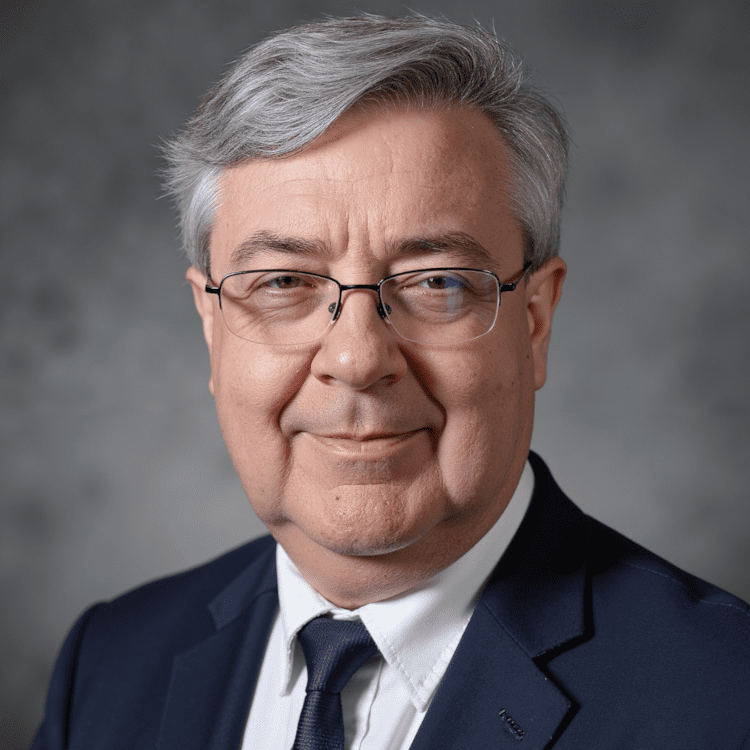
Dr. Curt Watke is a distinguished missiologist whose three-plus-decade-long career has significantly impacted Christian mission work in North America, particularly in under-reached and challenging regions. Holding a Ph.D. in Evangelism and Missions, Dr. Watke has focused on bridging cultural gaps and fostering sustainable Christian communities by developing innovative strategies that address contemporary challenges like globalization, urbanization, and religious pluralism. His emphasis on cultural sensitivity and contextualization in mission work is reflected in his collaborative writings, including notable works such as “Ministry Context Exploration: Understanding North American Cultures” and “Starting Reproducing Congregations.” Beyond his writing, Dr. Watke is a sought-after speaker and educator, lecturing at seminaries and conferences worldwide, and his teachings continue to inspire and equip new generations of missional leaders. His enduring legacy is marked by unwavering dedication to the mission of God and a profound influence on missional thought and practice. Dr. Watke serves as President and Professor of Evangelism & Missiology at Missional University.