Introduction: Mission as the Organizing Framework
The missio Dei—the mission of God—provides the most comprehensive framework for understanding all theological realities, including the preternatural realm. As Christopher J. H. Wright argues in The Mission of God, “Mission is not just one of a list of things that the Bible happens to talk about, only a bit more urgently than some. Mission is, in that much-abused phrase, ‘what it’s all about'” (Wright, C.J.H., 2006, pp. 22-23). If mission constitutes the central narrative of Scripture, then preternatural phenomena—angelic activity, demonic opposition, spiritual warfare, signs and wonders—must be interpreted primarily through their relationship to God’s redemptive purposes.
David Bosch’s paradigm-shifting work Transforming Mission established from the scripture that mission belongs fundamentally to God’s nature: “Mission was understood as being derived from the very nature of God. It was thus put in the context of the doctrine of the Trinity, not of ecclesiology or soteriology” (Bosch, 1991, p. 390). This Trinitarian foundation means that all reality, including the spiritual realm and its preternatural manifestations, exists in relation to the Father’s sending of the Son and the Spirit into the world for redemptive purposes.
From this missional perspective, the preternatural is neither peripheral nor merely spectacular. Rather, spiritual realities constitute the battlefield on which God’s mission encounters opposition and the means through which God advances His purposes. As Clinton Arnold observes, “The powers of darkness are not inactive bystanders to the redemptive work of God. They actively oppose the extension of the kingdom.” (Arnold, C. E., 1992, p. 203.)
Defining the Preternatural in Missional Context
Beyond Nature, Within Mission
From an evangelical perspective shaped by the missio Dei, the preternatural middle realm encompasses spiritual realities and activities that transcend ordinary material causation while remaining entirely subordinate to God’s sovereign mission. This includes the agency of created spiritual beings—angels and demons—whose powers exceed human capabilities yet serve (willingly or unwillingly) within God’s unfolding redemptive plan.
Unlike philosophical definitions that emphasize ontological categories, a missional definition focuses on functional purpose: preternatural phenomena are those spiritual realities that interact with the material world in ways that advance, oppose, or otherwise relate to God’s mission. As Michael Goheen writes, “The missional reading of Scripture finds the unifying thread in God’s purpose to restore the creation and human life to what he intended from the beginning” (Goheen, 2014, p. 29). Preternatural realities participate in this cosmic drama.
The Biblical-Theological Foundation
Scripture presents preternatural realities not as abstract metaphysical curiosities but as active participants in redemptive history. Angels announce the gospel (Luke 2:10-14), guide missional leaders (Acts 8:26), deliver apostles from prison (Acts 12:7-11), and will accompany Christ’s return (Matthew 25:31). Demons oppose the kingdom’s advance (Mark 5:1-20), blind unbelievers to the gospel (2 Corinthians 4:4), and empower false religion (1 Corinthians 10:20). Spiritual warfare characterizes Paul’s missional experience (Ephesians 6:12; 2 Corinthians 10:3-5).
As Gregory Boyd argues in God at War, “The biblical narrative is characterized by a warfare worldview… The central claim of this worldview is that the earth is virtually caught in the crossfire of an ongoing battle between God and the Satan” (Boyd, 1997, p. 13). This warfare occurs not as cosmic dualism but as resistance to God’s mission by rebellious spiritual powers whom God will ultimately judge and whose defeat Christ has already secured (Colossians 2:15).
Preternatural Categories in Mission Context
Within God’s mission, preternatural phenomena manifest in several key categories, each of which will be discussed more fully in future parts of this series:
1. Angelic ministry that serves the advance of redemption. As the author of Hebrews affirms, angels are “ministering spirits sent out to serve for the sake of those who are to inherit salvation” (Hebrews 1:14). Their activity is explicitly missional—oriented toward bringing people into salvific relationship with God.
2. Demonic opposition that seeks to thwart the gospel’s advance. Paul describes his missional calling in terms of turning people “from darkness to light and from the power of Satan to God” (Acts 26:18), recognizing that evangelism involves power encounter with spiritual forces.
3. Signs and wonders that authenticate the message and demonstrate the kingdom’s presence. The book of Acts portrays these not as entertainment but as kingdom demonstrations that advance mission (Acts 2:43; 4:30; 5:12; 14:3).
4. Spiritual warfare that characterizes life in the overlap of the ages. As Richard Middleton observes in A New Heaven and a New Earth, believers exist in “the eschatological tension between the ‘already’ and the ‘not yet,'” where spiritual conflict persists until Christ’s return (Middleton, 2014, p. 165).
5. Prophetic revelation and spiritual discernment that guide missional activity. The Spirit’s guidance through the scripture, visions, dreams, and prophetic words repeatedly redirects mission strategy in Acts (10:9-20; 16:6-10; 18:9-11).
The Trinitarian Mission and Preternatural Reality
The missio Dei is irreducibly Trinitarian, and every preternatural phenomenon—angelic ministry, demonic opposition, signs and wonders, spiritual warfare, and prophetic guidance—finds its meaning and limitation within the distinct yet inseparable missions of Father, Son, and Holy Spirit.
The Father’s Sending: Mission Origin and Authority
The missio Dei originates in the Father’s decision to reconcile the world to Himself. As Darrell Guder writes, “The classical doctrine of the missio Dei as God the Father sending the Son, and God the Father and the Son sending the Spirit is expanded to include yet another movement: Father, Son, and Holy Spirit sending the church into the world” (Guder, 1998, p. 4). This Trinitarian sending establishes the framework within which all preternatural activity occurs.
The Father’s sovereignty means that preternatural forces, whether angelic or demonic, operate under divine authority and permission. Job 1-2 provides the paradigmatic example: Satan’s affliction of Job occurs only within boundaries the Father establishes. As Sydney Page argues, “Satan is presented in Job as a member of the heavenly court and thus as subordinate to God… His malevolent activity is thus subject to divine restraint” (Page, 2007, p. 451).
The mission begins with the Father’s eternal purpose to redeem and restore creation through sending the Son and the Spirit. This sending is not merely intra-Trinitarian; it is the exercise of absolute sovereignty over every spiritual power. The preternatural realm is never autonomous. As Gerald F. Hawthorne notes, “The Bible nowhere presents the demonic world as a rival kingdom with independent authority; rather, it is a defeated and delimited rebellion under the Father’s ultimate control” (Hawthorne, 2015, p. 87).
- Angelic ministry operates as delegated service within the Father’s plan. Angels are “ministering spirits sent (Greek: apostellomena) to serve” (Heb 1:14), echoing the very language of apostolic sending rooted in the Father’s mission. The angel who directs Philip to the Ethiopian eunuch (Acts 8:26) and the angel who releases Peter from prison (Acts 12:7–11) act as extensions of the Father’s missional initiative (Green, 2004, pp. 112–118).
- Demonic opposition, though real and virulent, is always circumscribed. The classic example remains Job 1–2, where Satan appears before the divine council only by permission and operates within explicitly defined limits (Page, 1995, pp. 66–78). In missional contexts, Paul’s “thorn in the flesh, a messenger of Satan” (2 Cor 12:7) is ultimately “sent” (by permissive will) to serve the Father’s purpose of humility and dependence (Arnold, 2010, pp. 145–152).
- Signs and wonders ultimately testify to the Father’s reign. When Jesus casts out demons “by the finger of God” (Luke 11:20), He declares that “the kingdom of God has come upon you”—the Father’s rule breaking into history (Twelftree, 2011, pp. 301–304).
Missiologically, the Father’s role assures missional leaders that no preternatural opposition can ultimately frustrate the divine purpose. When missional leaders encounter spiritual opposition, they do so with confidence that the Father’s authority supersedes all spiritual powers. Jesus’ commissioning in Matthew 28:18-20 grounds the Great Commission in His “all authority in heaven and on earth“—authority explicitly extending to the preternatural realm. As John Piper writes, “Behind every missionary obstacle stands the sovereign Father who turns even the wrath of hell to serve the progress of the gospel” (Piper, 1993, p. 214).
The Son’s Incarnation: Mission Embodiment and Victory
The incarnation represents the supreme intersection of divine mission and preternatural reality. Christ enters human history to accomplish redemption, and His ministry immediately engages spiritual powers. His temptation by Satan (Matthew 4:1-11), His exorcisms (Mark 1:21-28; 5:1-20; 9:14-29), and His teaching about binding the strong man (Mark 3:27) all demonstrate that mission involves direct confrontation with preternatural opposition.
The cross accomplishes cosmic victory. Paul declares that on the cross, Christ “disarmed the rulers and authorities and put them to open shame, by triumphing over them” (Colossians 2:15). As N. T. Wright explains in Surprised by Hope, “Jesus’ death was the defeat of the powers of darkness, of sin, death and the devil… The resurrection demonstrates that this victory was complete.”
Thus, the incarnation plunges the second Person of the Trinity directly into the preternatural battlefield. From the wilderness temptation (Matt 4:1–11) to the cross and resurrection, Jesus’ mission is inseparable from confrontation with and triumph over spiritual powers.
- Demonic opposition reaches its zenith in direct assaults on the Son, yet every encounter ends in defeat for the evil one (Mark 1:24; 3:27; Luke 10:18). The Gerasene demoniac episode (Mark 5:1–20) is paradigmatic: the demons recognize Jesus’ identity and authority, beg for mercy, and are dispatched—then the formerly possessed man becomes the first missionary to the Decapolis (Gundry, 2012, pp. 89–102).
- Angelic ministry serves the incarnate Son at critical missional moments: strengthening Him after temptation (Matt 4:11), announcing His birth and resurrection (Luke 2:14; Matt 28:2–7), and promising to accompany His return in glory (Matt 25:31; 1 Thess 4:16) (Dickason, 1993, pp. 178–180).
- Signs and wonders are Christological demonstrations that the kingdom has invaded Satan’s territory. Exorcisms, in particular, are not mere healings but public declarations that the Stronger Man has bound the strong man (Mark 3:27). As Graham Twelftree concludes, “Jesus’ exorcisms were acts of war that demonstrated the arrival of the kingdom of God and the defeat of Satan” (Twelftree, 1993, p. 227).
The cross is the decisive preternatural victory: “Having disarmed the powers and authorities, he made a public spectacle of them, triumphing over them by the cross” (Col 2:15). The resurrection and ascension install the Son as the enthroned Lord to whom every preternatural knee must bow (Phil 2:9–11; Eph 1:20–22).
This Christological center transforms how evangelicals understand preternatural phenomena. All spiritual warfare occurs in light of Christ’s finished victory. Demons are defeated enemies whose judgment is certain (Matthew 8:29; Revelation 20:10). Angels worship the Lamb (Revelation 5:11-12) and serve His mission. The preternatural realm cannot be understood apart from Christ’s lordship over it. Contemporary mission, therefore, is never a mopping-up operation behind a retreating enemy; it is the enforcement of a victory already won (Wright, N.T., 2008, pp. 224–229).
The implications for mission are decisive. As Charles Kraft argues in Christianity with Power, “Jesus went about demonstrating the kingdom of God in power—power over demons, disease, death, nature, and every other area over which Satan had usurped authority” (Kraft, 1998, 62). Christian mission continues this pattern, proclaiming Christ’s victory and demonstrating it through power encounters with spiritual forces.
The Spirit’s Empowerment: Mission Enablement and Presence
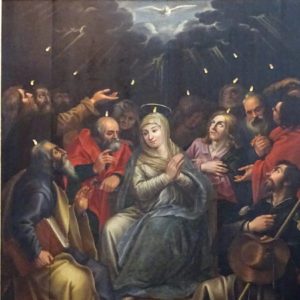
The Spirit empowers the church for mission and mediates God’s presence in the preternatural realm. At Pentecost, the Spirit’s outpouring inaugurates the sending of Christian believers (Acts 1:8; 2:1-4). The Spirit then guides mission strategy through visions and prophetic revelation (Acts 10:19; 13:2; 16:6-10), empowers witness through signs and wonders (Acts 2:43; 6:8), enables discernment of spirits (1 Corinthians 12:10; 1 John 4:1), and sustains missional believers through spiritual warfare (Ephesians 6:17-18).
The Spirit’s role connects preternatural reality to missional practice. As Frank Macchia observes, the Spirit’s gifts and manifestations are “empowerments for mission and ministry.” Glossolalia, prophecy, healings, and exorcisms served mission by demonstrating the kingdom’s presence and authenticating the gospel message.
The Spirit also enables believers to engage preternatural opposition. Paul’s instruction to “be filled with the Spirit” precedes his teaching on spiritual warfare (Ephesians 5:18–6:20), suggesting that Spirit-empowerment equips believers for the conflict. Prayer “in the Spirit” (Ephesians 6:18) becomes spiritual warfare that operates at the preternatural level where demonic opposition occurs.
Thus the Spirit is the personal presence of the exalted Christ and the empowering agent for the church’s participation in the missio Dei. Some missiologists emphasize that the Spirit’s ministry is inherently “power ministry” in the preternatural sphere.
- Prophetic revelation and spiritual discernment are preternatural gifts given for missional direction. The Spirit speaks directly to the Antioch church, “Set apart for me Barnabas and Saul for the work to which I have called them” (Acts 13:2), and blocks or redirects missional journeys through visions and prophetic restraint (Acts 16:6–10) (Keener, 2016, pp. 145–168).
- Signs and wonders are the Spirit’s continuation of Jesus’ ministry. The same Spirit who descended on Jesus at His baptism (Luke 3:22) falls on the church at Pentecost, resulting in immediate kingdom demonstrations (Acts 2:43; 4:30–31). Stephen, Philip, and Paul all perform “signs and wonders” explicitly attributed to the Spirit’s power (Acts 6:8; 8:6–7; Rom 15:19) (Warrington, 2008, pp. 201–215).
- Spiritual warfare is conducted “in the Spirit.” The armor of God in Ephesians 6 culminates with “praying at all times in the Spirit” (6:18), and the sword of the Spirit is the spoken word of God (6:17). Ed Murphy’s massive study concludes that “effective spiritual warfare is impossible apart from continual dependence upon and filling with the Holy Spirit” (Murphy, 1996, p. 412).
- Discernment of spirits (1 Cor 12:10) and deliverance ministry remain vital in many Majority World contexts precisely because the Spirit equips the church to distinguish and defeat preternatural deception and oppression (Yung, 2001, pp. 34–49).
Thus in many Majority World contexts, the Spirit makes the church a missional community that continues the same pattern of preternatural engagement exhibited by Jesus: proclamation accompanied by demonstration, authority exercised through dependence, and victory manifested in weakness.
Conclusion: Preternatural Reality as Subordinate to the Missio Dei
The preternatural realm is not an optional appendix to Christian mission; it is the invisible theatre in which the Triune God’s redemptive drama is being performed. Angels serve, demons rage, signs break in, and spiritual conflict persists precisely because the Father continues to send, the Son continues to reign, and the Spirit continues to empower a redeemed people to bear witness to the crucified and risen Lord until the end of the age.
From an evangelical missional perspective, every preternatural phenomenon—whether the obedient ministry of angels, the furious but futile opposition of demons, the authenticating power of signs and wonders, the ongoing reality of spiritual warfare, or the guiding voice of biblical revelation—must be interpreted within the Trinitarian mission of Father, Son, and Holy Spirit. The Father sovereignly delimits all spiritual activity; the Son has publicly disarmed and triumphed over the powers; the Spirit equips and energizes the church to proclaim and demonstrate that triumph in word and deed. There is, therefore, no spiritual power outside the reach of the missio Dei, no demonic stronghold that can withstand the advance of the gospel, and no angelic ministry that operates apart from the purposes of the sending God.
This Trinitarian framework liberates the church from both naïve neglect and sensationalist preoccupation with the preternatural. Missional believers and leaders are called neither to ignore the spiritual conflict nor to fixate on it, but to engage it with biblical confidence: the battle belongs to the Lord who has already won it in Christ and who now advances it through His Spirit-filled people. As Lesslie Newbigin insisted, “The church’s mission is nothing less than participation in the victory of Christ over the principalities and powers” (Newbigin, 1989, p. 135). Until the day when every knee—visible and invisible—bows to the Lamb who was slain (Phil 2:10–11; Rev 5:11–14), the church marches forward in the power of the Spirit, under the authority of the Son, according to the eternal purpose of the Father, proclaiming and demonstrating that Jesus Christ is Lord over every preternatural reality, to the glory of God alone.
Sources
- Arnold, C. E. (2010). Ephesians: Power and Magic—The Concept of Power in Ephesians in Light of Its Historical Setting. Wipf & Stock.
- Arnold, C. E. (1992). Powers of Darkness: Principalities and Powers in Paul’s Letters. InterVarsity Press.
- Bosch David J. Transforming Mission: Paradigm Shifts in Theology of Mission. Orbis Books.
- Boyd, Gregory A. (1997). God at War: The Bible and Spiritual Conflict. InterVarsity Press.
- Dickason, C. F. (1993). Angels, Elect and Evil (rev. ed.). Moody Press.
- Goheen, Michael W. (2014). Introducing Christian Mission Today: Scripture, History, and Issues. IVP Academic.
- Green, G. L. (2004). “Angels and Mission in Acts.” Journal of the Evangelical Theological Society, 47(1), 109–124.
- Guder, Darrell L. (1998). Missional Church: A Vision for the Sending of the Church in North America. Eerdmans.
- Gundry, R. H. (2012). “Jesus and the Demons in Mark.” Bulletin for Biblical Research, 22(1), 87–104.
- Hawthorne, G. F. (2015). “Principalities and Powers.” In G. F. Hawthorne, R. P. Martin, & D. G. Reid (Eds.), Dictionary of Paul and His Letters (pp. 86–92). InterVarsity Press.
- Keener, C. S. (2016). Spirit Hermeneutics: Reading Scripture in Light of Pentecost. Eerdmans.
- Kraft, Charles H. Christianity with Power: Your Worldview and Your Experience of the Supernatural. Vine Books.
- Macchia, Frank D. (1992). “Sighs Too Deep for Words: Toward a Theology of Glossolalia,” Journal of Pentecostal Theology 1, no. 1: 62.
- Middleton, J. Richard. (2014). A New Heaven and a New Earth: Reclaiming Biblical Eschatology. Baker Academic.
- Murphy, E. F. (1996). The Handbook for Spiritual Warfare (rev. ed.). Thomas Nelson.
- Newbigin, L. (1989). The Gospel in a Pluralist Society. Eerdmans.
- Page, S. H. T. (1995). Powers of Evil: A Biblical Study of Satan and Demons. Baker Academic.
- Page, S. H. T. (2007). “Satan: God’s Servant,” Journal of the Evangelical Theological Society 50, no. 3: 451.
- Piper, J. (1993). Let the Nations Be Glad! The Supremacy of God in Missions. InterVarsity Press.
- Twelftree, G. H. (1993). Jesus the Exorcist: A Contribution to the Study of the Historical Jesus. Hendrickson.
- Twelftree, G. H. (2011). “Healing, Illness, and Demons in the Gospel of Luke.” In The Gospel of Luke: A Missional Commentary (pp. 295–318). Eerdmans.
- Warrington, K. (2008). Pentecostal Theology: A Theology of Encounter. T&T Clark.
- Wright, Christopher J. H. (2006). The Mission of God: Unlocking the Bible’s Grand Narrative IVP Academic
- Wright, N. T. (2008). Surprised by Hope: Rethinking Heaven, the Resurrection, and the Mission of the Church. HarperOne.
- Yung, H. (2001). “Spiritual Warfare in a Missional Paradigm.” Asian Journal of Pentecostal Studies, 4(1), 31–52.

Dr. Curt Watke is a distinguished missiologist whose three-plus-decade-long career has significantly impacted Christian mission work in North America, particularly in under-reached and challenging regions. Holding a Ph.D. in Evangelism and Missions, Dr. Watke has focused on bridging cultural gaps and fostering sustainable Christian communities by developing innovative strategies that address contemporary challenges like globalization, urbanization, and religious pluralism. His emphasis on cultural sensitivity and contextualization in mission work is reflected in his collaborative writings, including notable works such as “Ministry Context Exploration: Understanding North American Cultures” and “Starting Reproducing Congregations.” Beyond his writing, Dr. Watke is a sought-after speaker and educator, lecturing at seminaries and conferences worldwide, and his teachings continue to inspire and equip new generations of missional leaders. His enduring legacy is marked by unwavering dedication to the mission of God and a profound influence on missional thought and practice. Dr. Watke serves as President and Professor of Evangelism & Missiology at Missional University.