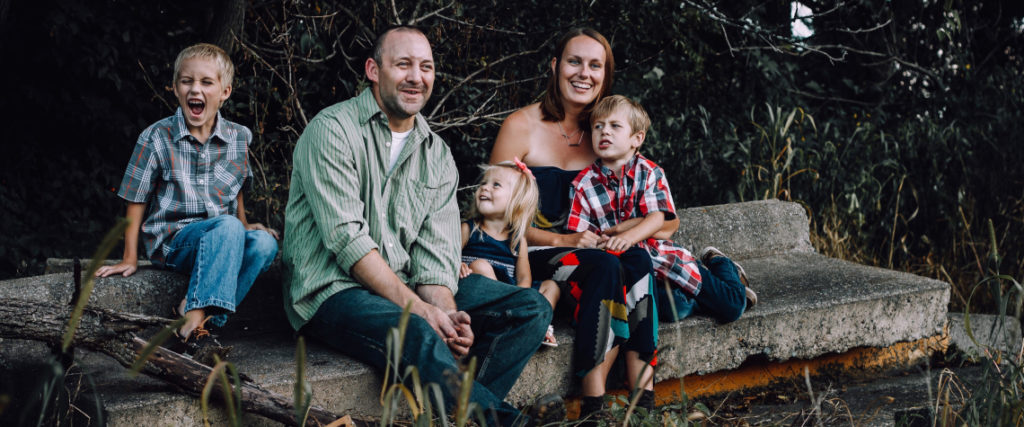
The missio Dei, God’s mission to redeem and restore all creation through Christ, is a calling that extends into every sphere of life, including the home. Families, as the primary context for nurturing faith and character, are vital arenas for living out this mission. Parents have a unique opportunity to raise children who actively participate in God’s redemptive work, embodying His love, justice, and truth in their everyday lives. This blog explores how individuals—specifically parents—can engage in missional care by raising missional kids within the missio Dei framework, emphasizing a holistic, integral mission perspective that integrates gospel proclamation, service, and presence. Through practical steps like modeling faith at home, serving neighbors, fostering gospel-shaped community, and encouraging verbal gospel sharing, parents can transform their homes into hubs of God’s redemptive love, equipping children to missionize naturally and impact their world for Christ.
The Missio Dei in Family Life
The missio Dei is God’s initiative to reconcile all things to Himself (Colossians 1:20), encompassing spiritual salvation and the restoration of social, cultural, and personal realities. Family life is a sacred space for this mission, where parents are called to disciple their children to know and follow Christ (Deuteronomy 6:6-9). Scripture emphasizes the role of parents in passing down faith, instructing children to love God and neighbor (Proverbs 22:6; Matthew 22:37-39). By raising missional kids, parents participate in God’s redemptive work, preparing the next generation to reflect His kingdom values in their communities.
Missional care in the family context involves an integral mission approach, combining proclamation (sharing the gospel), service (meeting practical needs), and presence (embodying Christ’s character). This holistic perspective ensures that children not only hear about faith but see it lived out in tangible ways. As parents model missional living, they create environments where faith grows naturally, equipping kids to join God’s mission in their schools, neighborhoods, and beyond. The School of Missional Practice at Missional University underscores this, encouraging families to integrate faith and action to foster transformative gospel-centered lives.
Missional Care: Raising Kids to Join God’s Mission
Missional care in family life is about intentionally nurturing children to participate in God’s mission through relationships, actions, and words. It goes beyond traditional parenting by focusing on equipping kids to live as ambassadors of Christ (2 Corinthians 5:20) in their everyday contexts. This requires parents to model a faith that is active, relational, and culturally relevant, showing children that God’s mission is not confined to church but extends to every interaction.
For example, a parent might involve their child in preparing a meal for a neighbor in need, demonstrating Christ’s call to serve (Mark 10:45). During this act, they might share why they serve, pointing to Jesus’ love as the motivation. This combination of action and proclamation helps children see faith as a lived reality, not a set of abstract beliefs. By fostering such practices, parents create homes where the missio Dei is woven into daily life, transforming family routines into opportunities for redemptive impact.
Modeling Missional Living at Home
Parents are the primary influencers in a child’s life, and modeling missional living is foundational to raising missional kids. This begins with living authentically, allowing children to see faith in action. Colossians 3:23-24 encourages doing all things for God’s glory, and parents can demonstrate this by integrating faith into daily routines—praying together, discussing Scripture, or making ethical choices. For instance, a parent might explain why they choose fair-trade products, connecting it to God’s heart for justice (Micah 6:8).
Practical steps include creating family rhythms that reflect the missio Dei. A nightly gratitude ritual, where family members share how they saw God at work, helps children discern His presence (Psalm 145:4). Parents can also model forgiveness by resolving conflicts with grace, reflecting Christ’s reconciliation (Ephesians 4:32). These habits teach children that faith is not separate from life but shapes every decision, preparing them to live missionally in their own contexts.
Serving Neighbors as a Family
Serving others is a powerful way to raise missional kids, teaching them to embody Christ’s love through action. Jesus’ example of washing His disciples’ feet (John 13:14-15) shows that service is central to His mission, and families can follow suit by engaging with their neighbors. Simple acts—like mowing a neighbor’s lawn, hosting a community barbecue, or volunteering at a local shelter—demonstrate God’s care for others. Involving children in these activities helps them see service as a natural expression of faith.
For example, a family might organize a neighborhood cleanup, inviting kids to participate and discuss why caring for their community matters. Parents can tie this to Genesis 2:15, where God calls humanity to steward creation. These experiences not only meet practical needs but also create opportunities for gospel conversations, as neighbors may ask about the family’s motivation. By serving together, parents equip children to see their actions as part of God’s redemptive mission, fostering a heart for others.
Fostering Gospel-Shaped Community
Community is at the heart of the missio Dei, reflecting God’s desire for reconciled relationships (2 Corinthians 5:18-20). Parents can raise missional kids by fostering gospel-shaped community within and beyond the home. This involves creating environments where children experience belonging, learn to value diversity, and practice hospitality. Galatians 3:28 emphasizes unity in Christ, and families can model this by welcoming neighbors of different backgrounds or inviting classmates for playdates.
Practical steps include hosting family gatherings where faith is shared openly, such as a game night with a brief devotional. Parents might also encourage kids to build friendships with peers who feel marginalized, reflecting God’s heart for the overlooked (Psalm 82:3). By teaching children to pray for their friends or share their faith in age-appropriate ways, parents equip them to create gospel-centered communities in their schools or neighborhoods. These efforts help kids see themselves as agents of God’s mission, fostering transformation through relationships.
The Necessity of Verbal Gospel Proclamation
While actions like service and community-building are vital, the missio Dei requires verbal gospel proclamation to catalyze true transformation. Romans 10:14 underscores that faith comes through hearing the word of Christ, and parents must teach children to share the gospel clearly and respectfully. This doesn’t mean preaching but modeling how to share faith naturally—through conversations, stories, or responses to questions (1 Peter 3:15).
For instance, a parent might share their testimony during a family dinner, explaining how Jesus changed their life, and encourage their child to share their own story with a friend. When a neighbor asks why the family serves, parents can guide their child to respond with, “We love because Jesus first loved us” (1 John 4:19). By practicing these conversations at home, parents equip children to proclaim the gospel in their contexts, ensuring that their actions point to Christ as the source of hope. This holistic approach—combining deeds with words—fosters personal and spiritual transformation.
Discerning God’s Work in Family Life
Missional care requires discernment—seeing where God is already at work in children’s lives and their communities (John 5:17). Parents can observe their kids’ passions, struggles, or friendships to identify opportunities to join God’s mission. For example, a child’s concern for a bullied classmate might reflect God’s heart for justice, prompting a parent to discuss Isaiah 1:17 and pray together for the situation. By affirming these connections, parents help children see their lives as part of God’s redemptive narrative.
Prayer is key to this discernment. Parents can pray daily for wisdom to guide their children and for opportunities to share faith (James 1:5). A family prayer walk through the neighborhood, asking God to reveal His work, can also help children develop a missional mindset. By aligning their parenting with God’s activity, parents create environments where faith grows organically, equipping kids to missionize with purpose.
Overcoming Challenges in Raising Missional Kids
Raising missional kids comes with challenges, such as busy schedules, cultural pressures, or children’s resistance to faith. Modern family life is often hectic, with school, activities, and work competing for time. Parents can address this by integrating missional practices into existing routines—praying in the car, serving during school events, or discussing faith over meals. Cultural pressures, like secular values or social media influences, can be countered by modeling authenticity and discussing how faith shapes decisions (Philippians 4:8).
If children resist faith, parents should respond with patience, trusting God’s timing (2 Timothy 2:24-25). Sharing stories of their own faith journey or inviting kids to serve alongside them can spark curiosity. Prayer remains essential, as parents rely on the Holy Spirit to soften hearts and open doors (Ephesians 6:18). By persevering through these challenges, parents demonstrate that the missio Dei is a lifelong journey, equipping children to embrace it.
The Transformative Impact of Missional Parenting
Raising missional kids has profound impacts, transforming individuals, families, and communities. On a personal level, children grow in faith, finding purpose in God’s mission. Spiritually, gospel proclamation leads to encounters with Christ, fostering salvation and growth. Societally, missional kids influence their peers, schools, and neighborhoods, addressing issues like loneliness or injustice. For example, a child who shares their faith with a classmate might inspire a ripple effect of kindness, creating a gospel-centered community.
Parents also grow through this process, deepening their faith as they witness God’s work in their children. By modeling missional living, they inspire others—neighbors, relatives, or other parents—to join the missio Dei. This multiplication effect transforms homes into hubs of redemptive love, where children are equipped to missionize naturally, carrying God’s mission into their generation and beyond.
Practical Steps for Raising Missional Kids
To raise missional kids, parents can take intentional, practical steps rooted in the missio Dei. Start by praying daily for your children, asking God to guide them and reveal opportunities to join His mission (John 16:13). Model faith at home through consistent practices like family devotions, gratitude rituals, or ethical decision-making. Serve neighbors together—whether through small acts like baking cookies or larger projects like volunteering—tying these to biblical values. Foster gospel-shaped community by hosting inclusive gatherings or encouraging kids to build diverse friendships. Teach children to share the gospel in age-appropriate ways, practicing conversations at home to build confidence.
Reflect on your family’s context. A single parent might involve their child in a community garden, while a blended family might host a neighborhood movie night with a faith-based discussion. Whatever your situation, see parenting as a divine opportunity to raise kids who embody Christ’s love, transforming their world for His glory.
Conclusion: Transforming Homes into Hubs of God’s Mission
The missio Dei invites parents to raise children who actively participate in God’s redemptive work, transforming family life into a vibrant expression of missional care. By modeling faith, serving neighbors, fostering community, and encouraging gospel proclamation, parents can equip kids to missionize naturally in their schools, neighborhoods, and beyond. Verbal gospel sharing remains the catalyst for true transformation, pointing others to Christ as the source of hope. As you embrace this calling, trust God to work through your family, making your home a hub of His redemptive love. Start today—pray, serve, share, and disciple—and watch God use your family to advance His mission in the world.
Sources
- Bosch, David J. Transforming Mission: Paradigm Shifts in Theology of Mission. Maryknoll: Orbis Books, 1991.
- The Holy Bible, English Standard Version (ESV). Crossway, 2001.
- Newbigin, Lesslie. The Open Secret: An Introduction to the Theology of Mission. Grand Rapids: Eerdmans, 1995.
- Stetzer, Ed, and Philip Nation. Compelled by Love: The Most Excellent Way to Missional Living. Birmingham: New Hope Publishers, 2008.
- Watke, Curt. “Missionizing Your Workplace: A Gospel-Centered Approach.” Missional Loft, Missional University. Accessed October 2025.
- Wright, Christopher J.H. The Mission of God: Unlocking the Bible’s Grand Narrative. Downers Grove: IVP Academic, 2006.
- Yu, Sarah. Raising Kids on Mission: Practical Strategies for Gospel-Centered Parenting. Downers Grove: InterVarsity Press, 2023.

Daniella Asomugha is a Digital Content Writer with a B.Sc in Chemistry from the University of Nigeria, Nsukka, bringing a unique analytical perspective to her work. With a strong interest in environmental issues, she blends her scientific background with expertise in social media management, UX writing, and content creation. Daniella’s diverse career includes roles that emphasize sustainability and environmentally-conscious branding, showcasing her ability to craft compelling narratives that resonate with eco-conscious audiences while driving engagement and brand awareness.