Awakening to God’s Sending Heart
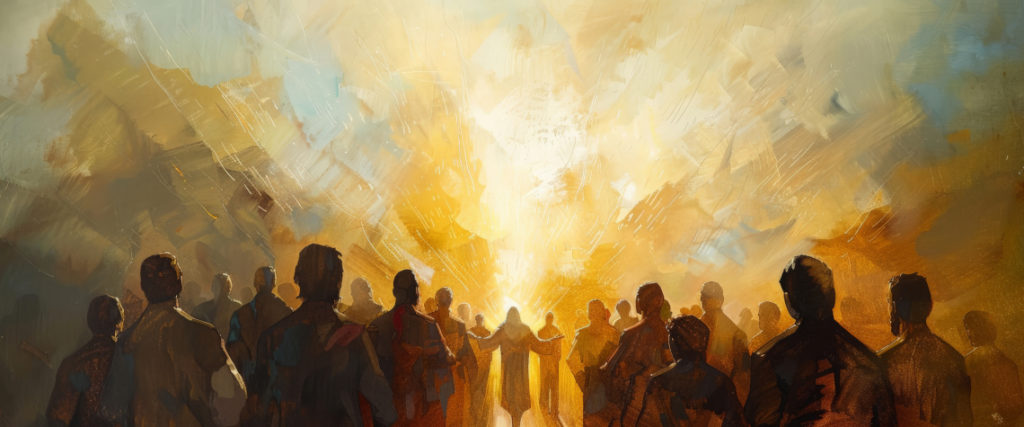
Across the Old and New Testaments, a profound truth emerges: God is a sending God. From the dawn of creation to the promise of renewal, the Bible unfolds as a grand narrative of divine initiative, where the Creator reaches out to restore what has been fractured. This sending—known as the Missio Dei—forms the heartbeat of global ministry, calling each believer not to invent their own purpose but to step into the eternal mission of the Triune God. As followers of Christ, we are invited to participate in this unfolding story, where personal lives intersect with God’s global purposes.
The Missio Dei is not a modern invention but a thread woven through the entirety of the biblical canon. It begins with God’s command to humanity in Genesis, evolves through the covenants with Israel, culminates in the incarnation of Jesus, and extends through the empowering work of the Holy Spirit. For individuals today, this means recognizing that global ministry is less about crossing oceans and more about embodying God’s redemptive intent in every interaction, whether across borders or in one’s neighborhood. Competencies for this calling—such as cultural sensitivity, relational depth, and scriptural discernment—are biblically grounded, emerging from stories of faithful servants like Abraham and Paul.
This article explores these roots, emphasizing how the Missio Dei informs personal practice. It highlights the necessity of redemptive relationships, which serve as bridges for God’s healing work among overlooked and excluded groups worldwide. By critiquing our own contexts through Scripture, we uncover a missional calling that integrates into daily vocations and community life. Ultimately, the goal is to position believers for service that is theologically anchored, fostering networks of missional communities that multiply God’s impact globally. As we journey through these pages, may you sense the Spirit’s nudge toward faithful participation with the One who sends.
Unpacking the Missio Dei: God’s Eternal Sending
At its core, the Missio Dei captures the essence of a God who acts to redeem and renew creation. The term, meaning “the mission of God,” underscores that mission originates not in human effort but in the very nature of the Trinity. The Father sends the Son, the Son sends the Spirit, and together they send us—believers—as agents of reconciliation. This divine sending is no afterthought; it is the framework for understanding Scripture’s overarching plotline, from Genesis to Revelation.
Biblically, the Missio Dei begins in the relational harmony of creation. In Genesis 1:26-28, God forms humanity in His image, commissioning them to cultivate the earth and exercise stewardship. This mandate is inherently missional, as it positions people as co-laborers in God’s creative and sustaining work. Even after the rupture of sin in Genesis 3, God’s sending persists. He seeks out Adam and Eve, clothing them in grace, foreshadowing the redemptive pursuit that defines His character. Scholars note that this early narrative establishes mission as involvement in God’s restorative activity, not merely a response to failure but a continuation of His original intent.
The concept gained prominence in the 20th century, particularly at the 1952 Willingen conference of the International Missionary Council, where theologians emphasized mission as rooted in the Trinity’s dynamic relationships. Yet, its biblical depth predates such gatherings. Consider the covenant with Abraham in Genesis 12:1-3, where God calls one man to bless all nations—a pivotal sending that echoes through Israel’s history. Prophets like Isaiah envision a servant who bears the sins of many (Isaiah 53), pointing to the ultimate Sender: the Father dispatching the Son for humanity’s sake.
For individuals in global ministry, grasping the Missio Dei shifts focus from self-initiated projects to alignment with God’s prior action. It invites discernment: Where is God already at work in a distant village or urban enclave? How can one’s skills—be it teaching, healing, or listening—extend His redemptive reach? This theocentric view liberates believers from performance anxiety, replacing it with joyful partnership. As one engages the world, the Missio Dei reminds us that success lies not in metrics but in faithfulness to the Sender.
Biblical Foundations: Tracing Sending Through Scripture
Scripture brims with sending narratives that illuminate the Missio Dei, offering a blueprint for individual involvement. These stories are not isolated events but interconnected threads in God’s redemptive plan, inviting personal reflection and action.
In the Old Testament, God’s sending unfolds through covenantal promises. The exodus from Egypt (Exodus 3:7-10) exemplifies this: God hears the cries of oppressed Israel and commissions Moses as His mouthpiece. Here, sending is tied to liberation—freeing people from bondage to reveal God’s character. Individuals today might see parallels in advocating for those trapped in cycles of poverty or exclusion, stepping into Moses’ role through vocational justice work. Similarly, the prophetic calls, such as Jeremiah’s (Jeremiah 1:4-10), underscore personal commissioning: God forms and appoints each person before birth for His purposes. This counters modern notions of accidental calling, affirming that every believer has a missional role etched into their story.
The Gospels crystallize the Missio Dei in Jesus’ life and words. John 20:21 declares, “As the Father has sent me, I am sending you,” linking apostolic mission directly to Christ’s incarnation. Jesus embodies sending by entering human frailty, healing the sick, and proclaiming the kingdom (Luke 4:18-19). His interactions—dining with tax collectors, conversing with Samaritans—model redemptive relationships that dismantle barriers. For global servants, this means prioritizing presence over programs; one’s life becomes the message, fostering trust in diverse settings.
The New Testament epistles and Acts expand this to communal yet individual dimensions. Paul’s journeys in Acts illustrate adaptive sending: he contextualizes the gospel for Jews and Gentiles alike (Acts 17:22-31), urging believers to “become all things to all people” (1 Corinthians 9:22). Ephesians 4:11-16 describes the church as a body equipped for maturity, where each member contributes uniquely to God’s building project. This democratizes mission: no longer reserved for professionals, it calls plumbers, teachers, and artists to embody Christ’s reconciling love in their spheres.
Revelation seals the narrative with eschatological hope, depicting a renewed creation where nations worship together (Revelation 7:9-10). This vision propels individuals toward global horizons, motivating cross-cultural partnerships. By immersing in these texts, believers critique personal contexts—identifying idols of comfort or fear—and realign with God’s sending rhythm. The result? A life attuned to Scripture’s missional pulse, ready for whatever border God beckons one to cross.
The Individual’s Calling: Discerning Your Place in God’s Sending
Every believer bears a missional imprint, woven into the fabric of the Missio Dei. Unlike a vague spiritual nudge, this calling emerges from deliberate engagement with Scripture, prayer, and community, transforming ordinary lives into conduits of divine purpose.
Discernment begins with self-examination through biblical lenses. Romans 12:1-2 urges presenting bodies as living sacrifices, renewed in mind to discern God’s will. For the individual, this means auditing daily routines: Does my career in engineering serve kingdom extension, perhaps by designing sustainable solutions for underserved villages? Or does my role as a parent model gospel hospitality, inviting international students into our home? Such reflection reveals how personal gifts align with global needs, echoing 1 Corinthians 12’s body metaphor where no part is dispensable.
Global ministry amplifies this calling amid diversity. In a world of 7,000 languages and myriad cultures, individuals must cultivate intercultural humility—listening before speaking, as James 1:19 advises. Consider the Ethiopian eunuch in Acts 8:26-40: Philip’s Spirit-led encounter bridges ethnic divides through relational dialogue. Today, this might involve a business professional in Asia building friendships that open doors to faith conversations, or a retiree volunteering in refugee camps to offer hope amid displacement.
Challenges abound—cultural misunderstandings, isolation, spiritual warfare—but the Missio Dei equips through the Spirit’s empowerment (Acts 1:8). Personal stories abound: a nurse in sub-Saharan Africa finds her empathy, honed in local clinics, uniquely suited to heal and proclaim; a tech entrepreneur leverages networks to distribute Bibles digitally in restricted nations. These vignettes illustrate that calling is contextual yet universal: God’s sending adapts to one’s wiring while transcending geography.
Critiquing contexts sharpens this discernment. In affluent settings, prosperity might numb urgency; Scripture counters with the rich young ruler’s challenge (Mark 10:17-27), prompting radical generosity. In hardship, despair looms, but Job’s restoration reminds us of God’s sovereign goodness. Ultimately, the individual’s calling is participatory: joining the Sender in reclaiming lives, one relationship at a time. As you prayerfully trace your story against Scripture’s, expect clarity—not in grand gestures, but in faithful steps toward the nations.
Redemptive Relationships: The Heartbeat of Missional Engagement
Relationships lie at the epicenter of the Missio Dei, serving as vessels for God’s redemptive flow. Far from superficial connections, they embody Christ’s incarnational love, bridging divides to heal and restore.
Biblically, redemption pulses through divine-human bonds. God’s covenant with David (2 Samuel 7) promises an enduring line, fulfilled in Jesus who redeems through intimate sacrifice. The parable of the prodigal son (Luke 15:11-32) vividly portrays this: the father’s embrace models pursuing the lost, not with condemnation but with restorative grace. Individuals in global ministry mirror this by prioritizing vulnerability—sharing meals, stories, and struggles—to foster trust.
In diverse settings, redemptive relationships counter exclusion. Jesus’ conversation with the Samaritan woman (John 4:1-42) shatters social norms, yielding a harvest of belief. Today, this translates to expatriates learning local dialects to affirm overlooked voices, or locals mentoring immigrants through shared vulnerabilities. Such bonds address structural inequalities, like economic disparities, by empowering disadvantaged communities through collaborative ventures—microfinance groups or literacy programs grounded in mutual respect.
Practical cultivation demands intentionality. Ephesians 4:2-3 calls for bearing with one another in love, preserving unity. Start small: commit to weekly coffee with a cultural “outsider,” practicing active listening. In global contexts, this scales to partnerships—linking Western donors with indigenous leaders for sustainable development. Challenges like language barriers or power imbalances arise, but grace prevails, as Galatians 6:2 instructs mutual burden-bearing.
These relationships multiply impact, forming networks where redemption cascades. A single friendship might spark a Bible study, birthing a missional hub. For the individual, they cultivate Christlikeness, echoing Ruth’s loyalty to Naomi (Ruth 1:16-17)—a bond that reshapes destinies. In the Missio Dei, relationships are not optional; they are the medium of God’s mending, inviting us to love as we have been loved.
The Power of Missional Communities: Networks for Global Impact
Missional communities emerge as vital expressions of the Missio Dei, where individuals coalesce around shared pursuit of God’s kingdom. Unlike casual gatherings, these networks—small, committed groups—embody life-on-life discipleship, propelling believers outward.
Defined biblically, they echo Jesus’ band of twelve: a tight-knit circle pursuing mission through mutual growth (Mark 3:13-19). As described in contemporary reflections, a missional community comprises disciples mutually invested in spiritual formation while engaging the world together. This structure counters isolation, providing environments for vulnerability, accountability, and mission practice—much like the early church in Acts 2:42-47, devoted to teaching, fellowship, meals, and prayer.
What distinguishes these communities? They prioritize mission over maintenance, viewing relationships as gateways to gospel demonstration. Unlike Bible studies focused on knowledge intake, they integrate study with obedience, equipping members for cultural engagement. In global ministry, this means networks adapting to contexts: urban professionals in Europe forming pods to serve migrants, or rural families in Latin America collaborating on agricultural outreach.
Multiplication is key—networks birthing networks—to saturate unreached areas. Jesus’ strategy of sending pairs (Luke 10:1) models this: small units expand exponentially. Individuals thrive here, discovering gifts through communal rhythms—hospitality dinners, service projects, prayer vigils—that propel them globally. Challenges like transience or conflict test resilience, but as iron sharpens iron (Proverbs 27:17), they refine missional fidelity.
For global effectiveness, these communities integrate with broader strategies like church planting. A network in Southeast Asia might plant fellowships among ethnic minorities, leveraging members’ vocations for holistic witness. The result? Empowered individuals, woven into God’s sending, amplifying redemption worldwide.
Integrating into Church Planting: Multiplying Missional Networks
Church planting within the Missio Dei framework breathes life into missional communities, emphasizing multiplication over mere establishment. For individuals, this integration means viewing one’s role as seed-sowing in God’s expansive field.
Scripture frames planting as divine-human partnership. In 1 Corinthians 3:6-9, Paul and Apollos labor as co-workers in God’s field, underscoring humility: growth is His domain. Planting thus invites believers to contextualize the gospel—discerning receptive soils, as in the parable of the sower (Matthew 13:1-23)—through relational investment.
Missional networks fuel this process. Committed groups provide the relational backbone: scouting locations, building bridges with locals, and discipling new believers. In global hotspots like the Middle East, a network might start with house fellowships, evolving into autonomous plants that spawn further outposts. Individuals contribute uniquely—a teacher’s curriculum aids children’s ministries, a financier’s acumen ensures sustainability—fulfilling Ephesians 4’s equipping vision.
Multiplication demands strategic release. Acts 13:1-3 shows the leaders of Antioch fasting and confirming that the Spirit had called Barnabas and Saul to a specific mission. The leaders then set them apart for this Spirit-led work, launching a new movement. Similarly, networks train leaders through apprenticeship, sending them to pioneer amid risks like persecution or cultural resistance. Success metrics shift from attendance to transformed lives, measuring fruit in disciples made and communities renewed.
Challenges—resource scarcity, burnout—arise, but the Missio Dei sustains through Spirit-dependence. Planters critique contexts prayerfully, adapting models to honor local expressions. Ultimately, integration fosters exponential growth: one individual’s obedience multiplies into networks dotting the globe, embodying God’s sending heart.
Practical Steps: Living Faithfully in Missional Networks
Embodying the Missio Dei demands actionable faithfulness, especially within missional networks. These steps ground theology in daily rhythms, empowering individuals for sustained global impact.
First, cultivate spiritual habits attuned to sending. Daily Scripture immersion—perhaps meditating on John 20:21—renews vision, while prayer journals track God’s prompts in relationships. Weekly rhythms, like Sabbath rest, prevent burnout, echoing Jesus’ withdrawal for renewal (Mark 6:31).
Second, build redemptive bonds intentionally. Map your “third places”—coffee shops, markets—where you can host diverse guests. In networks, rotate leadership to share ownership, fostering vulnerability through shared testimonies. Globally, this might mean virtual calls with overseas partners, co-planning mercy initiatives.
Third, pursue skill-building for contextual witness. Study languages or cultures via apps, attending intercultural workshops. Networks host simulations—role-playing gospel conversations—to hone empathy, addressing inequalities like access to education through joint literacy drives.
Fourth, measure growth holistically. Track not just conversions but relational depth: How many sustained friendships bridge divides? Quarterly retreats debrief, celebrating small wins while course-correcting.
Fifth, multiply through sending. Identify emerging leaders, mentoring via life-on-life investment. As networks expand, commission members to new frontiers, trusting God’s provision.
These practices, rooted in grace, transform routine into redemptive adventure. Challenges like doubt yield to perseverance, as Hebrews 12:1-2 spurs looking to Jesus. Faithful steps in networks ripple outward, drawing the world into God’s embrace.
Conclusion: Stepping into Theologically Motivated Service
The Missio Dei beckons individuals beyond introspection to active participation in God’s global renewal. From biblical sendings to redemptive bonds in missional networks, Scripture equips us for this calling. As you reflect on your context, heed the Spirit’s whisper: Your story intersects with the Sender’s grand narrative. Embrace competencies forged in the Word, multiply through communities, and live as sent ones. In this, find joy—God’s mission is victorious, and you are invited to the feast.
Sources
- Bosch, David J. Transforming Mission: Paradigm Shifts in Theology of Mission. Maryknoll, NY: Orbis Books, 1991. (Chapter 1 provides a foundational analysis of Missio Dei as rooted in Trinitarian sending, emphasizing its biblical origins in Genesis and the Gospels.)
- Newbigin, Lesslie. The Open Secret. Grand Rapids, MI: Eerdmans, 1978. (Chapters 3 thru 6 discuss the Trinitarian role in the Missio Dei, with specific chapters on the mission of God the Father, Son and Holy Spirit.)
- Vicedom, Georg. The Mission of God: an Introduction to a Theology of Mission. Saint Louis, MO: Concordia, 1965. (Vicedom discusses the sending theme and relates it to a theology of the apostolate, discipleship, the church, and the people of God in chapter 3.)
- Wright, Christopher J. H. The Mission of God: Unlocking the Bible’s Grand Narrative. Downers Grove, IL: IVP Academic, 2006. (The book traces Missio Dei through Scripture’s metanarrative, highlighting individual participation in redemptive relationships from Abraham to Revelation.)
- Wright, Christopher J. H. The Mission of God’s People: A Biblical Theology of the Church’s Mission. Grand Rapids, MI: Zondervan, 2010. (Chaper 12 discusses the Trinitarian grounding of the sending of God’s people.)
- Köstenberger, Andreas J., and Peter T. O’Brien. Salvation to the Ends of the Earth: A Biblical Theology of Mission. Downers Grove, IL: InterVarsity Press, 2001. (This work details biblical sending narratives, focusing on apostolic models for personal missional calling in global contexts.)
- Buys, Phillipus J. “The Roots of Missio Dei in the Reformation, and Its Implications for Theological Education.” In die Skriflig/In Luce Verbi 54, no. 2 (2020): a2588. https://doi.org/10.4102/ids.v54i2.2588. (The article explores Reformed covenant theology as a basis for Missio Dei, with applications for individual equipping in ministry.)
- Anderson, Christian J. “Beginning at the Beginning: Reading Missio Dei from the Start of the Bible.” Missiology: An International Review 45, no. 4 (2017): 403–418. https://doi.org/10.1177/0091829617728533. (Focuses on Genesis 1-2 as the origin of human involvement in God’s mission, linking creation mandate to contemporary global service.)
- Van Rheenen, Gailyn. “From Theology to Practice: Participating in the Missio Dei.” Missio Dei: A Journal of Missional Theology and Praxis 1, no. 1 (2010): 3–15. (Discusses the flow from Trinitarian theology to practical missional communities, emphasizing individual roles in networks.)
- Sonea, Cristian. “Missio Dei – The Contemporary Missionary Paradigm and Its Reception in the Eastern Orthodox Missionary Theology.” Review of Ecumenical Studies Sibiu 9, no. 1 (2017): 70–91. https://doi.org/10.2478/res-2017-0005. (Examines redemptive aspects of Missio Dei in Orthodox thought, with implications for relational ministry worldwide.)
- Zscheile, Dwight J. Cultivating Sent Communities: Missional Spiritual Formation. Grand Rapids, MI: Eerdmans, 2012. (Explores spiritual formation in missional communities, with case studies on individual discernment and global partnerships.)
- Hastings, Ross. Missional God, Missional Church: Hope for Re-Evangelizing the West. Downers Grove, IL: IVP Academic, 2012. (Connects Trinitarian Missio Dei to community practices, highlighting personal faithfulness in redemptive relationships.)
- Smither, Edward L. Christian Mission: A Concise Global History. Bellingham, WA: Lexham Press, 2019. (Provides historical overview of mission, integrating biblical roots with individual roles in multiplying networks across eras.)

Dr. Curt Watke is a distinguished missiologist whose three-plus-decade-long career has significantly impacted Christian mission work in North America, particularly in under-reached and challenging regions. Holding a Ph.D. in Evangelism and Missions, Dr. Watke has focused on bridging cultural gaps and fostering sustainable Christian communities by developing innovative strategies that address contemporary challenges like globalization, urbanization, and religious pluralism. His emphasis on cultural sensitivity and contextualization in mission work is reflected in his collaborative writings, including notable works such as “Ministry Context Exploration: Understanding North American Cultures” and “Starting Reproducing Congregations.” Beyond his writing, Dr. Watke is a sought-after speaker and educator, lecturing at seminaries and conferences worldwide, and his teachings continue to inspire and equip new generations of missional leaders. His enduring legacy is marked by unwavering dedication to the mission of God and a profound influence on missional thought and practice. Dr. Watke serves as President and Professor of Evangelism & Missiology at Missional University.