Introduction: The Trinitarian Foundation of Mission in Africa
The African continent stands at a unique intersection of spiritual vitality, cultural richness, and missional opportunity. With Christianity experiencing its most dramatic growth in sub-Saharan Africa, understanding the theological foundations of mission becomes increasingly vital. At the heart of this understanding lies the doctrine of the Trinity—not merely as an abstract theological concept, but as the living pattern for how God engages with creation and how believers participate in His redemptive work.
The mission of God (missio Dei) flows from the very nature of God as three persons in perfect communion: Father, Son, and Holy Spirit. This Trinitarian reality shapes everything about how mission unfolds across Africa today. Just as God exists in eternal relationship and extends that relationship outward in creative and redemptive love, so the church in Africa is called to embody this relational, redemptive presence in communities from Cairo to Cape Town, from Dakar to Dar es Salaam.
This exploration examines how Trinitarian theology informs missional practice in African contexts, drawing parallels between biblical patterns of divine action and contemporary realities. By understanding mission through a Trinitarian lens, believers across Africa can more faithfully participate in what God is already doing on this vibrant continent.
The Triune God: A Community of Love in Mission
The Relational Nature of the Trinity
The Christian understanding of God begins with relationship. God is not a solitary monarch ruling from cosmic distance, but a community of three persons—Father, Son, and Holy Spirit—united in perfect love, mutual honor, and shared purpose. This perichoretic dance of divine love (the term comes from a Greek word meaning “rotation” or “going around”) represents the eternal reality from which all mission flows.
In African contexts, where ubuntu philosophy emphasizes that “I am because we are,” this Trinitarian understanding resonates deeply. The African worldview has long recognized that personhood is inherently relational and communal. Just as God exists in community, so humanity—created in God’s image—finds its true identity in relationship. This provides a powerful theological framework for mission in Africa, where the gospel speaks not only to individuals but to entire communities, families, and social networks.
From Divine Community to Creative Mission
The first act of the Trinitarian mission appears in Genesis 1:26, where God declares, “Let us make mankind in our image, in our likeness.” This plural language hints at the communal nature of God and establishes that humanity’s very existence is a missional act. We are created to reflect the relational love of the Trinity and to participate in God’s creative, ordering work in the world.
In contemporary Africa, this creation mandate takes on particular significance. As African communities navigate rapid urbanization, technological change, and environmental challenges, the call to image God in creation becomes urgent. When believers in Nairobi work to address water scarcity, when farmers in the Sahel practice sustainable agriculture, or when educators in Lagos shape young minds, they participate in the original creative mission of the Triune God.
The Trinity’s creative work continues today. Just as the Spirit hovered over the waters in Genesis 1:2, the same Spirit moves across Africa’s cities, villages, and wilderness areas, bringing order from chaos, hope from despair, and new life from death.
The Father’s Heart: Initiating Redemptive Relationships
God’s Covenant Love in Scripture
The Father’s role in redemptive history reveals a God who initiates relationship despite humanity’s rebellion. From His covenant with Abraham—promising to bless all nations through his offspring (Genesis 12:1-3)—to His patient pursuit of wayward Israel, the Father demonstrates steadfast, covenant-keeping love. This is not mission driven by duty but by the Father’s deep desire for relationship with His creation.
In Africa today, we witness similar patterns of divine initiative. The remarkable growth of Christianity across the continent over the past century—from approximately 9 million Christians in 1900 to over 700 million today—cannot be explained by human strategy alone. Like the Father’s call to Abraham to leave Ur and venture into unknown territory, God has been calling Africans into redemptive relationship, often in unexpected ways and through unlikely messengers.
Redemptive Relationships in African Contexts
The Father’s heart for relationship manifests powerfully in how African Christians are pioneering new models of redemptive community. In South Africa, reconciliation ministries bring together those divided by apartheid’s legacy, modeling forgiveness that only the Father’s love makes possible. In Rwanda, where genocide tore apart the social fabric, Christian communities demonstrate the Father’s reconciling power as survivors and perpetrators gather at the same communion table.
These are not merely human achievements but evidence of the Father’s ongoing missional work. When a Nigerian pastor forgoes personal safety to minister in Boko Haram-affected regions, he reflects the Father’s willingness to pursue the lost at any cost. When Ethiopian Christians establish orphan care ministries, they embody the Father’s special concern for the vulnerable and marginalized.
The Father’s mission also involves establishing spiritual families. In Acts 2:42-47, the early church devoted themselves to fellowship, breaking bread, and sharing possessions. This pattern repeats across Africa today as believers create extended spiritual families that transcend tribal, ethnic, and national boundaries. In regions where traditional family structures face strain from urbanization and migration, the church becomes the Father’s instrument for creating new, redemptive kinship networks.
The Son’s Mission: Incarnational Presence and Sacrificial Love
Christ’s Model of Incarnational Mission
The pinnacle of Trinitarian mission occurs in the incarnation, when the eternal Son takes on human flesh and dwells among us (John 1:14). This movement from transcendence to immanence, from heavenly glory to earthly vulnerability, establishes the pattern for all Christian mission. Jesus did not minister from a distance but entered fully into the human condition, experiencing temptation, suffering, joy, and ultimately death.
For African mission, the incarnational principle means that effective ministry requires deep cultural engagement and genuine presence. Just as Jesus learned a specific language, adopted particular customs, and participated in a defined cultural context, missional Christians in Africa must embrace the diverse cultures, languages, and traditions of the continent. This is not superficial contextualization but profound incarnational solidarity.
Christ’s Work in Contemporary Africa
The parallels between Christ’s earthly ministry and current missional realities in Africa are striking. Jesus’ ministry in Luke 4:18-19—proclaiming good news to the poor, freedom for prisoners, recovery of sight for the blind, and release for the oppressed—finds contemporary expression across the continent.
In urban “informal settlements” from Kibera to Khayelitsha, churches minister to the poor not only with spiritual teaching but with practical assistance, education, and economic empowerment. These holistic approaches reflect Christ’s own ministry, which addressed both spiritual and physical needs. When believers establish microfinance programs, vocational training centers, or agricultural cooperatives, they continue Christ’s mission of good news to the poor.
The ministry of deliverance and healing also continues. Where traditional beliefs hold people captive to fear of spirits or ancestors, the gospel message of Christ’s victory over spiritual powers brings profound freedom. Medical missionaries and Christian health workers across Africa embody Christ’s healing ministry, treating diseases while also addressing spiritual wounds. The explosive growth of prayer and healing ministries in African Pentecostal and Charismatic churches reflects a deep hunger for Christ’s liberating, healing presence.
The Cross and Resurrection: Death and Life in African Mission
The cross stands at the center of Christ’s mission—a place of apparent defeat that becomes the locus of cosmic victory. Christ’s willingness to embrace suffering, abandonment, and death reveals the depths of God’s love and the costliness of redemption. His resurrection demonstrates that death never has the final word.
This pattern of death-to-life powerfully resonates in African contexts where suffering remains a daily reality for many. Believers facing persecution in regions dominated by other religions find strength in Christ’s own suffering. Communities devastated by poverty, disease, or conflict discover hope in the resurrection promise that God can bring life from death.
The martyrdom of African Christians—from the Ugandan martyrs of the late 19th century to contemporary believers killed for their faith in northern Nigeria, Somalia, or Sudan—testifies to the continuing pattern of cruciform mission. Yet these deaths, like Christ’s, become seeds that produce abundant harvest. The blood of martyrs continues to water the church’s growth across Africa.
The Spirit’s Empowerment: Pentecost and African Renewal
The Spirit’s Role in Trinitarian Mission
While the Father initiates mission and the Son accomplishes redemption, the Holy Spirit applies Christ’s work and empowers believers for participation in God’s mission. The promise of Acts 1:8—”you will receive power when the Holy Spirit comes on you; and you will be my witnesses“—launched the church’s global mission at Pentecost.
The Day of Pentecost in Acts 2 provides a remarkable picture of the Spirit’s missional work. Barriers of language and ethnicity dissolved as the Spirit enabled communication across differences. The same Spirit who brought order from chaos at creation now brings unity from diversity, creating one people from many nations.
The African Pentecost
Africa has experienced its own Pentecost in recent decades. The explosive growth of Pentecostal and Charismatic Christianity across the continent represents one of the most significant religious movements in modern history. From the Aladura churches of West Africa to the Zionist movements of Southern Africa, from the East African Revival to contemporary megachurches in cities like Lagos and Nairobi, African Christianity increasingly emphasizes the Spirit’s active presence and power.
This Spirit-empowered mission manifests in several ways. First, there is bold evangelistic witness. African believers, empowered by the Spirit, have become the world’s most active evangelists, not only within Africa but increasingly as missionaries to other continents. Nigerian, Kenyan, and Ghanaian missionaries now serve in Europe, Asia, and the Americas, bringing the gospel full circle to regions that once sent missionaries to Africa.
Second, the Spirit’s power is evident in spiritual gifts exercised for community building and missional advance. Prophecy provides direction for churches navigating complex social and political challenges. Healing ministries address both physical ailments and spiritual oppression. Speaking in tongues manifests the Spirit’s presence and breaks down linguistic barriers in multilingual contexts.
Third, the Spirit brings contextual wisdom for addressing uniquely African challenges. As churches confront issues like polygamy, ancestor veneration, or witchcraft accusations, the Spirit guides believers toward biblically faithful yet culturally sensitive responses.
Signs and Wonders in Mission
The Spirit’s work in Africa often includes signs and wonders that authenticate the gospel message. Reports of healing, deliverance from demonic oppression, and other supernatural interventions are common across the continent. While such reports require discernment, they align with the biblical pattern seen in Acts, where the Spirit’s power confirmed apostolic witness.
In regions where traditional religions emphasize spiritual power, demonstrations of the Holy Spirit’s superior authority become crucial for effective mission. When villagers witness Christ’s power to heal, protect, and deliver in ways that traditional remedies could not, the gospel gains a hearing. This power encounter evangelism, rooted in the Spirit’s missional work, has driven much of African Christianity’s growth.
Trinitarian Mission and African Ecclesiology
The Church as Trinitarian Community
The church itself is a Trinitarian reality—the Father’s chosen people, united in Christ, and indwelt by the Spirit. This Trinitarian identity shapes how African churches understand themselves and their mission. The church is not merely a human organization but a divine creation, brought into being by the Triune God to participate in His ongoing work.
African ecclesiology has particular strengths in emphasizing the communal nature of faith that reflects Trinitarian life. Where Western Christianity sometimes reduces faith to individual choice and private belief, African Christianity recognizes that believers are incorporated into a community that mirrors the divine community of Father, Son, and Spirit.
Models of Trinitarian Community in Africa
Throughout Africa, churches are pioneering new expressions of Trinitarian community. House churches in North African Muslim-majority contexts gather in small, intimate settings that reflect the relational intimacy of the Trinity. These communities practice mutual submission, shared leadership, and sacrificial love in ways that witness to the gospel in hostile environments.
Megachurches in cities like Lagos, Nairobi, and Johannesburg create structures for thousands to gather in worship while also organizing into cell groups where genuine relationship and mutual care can flourish. This both-and approach—large celebration and small community—reflects something of the Trinity’s unity in diversity.
African Independent Churches (AICs) have developed indigenous expressions of Christianity that integrate Trinitarian theology with African cultural forms. Through dance, drum, and ritual that honor African aesthetic sensibilities while remaining centered on Christ, these churches demonstrate that the gospel transcends any single cultural expression.
Practical Applications: Living Trinitarian Mission in Africa
Imaging God in African Relationships
The first practical application of Trinitarian mission involves consciously reflecting God’s relational nature in all spheres of life. In African extended family systems, this means moving beyond biological kinship to embrace the spiritual family of the church. When believers welcome strangers, care for orphans, and support widows, they extend the Father’s heart.
In ethnically divided societies, Trinitarian mission calls Christians to build relationships across tribal boundaries. Just as the three persons of the Trinity maintain their distinct identities while existing in perfect unity, so diverse ethnic groups can preserve their cultural distinctiveness while demonstrating the unity found in Christ. Churches that intentionally include multiple ethnic groups in leadership and worship embody this Trinitarian principle.
In the context of marriage and family, African Christians can model the mutual love and submission seen within the Trinity. Rather than patriarchal domination, Trinitarian theology points toward mutual honor, servant leadership, and self-giving love between spouses, parents and children, and throughout the extended family network.
Embodying Redeemed Humanity
As new creations in Christ (2 Corinthians 5:17), African believers are called to embody transformed humanity in contexts often marked by corruption, injustice, and broken systems. This involves personal integrity in business dealings, refusing to participate in corrupt practices even when such refusal comes at personal cost.
In government and public life, Christians can model the servant leadership Jesus demonstrated. African politicians who see their roles as service rather than enrichment, who prioritize the common good over tribal loyalty, and who practice transparency and accountability embody the redeemed humanity Christ makes possible.
Professional excellence in every field—from medicine to education, from agriculture to technology—reflects humanity restored to its original purpose of wisely stewarding creation and serving others. When African doctors provide excellent care to rich and poor alike, when teachers invest in every student’s potential, when engineers design sustainable infrastructure, they participate in God’s redemptive mission.
Restoring Brokenness Through Missional Love
Africa faces multiple forms of brokenness—poverty, disease, conflict, environmental degradation, and systemic injustice. Trinitarian mission calls believers to engage these challenges with Christ’s compassion and the Spirit’s power.
Churches engaging in community development initiatives—building schools, digging wells, establishing health clinics—demonstrate God’s concern for holistic restoration. These are not mere humanitarian projects but expressions of the Father’s restorative love, accomplished through Christ’s model of service, empowered by the Spirit.
Peacebuilding ministries in conflict-affected regions like South Sudan, eastern Congo, or northern Nigeria reflect the Trinity’s commitment to reconciliation. When Christians facilitate dialogue between warring groups, advocate for justice, and care for victims of violence, they participate in God’s mission to restore shalom.
Environmental stewardship addresses the brokenness of creation itself. As African communities face climate change impacts, deforestation, and resource depletion, Christians grounded in creation theology recognize their responsibility to care for the earth as an act of mission.
Living in Dependence on the Holy Spirit
The challenges facing African mission are too great for human wisdom or strength. Believers must cultivate deep dependence on the Holy Spirit’s guidance, power, and wisdom. This begins with practices of prayer and spiritual discernment—individually and corporately seeking the Spirit’s direction.
African churches excel at extended prayer meetings, all-night vigils, and sustained intercession. These practices reflect recognition that mission succeeds only as the Spirit empowers it. When churches pray before making major decisions, when individuals seek the Spirit’s guidance in daily choices, they align themselves with the Trinity’s ongoing work.
Spiritual gifts must be cultivated and deployed for missional purposes. The Spirit distributes gifts for the common good (1 Corinthians 12:7), equipping the church for its mission. African churches should encourage the development and exercise of all spiritual gifts—teaching, prophecy, healing, administration, mercy, and more—recognizing that each gift contributes to the body’s missional effectiveness.
Demonstrating Trinitarian Love Through Service
The mutual love and service within the Trinity establishes the pattern for Christian service. Jesus’ act of washing His disciples’ feet (John 13:1-17) reveals that true greatness in God’s kingdom comes through humble service.
In African churches, this principle challenges hierarchical leadership structures that sometimes develop. Pastors and leaders who follow Christ’s servant model invest in raising up others, share power rather than hoarding it, and prioritize the flourishing of their congregations over personal advancement.
Marketplace Christians can demonstrate Trinitarian love through ethical business practices, fair wages, and concern for employees’ welfare beyond mere productivity. Christian business owners who create jobs, mentor young people, and contribute to community development participate in God’s mission while engaging in commerce.
Even in simple daily interactions—helping a neighbor, showing kindness to a stranger, sharing resources with those in need—believers reflect the self-giving nature of the Trinity and invite others to experience God’s love.
Spiritual Disciplines for Trinitarian Mission
Prayer as Participation in Trinitarian Conversation
Prayer is not merely asking God for things but participating in the eternal conversation within the Trinity. Through the Spirit, believers approach the Father in Christ’s name, entering the divine fellowship. African prayer traditions, with their vibrancy, persistence, and expectancy, model this participatory approach.
Corporate prayer gatherings, common across African churches, create space for communities to align themselves with God’s purposes. Extended times of worship and intercession tune hearts to hear the Spirit’s voice and discern God’s direction for mission.
Scripture Reading and the Trinitarian Word
The Bible is itself a Trinitarian work—the Father’s revelation, centered on Christ, illuminated by the Spirit. Engaging Scripture requires all three persons of the Trinity: the Father who speaks, the Son who is the Word made flesh, and the Spirit who interprets truth to our hearts.
African approaches to Scripture that emphasize oral tradition, communal interpretation, and narrative theology can enrich global Christianity. When communities gather to hear and discuss God’s Word, asking how it applies to their specific contexts, they practice discernment that honors both the text’s authority and the Spirit’s contemporary voice.
Worship as Reflecting Divine Glory
Worship in African churches often exhibits exuberance, physicality, and extended duration that reflect the joy of participating in God’s eternal celebration. Whether through traditional drumming and dance or contemporary praise music, African worship at its best directs attention toward the Triune God and rehearses the story of redemption.
Worship also forms believers for mission. Through song, testimony, and proclamation, communities internalize the gospel narrative and their role within it. This formative aspect of worship equips believers to live missionally throughout the week.
Fasting and Spiritual Warfare
Recognizing that mission involves spiritual conflict, African Christians often practice fasting and engage in spiritual warfare. These disciplines acknowledge that forces opposed to God’s kingdom actively resist His mission and must be confronted through spiritual means.
Fasting demonstrates dependence on God rather than physical sustenance, creating space for heightened spiritual sensitivity. Times of prayer and fasting before major missional initiatives—church planting, evangelistic campaigns, or community transformation efforts—reflect biblical precedent and tap into spiritual resources necessary for advancing God’s kingdom.
Conclusion: Joining the Trinitarian Dance
The mission of God in Africa is nothing less than the Triune God’s ongoing work to redeem and restore this continent and its peoples. From the Father’s initiating love, through the Son’s incarnational presence and sacrificial death, to the Spirit’s empowering work, God is actively engaged in African realities. The question for African Christians is not whether God is at work but whether they will recognize and join what He is already doing.
Understanding mission through a Trinitarian lens transforms it from a program to be implemented into a divine dance to be joined. Just as the three persons of the Trinity exist in perpetual mutual love and service, so believers are invited to participate in this relationship and extend its blessings to the world.
Africa’s missional future is bright precisely because it rests not on human capability but on the faithfulness of the Triune God. As African Christians embrace their identity as image-bearers of the relational God, as they follow Christ’s incarnational model, as they depend on the Spirit’s power, they will continue to be agents of transformation across the continent and beyond.
The competency of Trinitarian personhood in service is not merely an academic concept but a lived reality. It calls believers to examine every relationship, every action, every initiative through the lens of God’s Trinitarian nature. It demands integrity, humility, and boldness. It promises divine empowerment, communal support, and eternal significance.
As African churches move forward in mission, may they do so with deep awareness of the Trinitarian foundation beneath their feet, the Trinitarian presence surrounding them, and the Trinitarian future toward which they move. In this way, the church in Africa becomes not just a witness to God’s mission but a living demonstration of the divine life itself—Father, Son, and Holy Spirit, dwelling among humanity, inviting all to experience redemptive relationship and participate in God’s restorative work.
Reflective Exercises for Personal Application
- Relationship Audit: List your most significant relationships. How do they reflect or fail to reflect the mutual love and service within the Trinity? What specific actions could you take this week to make these relationships more Trinitarian?
- Cultural Incarnation: Consider a cultural group in your region different from your own. What would incarnational mission look like in that context? What would you need to learn, and how might you need to change to minister effectively in that setting?
- Spirit Dependence Assessment: Examine a current challenge or opportunity in your life. Have you been relying primarily on your own wisdom and strength, or have you genuinely sought the Spirit’s guidance? Spend extended time in prayer asking for divine direction.
- Service Inventory: Identify three practical ways you could serve others this month that reflect Christ’s self-giving love. Commit to at least one and reflect on how God uses it for His mission.
- Trinitarian Prayer Practice: Dedicate time to pray specifically to each person of the Trinity, thanking the Father for His initiating love, the Son for His redemptive work, and the Spirit for His empowering presence. Ask how you can better participate in Their unified mission.
Resources
Books
- Bediako, Kwame. Christianity in Africa: The Renewal of a Non-Western Religion. Edinburgh: Edinburgh University Press, 1995.
- Bosch, David J. Transforming Mission: Paradigm Shifts in Theology of Mission. Maryknoll, NY: Orbis Books, 1991.
- Breedt, J. J., and C. J. P. Niemandt. “Relational Leadership and the Missional Church.” Verbum et Ecclesia 34, no. 2 (2013): 1-9.
- Goheen, Michael W. Introducing Christian Mission Today: Scripture, History and Issues. Downers Grove, IL: IVP Academic, 2014.
- Guder, Darrell L., ed. Missional Church: A Vision for the Sending of the Church in North America. Grand Rapids, MI: Eerdmans, 1998.
- Hastings, Adrian. The Church in Africa: 1450-1950. Oxford: Clarendon Press, 1994.
- Kärkkäinen, Veli-Matti. Trinity and Revelation: A Constructive Christian Theology for the Pluralistic World, Volume 2. Grand Rapids, MI: Eerdmans, 2014.
- Keller, Timothy. Center Church: Doing Balanced, Gospel-Centered Ministry in Your City. Grand Rapids, MI: Zondervan, 2012.
- Mbiti, John S. African Religions and Philosophy. 2nd ed. Oxford: Heinemann, 1990.
- Newbigin, Lesslie. The Open Secret: An Introduction to the Theology of Mission. Rev. ed. Grand Rapids, MI: Eerdmans, 1995.
- Ott, Craig, Stephen J. Strauss, and Timothy C. Tennent. Encountering Theology of Mission: Biblical Foundations, Historical Developments, and Contemporary Issues. Grand Rapids, MI: Baker Academic, 2010.
- Sanneh, Lamin. Translating the Message: The Missionary Impact on Culture. 2nd ed. Maryknoll, NY: Orbis Books, 2009.
- Tennent, Timothy C. Invitation to World Missions: A Trinitarian Missiology for the Twenty-First Century. Grand Rapids, MI: Kregel Academic, 2010.
- Volf, Miroslav. After Our Likeness: The Church as the Image of the Trinity. Grand Rapids, MI: Eerdmans, 1998.
- Walls, Andrew F. The Missionary Movement in Christian History: Studies in the Transmission of Faith. Maryknoll, NY: Orbis Books, 1996.
- Wright, Christopher J. H. The Mission of God: Unlocking the Bible’s Grand Narrative. Downers Grove, IL: IVP Academic, 2006.
Journal Articles
- Anderson, Allan H. “The Pentecostal Gospel, Religion, and Culture in African Perspective.” Exchange 28, no. 4 (1999): 282-301.
- Bevans, Stephen B., and Roger P. Schroeder. “Missio Dei: The Missional Church in Context.” International Review of Mission 93, no. 370/371 (2004): 365-382.
- Jenkins, Philip. “The Christian Revolution in Africa.” The Christian Century 124, no. 23 (2007): 20-24.
- Jere, Qeko. “Perichoretic interaction within the Trinity as a paradigm for fostering unity in the Public Affairs Committee (PAC) in Malawi.” Stellenbosch Theological Journal 4, no. 2 (2018): 553-578.
- Joseph, P. V. “The Trinity and Mission: Missio Dei in St. Augustine’s De Trinitate.” Evangelical Review of Mission. 44, no. 2 (2020):175-189.
- Kalu, Ogbu U. “Pentecostal and Charismatic Reshaping of the African Religious Landscape in the 1990s.” Mission Studies 20, no. 1 (2003): 84-109.
- Mburu, James. “Missio Dei and Community Transformation: A Critical Reflection on the Role of the Church in Kenya.” Transformation 34, no. 4 (2017): 280-290.
- Meyer, Birgit. “‘Make a Complete Break with the Past’: Memory and Post-Colonial Modernity in Ghanaian Pentecostalist Discourse.” Journal of Religion in Africa 28, no. 3 (1998): 316-349.
- Niemandt, C. J. P. “Trends in Missional Ecclesiology.” HTS Teologiese Studies/Theological Studies 68, no. 1 (2012): 1-9.
- Ott, Craig. “Mission as Participation in the Self-Giving of the Triune God.” Missiology: An International Review 38, no. 4 (2010): 411-426.
- Phan, Peter C. “World Christianity: Its Implications for History, Religious Studies, and Theology.” Horizons 39, no. 2 (2012): 171-188.
- Roxburgh, Alan J. “Missional Leadership: Equipping God’s People for Mission.” In Missional Church: A Vision for the Sending of the Church in North America, edited by Darrell L. Guder, 183-220. Grand Rapids, MI: Eerdmans, 1998.
- Senturias, Marcia. “The Trinity and Mission: Toward a Theology of Missional Participation.” Journal of Reformed Theology 7, no. 3 (2013): 257-278.
- Walls, Andrew F. “The Gospel as Prisoner and Liberator of Culture.” Missionalia 10, no. 3 (1982): 93-105.
- Wright, N. T. “Mission and the New Testament.” In God’s Mission Today: New Thinking and New Vision for a New Century, edited by Mark Bradford, 13-27. London: Church House Publishing, 2004.
Additional Resources
- African Journal of Evangelical Theology (AJET): https://biblicalstudies.org.uk/articles_ajet.php
- Journal of African Christian Thought: https://www.aet-africa.org/publications/journal-of-african-christian-thought/
- Lausanne Movement – African Resources: https://lausanne.org/category/regions/africa
- Missio Africanus: Journal of African Missiology: https://missioafricanus.com/journal/ Various issues focusing on contextual theology and mission in Africa
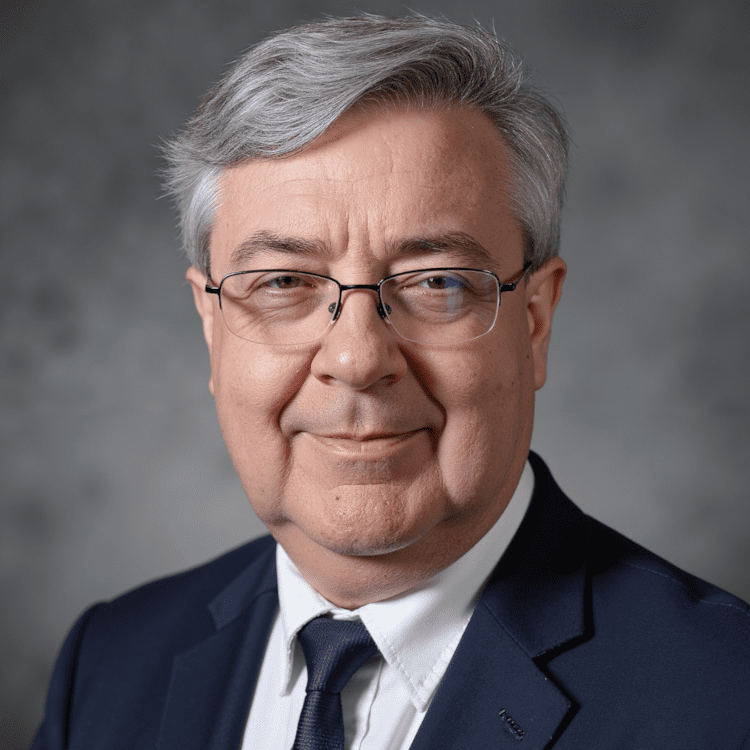
Dr. Curt Watke is a distinguished missiologist whose three-plus-decade-long career has significantly impacted Christian mission work in North America, particularly in under-reached and challenging regions. Holding a Ph.D. in Evangelism and Missions, Dr. Watke has focused on bridging cultural gaps and fostering sustainable Christian communities by developing innovative strategies that address contemporary challenges like globalization, urbanization, and religious pluralism. His emphasis on cultural sensitivity and contextualization in mission work is reflected in his collaborative writings, including notable works such as “Ministry Context Exploration: Understanding North American Cultures” and “Starting Reproducing Congregations.” Beyond his writing, Dr. Watke is a sought-after speaker and educator, lecturing at seminaries and conferences worldwide, and his teachings continue to inspire and equip new generations of missional leaders. His enduring legacy is marked by unwavering dedication to the mission of God and a profound influence on missional thought and practice. Dr. Watke serves as President and Professor of Evangelism & Missiology at Missional University.