
Redefining Success Through Divine Sovereignty
In a world obsessed with influence, control, and personal achievement, Christians face a fundamental worldview question: What is the true source of power and success? This question strikes at the heart of how we understand our participation in God’s mission. The dominant narratives of our cultures—technological utopianism, political power, self-determination, personal autonomy, ancestral authrority, karmic systems, indigenous religions—offer compelling yet ultimately hollow answers. As followers of Christ engaged in conversational witness, we must reckon with a radically different understanding of power: one rooted not in human achievement but in divine sovereignty, demonstrated not through coercion but through sacrificial service, and empowered not by strategic manipulation but by the Holy Spirit.
The biblical narrative presents a consistent testimony: true power flows from covenant relationship with God, not from human capacity or earthly authority. This truth transforms how we engage in Christian witness. Rather than relying on persuasive techniques, cultural influence, or forceful argumentation, we participate in God’s mission by depending on the Spirit’s empowerment, embracing the weakness of the cross, and demonstrating the kingdom through humble service. Understanding this distinction is not merely academic—it fundamentally shapes how we share our faith in everyday conversations with friends, neighbors, and colleagues.
The Biblical Foundation: Divine Sovereignty Over Human Authority
God’s Power Revealed in the Exodus
The Exodus narrative (Exodus 3-14) provides the foundational biblical story for understanding divine power versus earthly authority. When God calls Moses to confront Pharaoh, the most powerful ruler of the ancient world, He reveals His name as YHWH—the covenant-keeping God who liberates His people. The ten plagues systematically dismantle Egypt’s pantheon, demonstrating that the gods of empire have no real power. Pharaoh’s magicians can replicate some early signs, but they ultimately confess, “This is the finger of God” (Exodus 8:19).
This narrative establishes a crucial principle: God’s power is not simply greater than human power—it operates in an entirely different category. Pharaoh’s authority rests on military might, economic control, and political intimidation. God’s authority flows from His character as Creator, Sustainer, and Redeemer. The Israelites’ liberation comes not through military uprising or political negotiation, but through divine intervention that exposes the impotence of human power structures when they oppose God’s purposes.
For those engaged in Christian witness today, this story confronts our tendency to measure success by worldly metrics. We may be tempted to think that effective evangelism requires cultural influence, institutional power, or sophisticated strategies. The Exodus reminds us that God accomplishes His redemptive purposes through means that often appear weak or foolish to the world. Our confidence in witness should rest not on our persuasive abilities but on God’s sovereign power to open hearts and transform lives.
The Danger of Misplaced Trust: Israel Demands a King
First Samuel 8-10 presents a sobering warning about misplaced trust in human power structures. When Israel demands a king “like all the nations,” they fundamentally reject God’s direct reign over them. Samuel’s prophetic warning outlines how human kings will exploit, oppress, and disappoint—yet the people insist. God gives them what they want, but their choice represents a form of practical atheism: functionally trusting in visible human authority rather than in the invisible God who has repeatedly demonstrated His faithfulness.
This narrative exposes a persistent human temptation: seeking security in structures we can see and control rather than depending on God’s providence. In our contemporary context, this manifests in various forms of political idolatry—looking to governments, leaders, or ideological movements as ultimate saviors. Whether leaning left or right, Christians can fall into the trap of believing that if only the “right” people held power, society’s problems would be solved. This represents the same functional denial of God’s sovereignty that characterized Israel’s demand for a king.
In conversational witness, this insight helps us diagnose a common worldview assumption: that human institutions and strategies provide ultimate security. When engaging someone who places ultimate hope in political solutions, technological progress, or human achievement, we can gently raise questions about whether these sources of power have truly delivered on their promises. This isn’t to dismiss the proper role of government or human effort, but to expose the insufficiency of human power apart from God’s authority and grace.
Faithfulness in Powerlessness: Daniel’s Witness in Exile
The book of Daniel (chapters 1-6) presents a radically different model of power—one that operates through faithfulness in apparent powerlessness. Daniel and his friends live as captives in Babylon, stripped of their homeland, religious freedom, and political autonomy. Yet through their unwavering commitment to God’s commands, they demonstrate a power that kings cannot comprehend. When Nebuchadnezzar demands worship, Shadrach, Meshach, and Abednego refuse, declaring, “Our God whom we serve is able to deliver us… But if not, be it known to you, O king, that we will not serve your gods” (Daniel 3:17-18).
This “but if not” faith redefines success. True success is not escaping the fiery furnace or avoiding the lions’ den—it is covenant faithfulness regardless of outcomes. Daniel’s influence in the Babylonian and Persian courts came not through political maneuvering or compromising his convictions, but through consistent integrity and dependence on God. His witness led powerful pagan kings to acknowledge the God of Israel, not because Daniel wielded power over them, but because God’s sovereignty manifested through Daniel’s faithful vulnerability.
For contemporary Christians, Daniel’s example challenges our success-oriented culture. We’re conditioned to measure Christian witness by numerical growth, cultural visibility, or political influence. Daniel reminds us that faithful presence—maintaining integrity, serving excellently, and trusting God even when outcomes seem uncertain—may be more powerful than all our strategic plans. In conversations with friends and neighbors, our quiet consistency and genuine character often speak more eloquently than our words.
The Holy Spirit: The Source of Missional Power
Pentecost and the Power of the Spirit
The story of Pentecost in Acts 1-2 marks a decisive shift in redemptive history. Before His ascension, Jesus instructs His disciples to wait in Jerusalem for “power” (dynamis)—not political power, military might, or strategic advantage, but the empowering presence of the Holy Spirit. “You will receive power when the Holy Spirit has come upon you, and you will be my witnesses” (Acts 1:8). The promise links Spirit-empowerment directly to witness, establishing the fundamental principle that Christian mission is pneumatological—powered by the Spirit, not by human capacity.
When the Spirit descends at Pentecost, the results confound human expectations. Peter, who had denied Christ three times, boldly proclaims the gospel to thousands. People from diverse linguistic and cultural backgrounds hear the message in their own tongues—a reversal of Babel’s fragmentation and a sign that God’s kingdom transcends human divisions. Three thousand people respond and are baptized, not because of clever rhetoric or emotional manipulation, but because the Spirit opened hearts to receive the truth.
This pattern persists throughout Acts. The early church faces persecution, imprisonment, and hostility from both religious and political authorities. Yet they pray not for protection but for boldness (Acts 4:29), and the gospel advances not despite their weakness but through it. When Stephen is martyred, his death plants seeds that contribute to Paul’s conversion. When believers are scattered by persecution, they take the gospel to new regions. Human strategies would seek to consolidate power and minimize risk; the Spirit works through vulnerability and apparent defeat.
Pneumatological Mission in Contemporary Witness
Understanding mission as fundamentally pneumatological transforms how we approach evangelistic conversations. We recognize that our role is not to argue someone into the kingdom or to manufacture conversion through emotional appeals. Rather, we participate in what the Spirit is already doing—opening eyes, softening hearts, and drawing people to Christ. This understanding produces both confidence and humility: confidence because the Spirit is infinitely more capable than we are, and humility because we recognize our complete dependence on God’s work.
Practically, this means approaching witness as a posture of prayerful dependence. Before engaging in conversations about faith, we pray for the Spirit’s guidance, wisdom, and empowerment. During conversations, we remain sensitive to the Spirit’s leading, following unexpected directions rather than rigidly adhering to our planned scripts. After conversations, we trust the Spirit to continue working in ways we cannot see or control. This pneumatological approach frees us from the anxiety of “getting it right” or “closing the deal”—the Spirit accomplishes what only He can accomplish.
Power Through Weakness: The Incarnational Pattern
The Kenosis of Christ
Philippians 2:5-11 presents the most radical inversion of worldly power imaginable. Christ, “though he was in the form of God, did not count equality with God a thing to be grasped, but emptied himself, by taking the form of a servant.” The Greek word kenosis (emptying) describes Christ’s self-limitation in the incarnation—the infinite God becoming finite, the all-powerful one embracing vulnerability, the Lord of glory submitting to human authority.
This kenotic pattern defines Christian mission. Paul introduces this hymn with the exhortation to “have this mind among yourselves, which is yours in Christ Jesus” (Philippians 2:5). The incarnational approach to witness means embracing downward mobility rather than seeking upward advancement. It means entering into others’ contexts, listening to their stories, identifying with their struggles, and serving their needs—all while maintaining our distinctive identity as followers of Christ.
The cross represents the ultimate demonstration of power-through-weakness. Rome designed crucifixion as the most humiliating and degrading form of execution, reserved for slaves and rebels. Yet through this apparent defeat, Christ accomplished humanity’s redemption. “The weakness of God is stronger than men” (1 Corinthians 1:25). This paradox—that God’s power manifests most fully in human weakness—becomes the paradigm for Christian witness. We do not overcome the world through domination but through sacrificial love, not through coercion but through invitation.
Incarnational Witness in Practice
Incarnational witness means entering conversations without an agenda to control or dominate. It requires genuine curiosity about the other person’s story, beliefs, and experiences. Rather than waiting for our turn to speak or mentally preparing rebuttals, we practice active listening—seeking to understand before being understood. This posture of humility and service creates space for authentic dialogue and demonstrates the love of Christ more effectively than any argument.
Consider a conversation with a colleague who has experienced church hurt or has intellectual doubts about Christianity. An incarnational approach doesn’t immediately defend the faith or explain away their concerns. Instead, it begins with empathetic listening: “That sounds really painful. Tell me more about what happened.” By honoring their experience and taking their questions seriously, we create an environment where genuine conversation can occur. This doesn’t mean abandoning truth or avoiding difficult topics—it means approaching them with the grace and patience that God has shown us.
Confronting Alternative Power Narratives
The Autonomy Assertion: “I Am the Master of My Fate”
Western culture’s dominant narrative celebrates individual autonomy and self-determination. From childhood, people in western societies are taught that they can be anything they want if they work hard enough, that they are the captains of our own souls. This autonomy assertion represents the same temptation in Eden: “You will be like God” (Genesis 3:5). It’s the claim to ultimate self-sovereignty, the rejection of external authority, the insistence that each individual defines their own meaning, morality, and identity.
In conversational witness, we encounter this worldview constantly. It manifests in statements like “That may be true for you, but I determine my own truth” or “I don’t need anyone telling me how to live my life.” The presuppositional problem here is profound: autonomous humanity has no non-arbitrary basis for making any truth claims or moral judgments. If each person truly determines their own reality, then concepts like justice, human rights, or even rational discourse become impossible. Why should anyone accept my autonomous declarations as binding on them?
A thoughtful question in response might be: “By what standard do you evaluate which desires or impulses to follow?” This gently exposes the internal inconsistency. Every person makes judgments about which inclinations are legitimate and which should be resisted—but on what basis? The Christian worldview provides a coherent answer: we are created in God’s image with inherent dignity and purpose, and true freedom comes not from autonomous self-creation but from living according to our design. As Augustine observed, our hearts are restless until they find rest in God.
Technological Utopianism: The New Tower of Babel
Contemporary cultures often look to technology and scientific progress as the ultimate sources of human flourishing. This technological utopianism promises that human ingenuity will solve all problems—disease, poverty, even death itself. Like the builders of Babel, we seek to “make a name for ourselves” (Genesis 11:4) through human achievement, constructing towers to the heavens through artificial intelligence, genetic engineering, and space exploration.
Christianity doesn’t oppose technology or scientific advancement per se. The command to exercise dominion over creation (Genesis 1:28) includes developing tools and techniques that serve human flourishing. However, the Christian worldview recognizes that technology is not morally neutral—it shapes us even as we shape it. More fundamentally, no amount of technological advancement can address humanity’s deepest problem: our alienation from God caused by sin. Faster computers, longer lifespans, and space colonies cannot heal broken relationships, eliminate human cruelty, or satisfy the spiritual hunger in every human heart.
In conversations with those who place ultimate hope in human progress, we can acknowledge the genuine goods that technology provides while raising deeper questions: Has technology made us more loving, more just, or more at peace? Do social media, smartphones, and instant connectivity produce genuine community or profound loneliness? As Neil Postman observed, every technology gives us something and takes something away. Only the gospel addresses the human condition at its root—offering not just improved circumstances but transformed hearts.
Political Idolatry: False Saviors and Ultimate Allegiances
In politically polarized times, Christians face the temptation to conflate the kingdom of God with partisan political agendas. Whether progressive or conservative, political movements promise solutions to social problems through the right policies, leaders, or ideologies. This represents a form of political idolatry—looking to human governments as ultimate saviors rather than recognizing them as provisional, fallible human institutions.
The New Testament presents a nuanced view of political authority. Romans 13 acknowledges government as ordained by God for maintaining order and punishing wrongdoing. Yet Revelation 13 depicts political power as potentially beastly, demanding worship that belongs to God alone. Christians must maintain prophetic distance from all political systems, neither absolutizing them as saviors nor demonizing them as wholly evil. Our ultimate allegiance belongs to Christ’s kingdom, which transcends all earthly political categories.
In witness, this prophetic stance allows us to build bridges across political divides. When someone’s identity seems entirely defined by political affiliation, we can ask questions that probe beneath surface positions: “What do you hope this political movement will ultimately accomplish? What would a just society look like? How do you think we address the brokenness you see?” Such questions often reveal deeper longings for justice, security, belonging, or meaning—longings that only God can ultimately satisfy. By refusing to reduce the gospel to partisan politics, we maintain credibility with those across the political spectrum and point toward a kingdom not made with hands.
Ancestral Authority: African Traditional Power Structures
In many African contexts, power is understood not primarily through individual autonomy or political systems but through ancestral authority and communal relationships. The ancestors—deceased family and clan members—are viewed as active participants in the lives of the living, wielding power to bless or curse, protect or punish, guide or mislead. Success depends fundamentally on maintaining proper relationships with ancestral spirits through regular rituals, sacrifices, libations, and strict adherence to traditional protocols. Power flows vertically through generations and horizontally through extended family networks rather than residing in isolated individuals. To dishonor the ancestors or break from communal expectations risks invoking their displeasure, resulting in misfortune, illness, or social ostracism.
This worldview also includes seeking spiritual power through traditional healers (sangomas, babalawos, marabouts), diviners, and ritual practitioners who claim to manipulate spiritual forces for protection, healing, prosperity, or advancing personal interests against rivals. The spirit world is understood as immediately present and constantly active—not distant or abstract but intimately involved in daily affairs. Misfortune is rarely attributed to natural causes but to spiritual imbalance, witchcraft, or ancestral anger. Life becomes a careful navigation of spiritual obligations, attempting to maintain harmony with unseen powers that control one’s destiny. This creates a fundamentally different power paradigm than Western individualism—one rooted in fear of spiritual retribution and dependence on intermediaries who claim special access to the spirit realm.
In conversational witness with those from African traditional religious backgrounds, we acknowledge the reality of the spiritual realm—something Western secularism wrongly denies. The Bible affirms that spiritual forces exist and that our struggle includes wrestling against principalities and powers (Ephesians 6:12). However, Christian witness proclaims that Jesus Christ has ultimate authority over all spiritual powers—He is not one ancestor among many, not one spirit among a hierarchy, but the Creator of all things who existed before all powers and holds supremacy over them. Through His death and resurrection, Christ defeated death itself and disarmed all hostile spiritual forces, making a public spectacle of them and triumphing over them (Colossians 2:15). Questions to explore might include: “What gives the ancestors their authority? Who created them and established their power? Can ancestral power truly overcome death, or does death still hold them captive? Who liberates us from fear?” The gospel offers liberation from fear of capricious spirits, freedom from endless appeasement rituals, and the security of belonging to a God whose love cannot be lost through ritual failure.
Karmic Systems: Asian Impersonal Power Structures
Many Asian worldviews understand power through concepts of cosmic order, impersonal moral law, and cyclical time. In Hindu and Buddhist contexts, karma operates as an inexorable principle—every action generates consequences that determine one’s current circumstances and future rebirths. Unlike Western concepts of justice administered by a personal judge, karma functions mechanically and impersonally. Your suffering today results from moral debts incurred in this life or countless previous lives; your prosperity reflects past merit. Power comes through accumulating spiritual merit (punya) by performing righteous duties, religious rituals, and acts of charity, gradually progressing through endless cycles of reincarnation (samsara) toward eventual liberation (moksha or nirvana). Success is measured not by external achievements or relationships but by spiritual advancement toward escape from the wheel of suffering.
In East Asian contexts influenced by Confucianism, Taoism, and Chinese folk religion, power flows through proper alignment with the Tao (the Way), maintenance of hierarchical social relationships (Five Relationships), filial piety toward ancestors, and careful attention to cosmic harmony. Personal destiny is often understood as predetermined by celestial forces, astrological configurations at birth, or karmic inheritance from ancestors. The spirit world is densely populated with countless deities arranged in bureaucratic hierarchies, ancestral spirits requiring regular veneration, ghosts of the restless dead, and nature spirits inhabiting mountains, rivers, and trees. Success requires navigating these complex spiritual obligations through offerings, consulting fortune-tellers, choosing auspicious dates and directions, arranging spaces according to feng shui principles, and maintaining proper ritual relationships with the pantheon.
Conversational witness in these contexts can address the profound difference between impersonal systems and a personal God. While karma offers no hope for those trapped in suffering—your circumstances are exactly what you deserve based on past actions, and only you can work off your moral debt over countless lifetimes—the gospel announces grace. God’s unmerited favor breaks into our condition not because we’ve earned it through spiritual merit but because of His love. Thoughtful questions might include: “If karma is impersonal law, who established it and ensures its operation? Can an impersonal force truly satisfy the human longing for justice and mercy? Does your karma account for the suffering of innocent children born into terrible circumstances? If the self is ultimately an illusion, who is being liberated?” Christian witness proclaims that history is not an endless, meaningless cycle but a purposeful narrative moving toward restoration, that suffering is not deserved punishment but an evil God Himself entered into through the incarnation, and that liberation comes not through our spiritual achievement over countless lifetimes but through Christ’s finished work received by faith.
Syncretism and Spiritual Pragmatism: Latin American Folk Religion
In many Latin American contexts, power and authority are understood through a syncretic blend of Catholic Christianity, indigenous cosmologies, and African diaspora religions that creates a complex spiritual marketplace. Folk Catholicism often functions pragmatically rather than theologically—saints are approached as specialized intermediaries who can grant specific favors, perform miracles, or provide protection in exchange for devotion, pilgrimages, offerings, or promesas (vows). The Virgin Mary appears in various regional manifestations (Guadalupe, Aparecida, Copacabana), each with particular powers and patronages. Power is negotiated through spiritual transactions: light this candle, make this offering, complete this pilgrimage, fulfill this promise, and the saint will intercede on your behalf. This transactional approach reduces divine relationship to quid pro quo exchanges, where spiritual power is accessed through proper ritual performance rather than covenant faithfulness.
Beneath Catholic veneer, indigenous cosmologies often persist. Pachamama (Mother Earth) must be honored through offerings and rituals, particularly at planting and harvest. Mountains, springs, and ancient sites retain sacred power requiring respectful attention. Traditional healers (curanderos, yerbateros) are consulted alongside or instead of priests and doctors, practicing herbal medicine mixed with spiritual cleansing, divination, and invoking both Christian and pre-Christian powers. In regions with significant African heritage, traditions like Santería (Cuba), Candomblé (Brazil), and Vodou (Haiti) blend Catholic saints with African orishas or lwa, creating systems where spiritual power is accessed through ritual specialists (santeros, pais de santo, houngans), spirit possession, animal sacrifice, and elaborate ceremonial practices. Practitioners often see no contradiction in attending Mass on Sunday and consulting a santero on Monday—it’s pragmatic engagement with multiple sources of spiritual power to ensure protection, healing, prosperity, and resolution of problems.
Additionally, contexts marked by poverty, political corruption, and narco-violence have spawned new syncretisms. Prosperity gospel movements promise health and wealth as divine entitlements accessed through faith declarations and financial giving, essentially baptizing materialistic success as God’s will. Narco-spirituality has emerged where drug traffickers seek spiritual protection through devotion to folk saints like Santa Muerte (Holy Death), Jesús Malverde, or San Nazario, offering prayers, building shrines, and requesting protection for criminal enterprises. These represent desperate attempts to gain power and security in environments where traditional institutions have failed and where violence makes daily survival uncertain. Witness in these contexts must carefully distinguish between cultural expressions of genuine Christian faith and syncretistic practices that compromise biblical truth. Questions to explore might include: “Do we approach God through transactions or through relationship? Can spiritual power be bought, earned, or manipulated through rituals? Who is the ultimate mediator between God and humanity—many saints or one Savior?” The gospel announces that Jesus alone is the mediator (1 Timothy 2:5), that grace cannot be purchased or earned through religious performances, that God’s power is not controlled by human manipulation but flows from covenant relationship established by Christ’s sacrifice alone. True power comes not from appeasing multiple spiritual entities through anxious ritual obligations but from the Holy Spirit dwelling within believers, empowering them for faithful witness and joyful service.
The Presuppositional Foundations of Authority
The Transcendental Necessity of Divine Authority
Presuppositional apologetics argues that certain fundamental truths—logic, morality, human dignity—are only intelligible if God exists. Without a transcendent, personal source of authority, these concepts lose their grounding and become arbitrary human constructs. This approach doesn’t prove God’s existence through neutral reasoning but demonstrates that all meaningful thought and discourse presupposes His existence.
Consider the concept of moral obligation. Everyone recognizes certain acts as objectively wrong—torture of innocent children, genocide, exploitation of the vulnerable. We don’t just dislike these actions; we declare them unjust and worthy of condemnation. But objective moral obligations require a transcendent moral authority. If morality is merely a human construction—evolved preferences or social conventions—then moral claims reduce to expressions of personal or cultural taste. “I don’t like that” carries no more weight than “I don’t like broccoli.” Yet we know intuitively that some actions are truly, objectively wrong, regardless of personal preferences or cultural norms.
This argument isn’t about proving Christianity true in a neutral framework but about exposing the incoherence of non-Christian worldviews when pressed to their logical conclusions. Romans 2:14-15 indicates that all people know moral truth through conscience—the law written on their hearts. The presuppositional approach shows that this moral knowledge, which everyone possesses, cannot be accounted for without God. The unbeliever must borrow moral capital from the Christian worldview even while denying its source.
Dialogical Questions That Reveal Worldview Foundations
In conversational witness, presuppositional insights translate into penetrating questions that help others examine their foundational assumptions. When someone appeals to justice, we can ask: “What makes something just or unjust? Is justice just what we decide, or is there an objective standard?” When someone protests abuse of power, we inquire: “By what standard do you judge power legitimate or illegitimate? Why is coercion wrong?”
These questions aren’t meant to trap or embarrass but to invite genuine reflection. Most people haven’t thought deeply about the foundations of their beliefs. By asking thoughtful questions, we create space for them to discover internal inconsistencies and recognize their need for a more coherent worldview. The goal is not to “win” arguments but to demonstrate that the Christian faith provides the only adequate foundation for the things we all know to be true—logic, morality, human dignity, meaning, and purpose.
For example, contemporary discussions of human rights often assume that every person has inherent dignity and worth. But why? The Christian answer is imago Dei—humans are created in God’s image and therefore possess intrinsic value. Secular frameworks struggle to provide comparable grounding. If humans are merely products of blind evolutionary processes, why should they have rights that insects or rocks don’t have? Without God, “human rights” become arbitrary social constructions, subject to revision whenever convenient. The concept only makes sense if humans are uniquely created by and for a transcendent purpose.
Delegated Authority: Jesus’ Commission to His Disciples
Kingdom Authority and Spiritual Warfare
Jesus’ commissioning of His disciples reveals the nature of authority for Christian witness. In Matthew 10:1, Jesus “gave them authority over unclean spirits, to cast them out, and to heal every disease and every affliction.” This delegated authority is spiritual, not political. It operates through proclamation and demonstration of God’s kingdom breaking into present reality. The disciples exercise power not for personal gain or institutional advancement but for liberation, healing, and restoration.
Ephesians 6:12 reminds us that Christian witness occurs in the context of spiritual warfare: “We do not wrestle against flesh and blood, but against the rulers, against the authorities, against the cosmic powers over this present darkness.” This cosmic dimension of mission means that evangelistic conversations involve more than intellectual persuasion or emotional appeal. Behind resistance to the gospel stand spiritual forces that blind minds and harden hearts (2 Corinthians 4:4). Our weapons in this warfare are not worldly—not manipulation, not coercion, not political power—but spiritual: prayer, the word of God, faithfulness, and the power of the Holy Spirit.
Understanding spiritual warfare doesn’t mean seeing demons behind every disagreement or excuse our responsibility to engage thoughtfully. Rather, it reminds us that effective witness requires spiritual resources and that ultimate outcomes depend on God’s power to liberate captives. We pray for those we’re in conversation with, asking God to open blind eyes and soften hard hearts. We trust that God’s word does not return void but accomplishes His purposes. We recognize our dependence on resources beyond ourselves.
Authority Through Service, Not Domination
Jesus radically redefines authority through His own example and teaching. When His disciples argue about who is greatest, He tells them: “The kings of the Gentiles exercise lordship over them, and those in authority over them are called benefactors. But not so with you. Rather, let the greatest among you become as the youngest, and the leader as one who serves” (Luke 22:25-26). In God’s kingdom, authority manifests through service, leadership through humble washing of feet, greatness through self-giving love.
This servant paradigm transforms evangelistic practice. Rather than approaching witness as conquering territory or winning debates, we see it as serving others by sharing the greatest gift we’ve received. We don’t manipulate through high-pressure tactics or exploit emotional vulnerability. We don’t treat people as projects or statistics. Instead, we honor their dignity as image-bearers, respect their freedom to respond or reject, and trust that God works through patient, loving presence.
Practically, this might mean spending months or years building authentic friendship with someone before explicitly discussing the gospel. It means being willing to serve without guarantee of return—helping a neighbor move, providing meals during crisis, offering practical assistance—with no strings attached. When opportunities for spiritual conversations arise naturally, we share honestly and vulnerably about our own struggles and God’s faithfulness, inviting rather than coercing, proposing rather than imposing.
Living as Witnesses in a Pluralistic World
Faithful Presence in Diverse Contexts
Global contemporary societies are often characterized by deep pluralism—not just the presence of diverse beliefs but fundamental disagreement about how to adjudicate between competing truth claims. In this context, Christian witness requires both theological conviction and cultural sensitivity. We hold firmly to the exclusivity of Christ (John 14:6) while engaging those who disagree with gentleness and respect (1 Peter 3:15).
Faithful presence means maintaining our distinctive Christian identity while actively participating in the life of our communities. We don’t withdraw into isolated subcultures, nor do we accommodate the gospel to make it more palatable to secular sensibilities. Like Daniel in Babylon, we serve excellently in our vocations, contribute to the common good, and remain unapologetically committed to our convictions. This posture earns us credibility and creates opportunities for witness.
Cross-cultural spiritual conversations require wisdom and discernment. We must understand not just what people believe but why they believe it—the cultural values, historical experiences, and personal stories that shape their worldview. Rather than imposing our own Christian cultural expressions, we present the gospel in ways that connect with their particular context while remaining faithful to biblical truth. This contextual sensitivity demonstrates respect and increases the likelihood that the message will be heard and understood.
Integrating Worldview Understanding into Everyday Conversations
Understanding worldview—particularly regarding power and authority—enables more effective conversational witness. When a coworker expresses frustration with injustice in the workplace, we can listen empathetically while gently probing: “What do you think a truly just workplace would look like? Where does that standard of justice come from?” When a friend shares excitement about a political candidate, we might ask: “What ultimate problems do you hope this person can solve? Is politics capable of addressing our deepest needs?”
These questions aren’t manipulative traps but genuine invitations to deeper reflection. By asking rather than telling, we honor the other person’s agency and create space for the Holy Spirit to work. Often, thoughtful questions accomplish more than lengthy explanations. They help people recognize internal inconsistencies, confront unexamined assumptions, and acknowledge longings that their current worldview cannot satisfy.
As conversations progress, we look for opportunities to share how the Christian gospel addresses the issues being discussed. If someone expresses feeling powerless to change their circumstances, we can speak of God’s providence and the Spirit’s empowering presence. If someone wrestles with guilt over past failures, we point to the forgiveness and new identity available in Christ. If someone longs for a better world but sees no path forward, we testify to God’s kingdom breaking into present reality and the promise of ultimate restoration.
Conclusion: Confident Dependence on God’s Power
The question “What is the source of power and success?” demands a response that will shape everything about our participation in God’s mission. If we believe that power flows from human capacity, cultural influence, or strategic expertise, we will approach witness as a project we must accomplish through our own strength. We will measure success by numerical growth, cultural victories, or political influence. We will experience anxiety when results don’t match expectations and pride when they exceed them.
But if we truly believe that power flows from covenant relationship with God, demonstrated through the Holy Spirit’s work and manifested through weakness and service, our entire posture changes. We approach witness with confident dependence—confidence because God is sovereign and the Spirit is powerful, dependence because we recognize our complete inability to accomplish anything of spiritual significance apart from Him. We measure success by faithfulness rather than results, knowing that God causes growth in His timing and ways.
This understanding frees us from the burden of manufacturing conversions and allows us to be faithful witnesses wherever God places us. In offices and neighborhoods, coffee shops and classrooms, we live as people who have tasted the goodness of God’s kingdom. We ask thoughtful questions, listen with genuine interest, share our stories honestly, and trust the Spirit to do what only He can do. We demonstrate through our lives—imperfect but being transformed—that power through weakness is more beautiful and enduring than any worldly success.
The biblical narrative from Exodus to Acts reveals the same truth: God accomplishes His redemptive purposes not through coercive power but through self-giving love, not through human achievement but through divine grace, not through worldly strength but through Spirit-empowered weakness. As we participate in conversational witness, we join this ongoing story—testifying to the God whose sovereignty encompasses all creation, whose power liberates captives, whose authority transforms hearts, and whose kingdom will have no end.
Sources
- Augustine of Hippo. Confessions. Translated by Henry Chadwick. Oxford: Oxford University Press, 1991.
- Bosch, David J. Transforming Mission: Paradigm Shifts in Theology of Mission. Maryknoll, NY: Orbis Books, 1991.
- Brueggemann, Walter. The Prophetic Imagination. 2nd ed. Minneapolis: Fortress Press, 2001.
- Frame, John M. Apologetics: A Justification of Christian Belief. Phillipsburg, NJ: P&R Publishing, 2015.
- Guder, Darrell L., ed. Missional Church: A Vision for the Sending of the Church in North America. Grand Rapids: Eerdmans, 1998.
- Hunter, James Davison. To Change the World: The Irony, Tragedy, and Possibility of Christianity in the Late Modern World. Oxford: Oxford University Press, 2010.
- Kraft, Charles H. Anthropology for Christian Witness. Maryknoll, NY: Orbis Books, 1996.
- Kraft, Charles H. Worldview for Christian Witness. Pasadena, CA: William Carey Publishers, 2008.
- Newbigin, Lesslie. The Gospel in a Pluralist Society. Grand Rapids: Eerdmans, 1989.
- Newbigin, Lesslie. Foolishness to the Greeks: The Gospel and Western Culture. Grand Rapids: Eerdmans, 1986.
- Ott, Craig, Stephen J. Strauss, and Timothy C. Tennent. Encountering Theology of Mission: Biblical Foundations, Historical Developments, and Contemporary Issues. Grand Rapids: Baker Academic, 2010.
- Postman, Neil. Technopoly: The Surrender of Culture to Technology. New York: Vintage Books, 1993.
- Schreiter, Robert J. Constructing Local Theologies. Maryknoll, NY: Orbis Books, 1985.
- Smith, James K.A. Desiring the Kingdom: Worship, Worldview, and Cultural Formation. Grand Rapids: Baker Academic, 2009.
- Stott, John R.W. The Cross of Christ. Downers Grove, IL: InterVarsity Press, 2006.
- Van Til, Cornelius. The Defense of the Faith. 4th ed. Phillipsburg, NJ: P&R Publishing, 2008.
- Wells, Samuel. A Nazareth Manifesto: Being with God. Hoboken, NJ: Wiley-Blackwell, 2015.
- Wright, Christopher J.H. The Mission of God: Unlocking the Bible’s Grand Narrative. Downers Grove, IL: IVP Academic, 2006.
- Wright, N.T. Simply Good News: Why the Gospel Is News and What Makes It Good. New York: HarperOne, 2017.
- Yong, Amos. The Spirit Poured Out on All Flesh: Pentecostalism and the Possibility of Global Theology. Grand Rapids: Baker Academic, 2005.
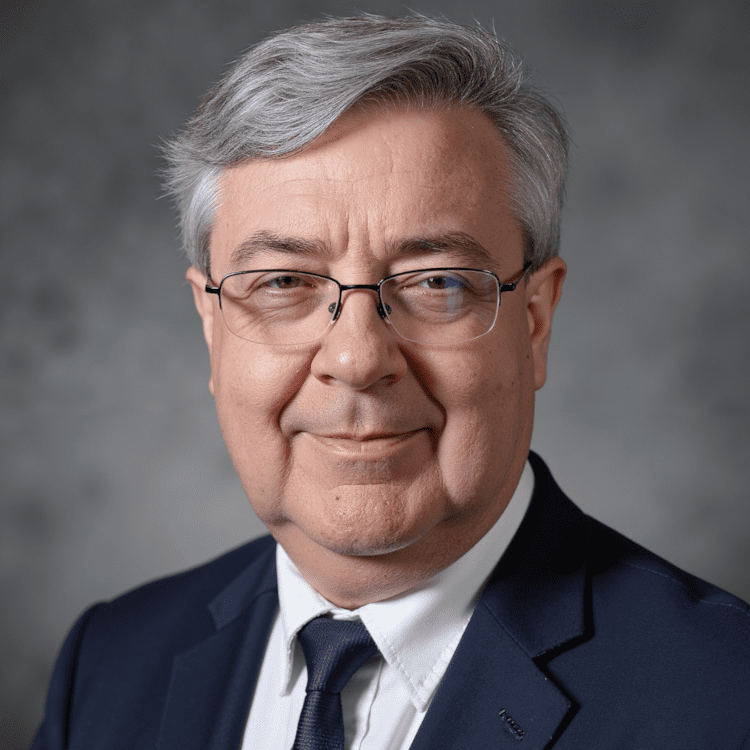
Dr. Curt Watke is a distinguished missiologist whose three-plus-decade-long career has significantly impacted Christian mission work in North America, particularly in under-reached and challenging regions. Holding a Ph.D. in Evangelism and Missions, Dr. Watke has focused on bridging cultural gaps and fostering sustainable Christian communities by developing innovative strategies that address contemporary challenges like globalization, urbanization, and religious pluralism. His emphasis on cultural sensitivity and contextualization in mission work is reflected in his collaborative writings, including notable works such as “Ministry Context Exploration: Understanding North American Cultures” and “Starting Reproducing Congregations.” Beyond his writing, Dr. Watke is a sought-after speaker and educator, lecturing at seminaries and conferences worldwide, and his teachings continue to inspire and equip new generations of missional leaders. His enduring legacy is marked by unwavering dedication to the mission of God and a profound influence on missional thought and practice. Dr. Watke serves as President and Professor of Evangelism & Missiology at Missional University.